
140 votes and the acting presidency: Serbia's parliament elects lecturer-farmer Čupić as speaker
Serbia's National Assembly elected Aleksandar Čupić of the Student List as its speaker after a three-day debate. With the speakership he also takes over the duties of acting president, while a government must be formed within 90 days and the movement has still not named a prime ministerial candidate.
On 19 November Serbia's National Assembly elected Aleksandar Čupić — an assistant professor at Belgrade's Faculty of Transport and Traffic Engineering and an organic fruit and vegetable farmer from Sopot — as its president. In an open roll-call vote, the candidate of the "Student List — Students Win" group received 140 of the 239 lawmakers present; his rival, Stojan Radenović of the "Aleksandar Vučić — Serbia Wins" group, got 97. Deputies of the national minority lists also voted for Čupić.
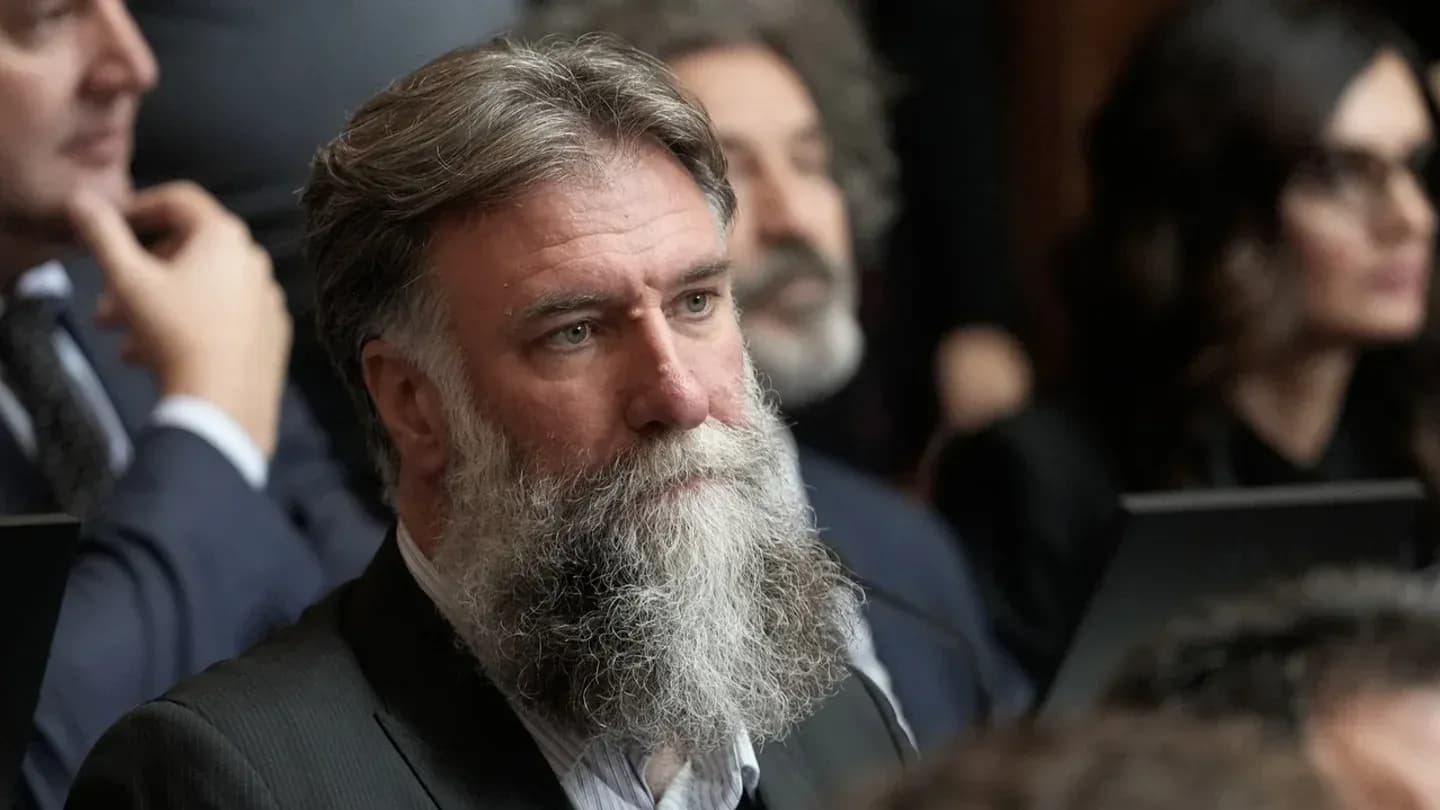
Together with the speakership, Čupić assumes the duties of acting president: Aleksandar Vučić resigned the presidency in September in order to run for prime minister, and the constitution bars him from seeking a third presidential term. It is the new speaker who must schedule the early presidential election, which has to be held by the end of the year — no later than 27 December.
Three days of debate, seven apartments and "verbal diarrhea"
The vote followed a three-day debate in which deputies of Vučić's group challenged everything: Čupić's academic title, his political past — including membership in the Ljuba Davidović foundation set up by the Democratic Party — and the origin of his property. The loudest claim was that he owns seven apartments and two garages, and the question of whether he pays tax on rental income. These assertions remain accusations by opponents, not an established fact: Čupić responded that he would file an asset report with the Agency for the Prevention of Corruption, as the law requires of every deputy within 30 days of mandate confirmation, and that he is "proud of everything he has acquired through his own work".
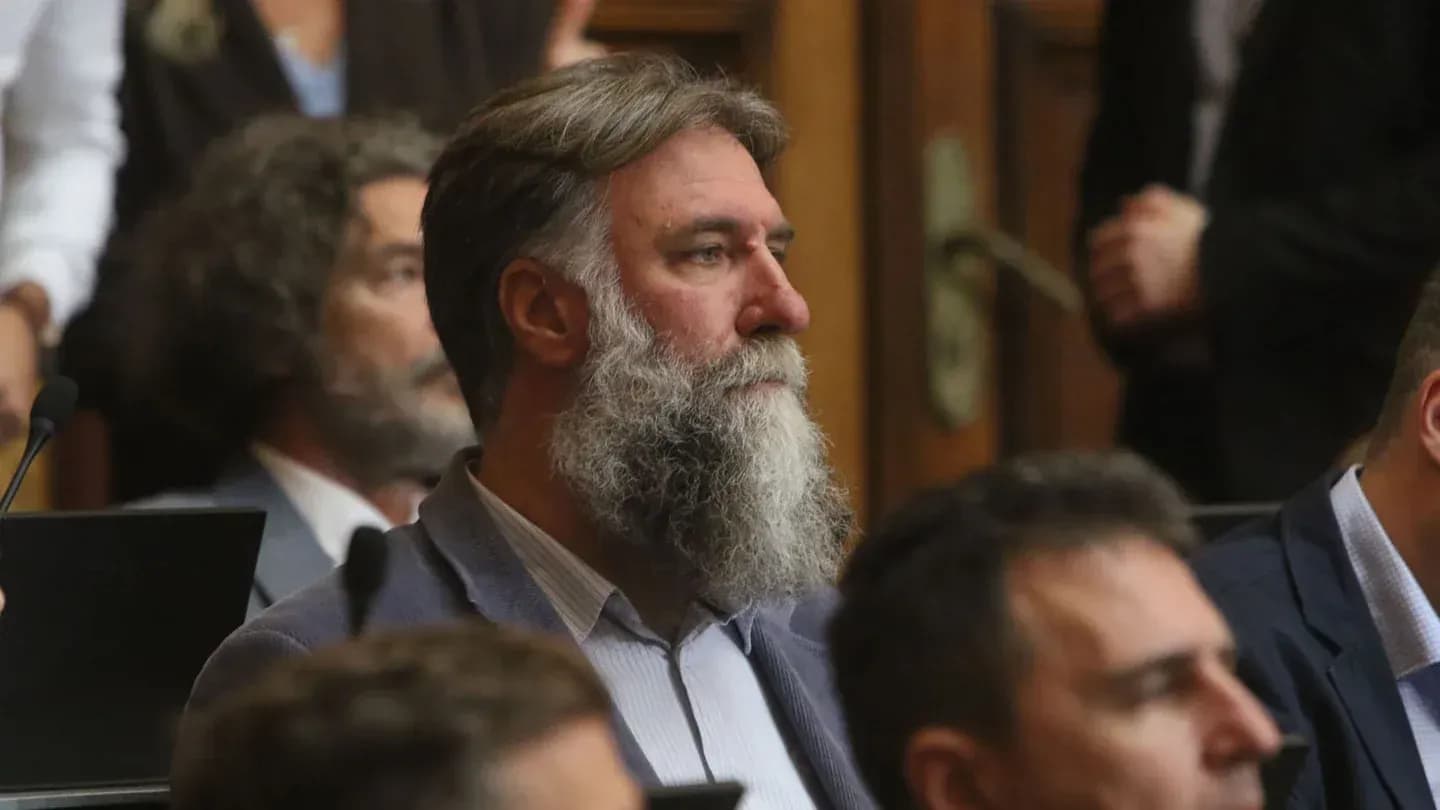
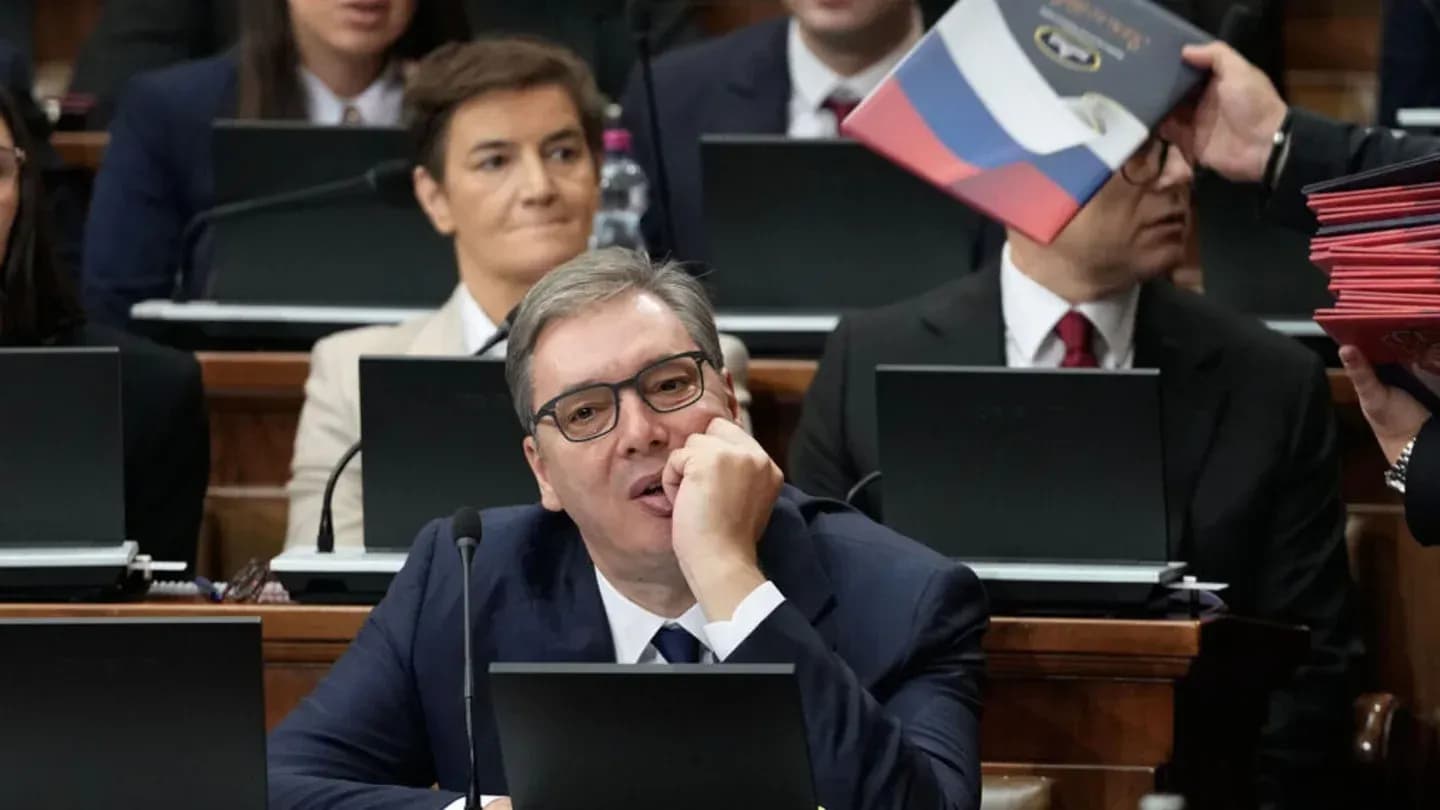
Jovo Bakić, head of the Student List parliamentary group, described the preceding days of discussion as "verbal diarrhea" and promised that investigative bodies would have their hands full over what had been done in the country before; he called the Informer television channel a "house of spiritual poison". Vučić accused Bakić of lying and insulting and described his address as "an image and an occasion of powerlessness". After his election, Čupić issued warnings to deputies of Vučić's group — including Vučić himself, Ana Brnabić and Milenko Jovanov — for straying from the agenda.
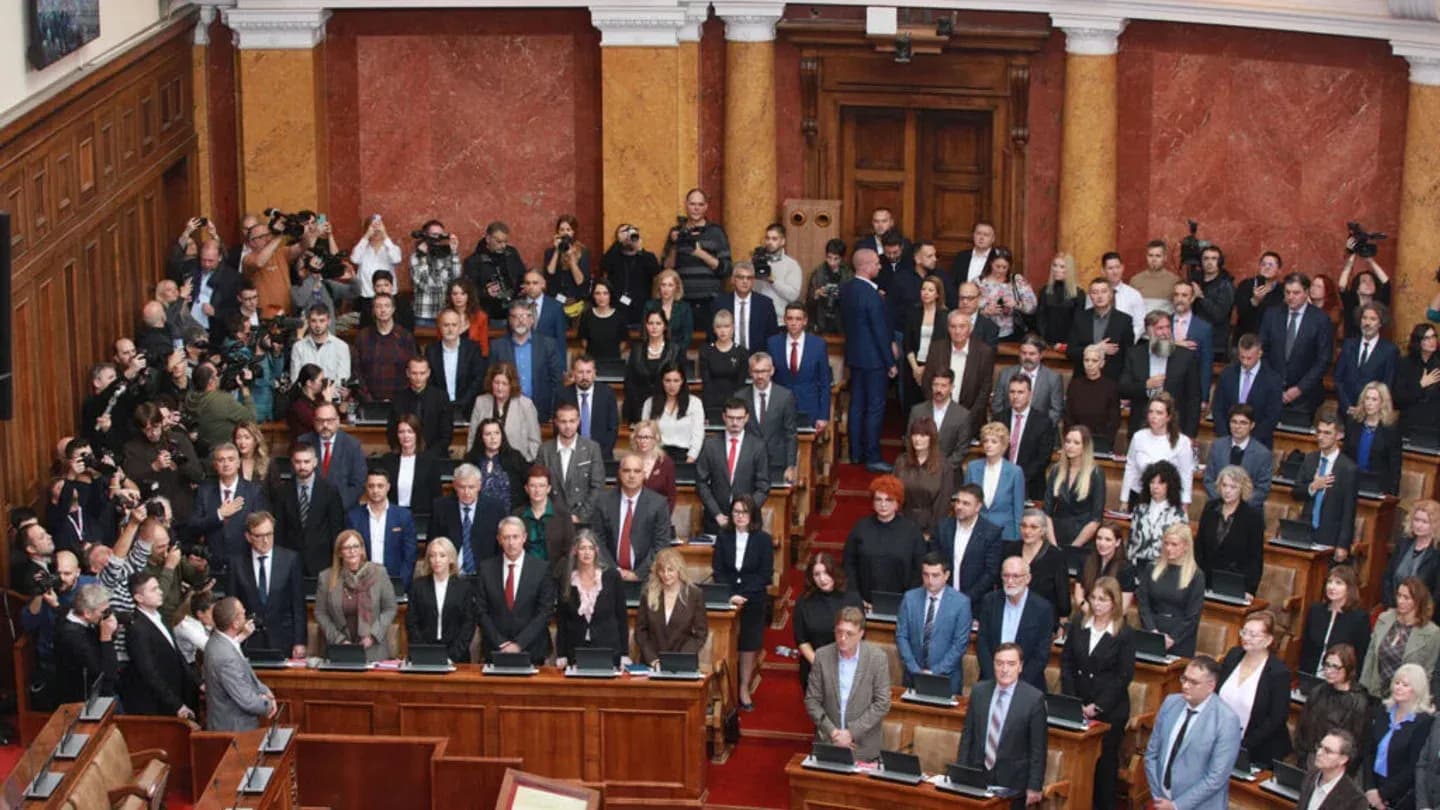
That same evening the assembly elected six deputy speakers, all from the Student List: deputies of Vučić's group walked out of the hall during the vote, calling the process a "farce", and none of their six candidates was elected. Mirjana Radaković of the Student List was appointed secretary general of the parliament. The next session, to elect working bodies and standing delegations to international institutions, is scheduled for 24 November.
Power without a leader and 90 days for a government
Čupić's election formalises the result of the 25 October vote: according to the final results of the Republic Electoral Commission, the Student List won 140 of 250 mandates, the "Aleksandar Vučić — United Serbia" list 103, and seven more seats went to national minority lists. Commission member Ivan Šebek pointed to "illogicalities and anomalies" in the repeat voting of 1 November, which in his assessment cost the student list one mandate in favour of Usame Zukorlić's list; the commission nonetheless confirmed the overall results.
The 90-day clock for forming and confirming a government started with the first session of the new assembly on 17 November. The victorious movement is deliberately leaderless and non-hierarchical: no prime ministerial candidate has been named, and decisions are taken collectively. That is the central tension of the coming weeks: the parliamentary majority already exists, but the state administration, security services and state-owned companies remain in the hands of people of the old regime — precisely those the Student List demands be dismissed, from the police director to the head of public broadcaster RTS, who has already stepped down.
Vučić, who kept the party leadership and a seat in parliament, accuses the winners of "revolutionary terror" in his daily appearances on loyal media and social networks. A wave of post-election arrests has included officials and police officers; among those detained is the owner of a private bank allegedly trying to siphon money from accounts used by millions of Serbians to pay electricity bills and parking fees. The money trail after the election has become a battleground of its own: in late October a candidate of the student list claimed an attempt to withdraw about a billion dinars from the state-owned Poštanska štedionica bank; Vučić called this a "notorious lie", and the bank itself denied any threat to its liquidity.
"We will restore dignity to the Assembly"
In his first address after the election Čupić promised to restore the dignity of the parliament and named five principles of its work: equality, listening carefully to interlocutors, politeness, a sense of shame and the strength of arguments. He publicly apologised to deputy Balint Pastor for incorrect information about his registration at the session, expressed regret over the first-day incident in which deputy Lidija Vukićević was doused with yogurt, and promised to change the practice under which students were not allowed into the hall this time: at the next sessions they will be able to follow the parliament's work live.
Congratulations came from EU Commissioner for Enlargement Marta Kos, who recalled that the new parliament "has a central role in delivering on the strong mandate given by Serbian citizens", from the leader of Bosnian Serbs Milorad Dodik and from Serbian Orthodox Patriarch Porfirije. For Brussels this is a separate signal: Serbia's EU membership bid stalled under Vučić because of democratic backsliding and close ties with Moscow.
What this changes
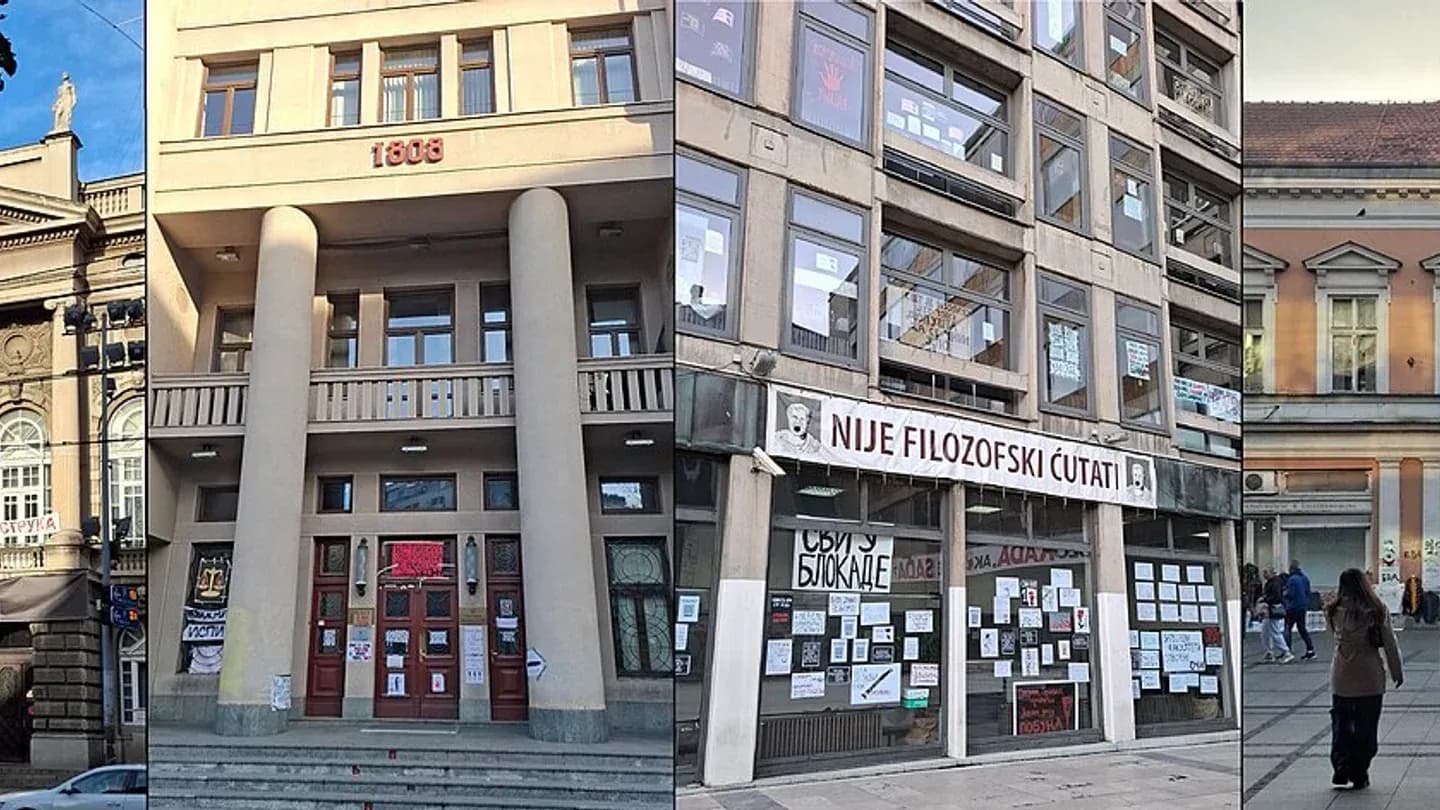
The student movement grew out of two years of anti-corruption protests that began after the collapse of a railway station canopy in Novi Sad in November 2024, which killed 16 people. Responsibility for that disaster and for corruption in state contracts became the movement's central demand — and for the first time in Serbia's history it has won a majority sufficient to form a government. Foreign policy is pushed to the background in its platform: Belgrade has for years balanced between the EU and Russia and has not joined sanctions against Moscow, and the new majority has not yet said whether it will change that course.
The nearest dates are already set: on 24 November the assembly is to complete the election of its working bodies; within 90 days of 17 November it must confirm a government; by 27 December it must hold a presidential election. The first test of whether the movement meets its own standards will be Čupić's asset declaration at the Agency for the Prevention of Corruption: a movement that spent two years demanding other people's declarations and resignations now has to show its own.
Primary sources
Documents and statements this story is based on.
Le Pen to Ukraine's ambassador: France can no longer fund Kyiv, but the EU's €90bn loan pledge will be honoured
France’s 5 November protests: new turnout estimates and government response
Pashinyan sees an EU application in 2027–2028 as possible, not accession
Europe on Fire: 410,000 March in France, Nearly 1,000 Arrested as Cost-of-Living Revolt Engulfs the Continent