
Le Pen to Ukraine's ambassador: France can no longer fund Kyiv, but the EU's €90bn loan pledge will be honoured
After a closed-door meeting with ambassador Vadym Omelchenko, Marine Le Pen promised to honour France's commitments under the EU's €90 billion loan while ending new financial contributions from Paris. Kyiv already faces a €70 billion gap in 2027 — and no guarantees from any French candidate.
On Monday 16 November in Paris, behind closed doors, Marine Le Pen received Ukraine's ambassador to France, Vadym Omelchenko. The communiqué of the National Rally published after the meeting contains a sentence Kyiv has heard from the frontrunner of the presidential race for months — but this time said to the ambassador face to face: if Le Pen wins the Élysée in 2027, “the state of France's public finances would no longer allow it to help Ukraine financially in the coming months”.
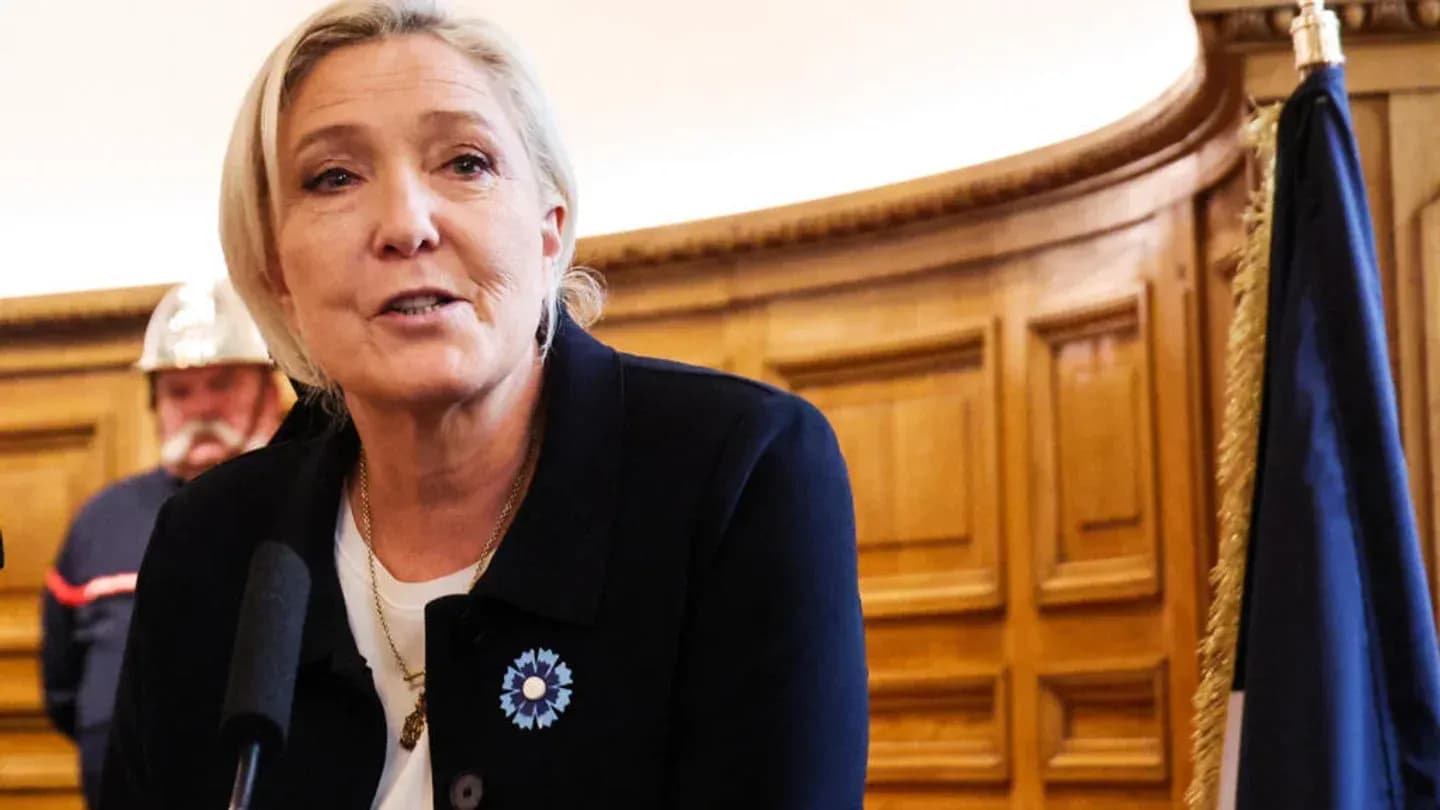
The same communiqué pledges that Paris “would honour the commitments taken so far, notably concerning the €90 billion loan” granted to Kyiv by the European Union. And it lists what would remain: free transfers of equipment, humanitarian aid, “a much more active diplomacy”, and a “strategic partnership” in digital technology, the defence industry and civil nuclear energy that “could take shape as soon as the conflict ends”. Le Pen asked the ambassador to tell Volodymyr Zelensky that she is entirely willing to meet him in Paris or Brussels.
Six months, then silence
The promise about the European loan needs unpacking, because it hides the difference between “cutting aid” and “cutting aid, French style”. The €90 billion Ukraine Support Loan was created in February 2026 by Regulation (EU) 2026/467 as enhanced cooperation: 24 member states of 27, without Czechia, Hungary and Slovakia. €60 billion is for defence and the defence industry, €30 billion for the budget. The Council allocated up to €45 billion for 2026 back on 23 April; by the end of October about €19.8 billion had been disbursed. On 30 October the European Commission proposed allocating the remaining €45 billion to 2027 — €13.3 billion in budget support and €31.7 billion for defence industrial capacity; the decision rests with the EU Council, and the money is to reach Kyiv by 31 December 2027.
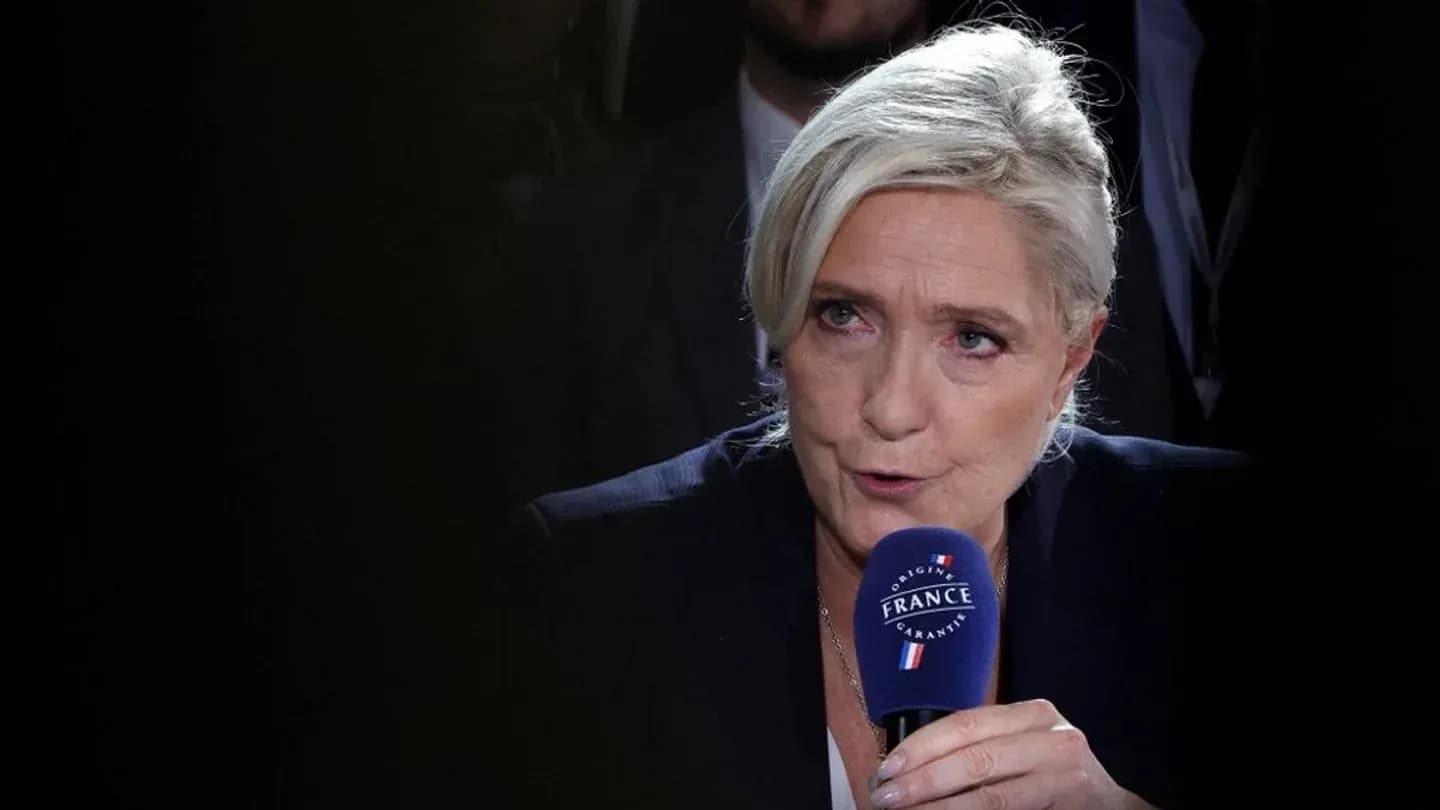
Le Pen's scheme, outlined in autumn and confirmed to the ambassador, is simple: after taking office she “would maintain payments for six months”, then stop financial aid. On the election calendar (first round in April 2027) that means a stop around November 2027 — right in the middle of delivering the second half of the loan. Formally the loan is an EU obligation, not Paris's. But French contributions and France's vote in the Council are part of the mechanism without which “honouring commitments” does not work.
The €70 billion hole
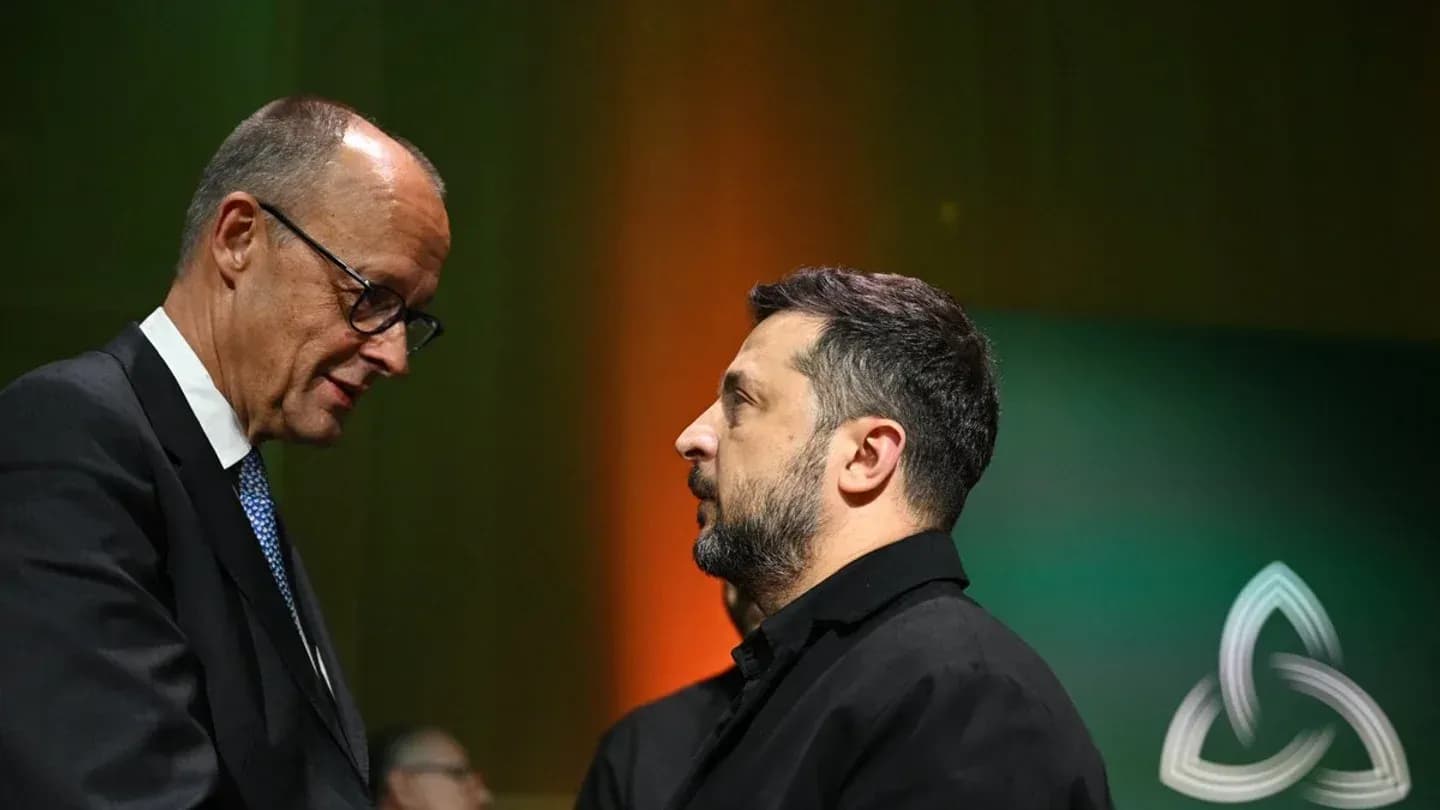
The context makes the promise sound more alarming for Kyiv than ever: for 2027 Ukraine estimates its needs at no less than €70 billion on top of the existing loan, of which about €40 billion is unfunded defence demand, above all drones and air defence. Zelensky asked for that money at the European Council on 16 October. The Commission is preparing a new €45 billion loan backed by the EU budget; the proposal to governments is scheduled for 18 November. Czechia, Slovakia, Hungary and Bulgaria have already said they will not take part. German Chancellor Friedrich Merz links approval of the EU's 2028–2034 budget to collective funding of Ukraine; Slovak Prime Minister Robert Fico calls this “blackmail” and will not yield.
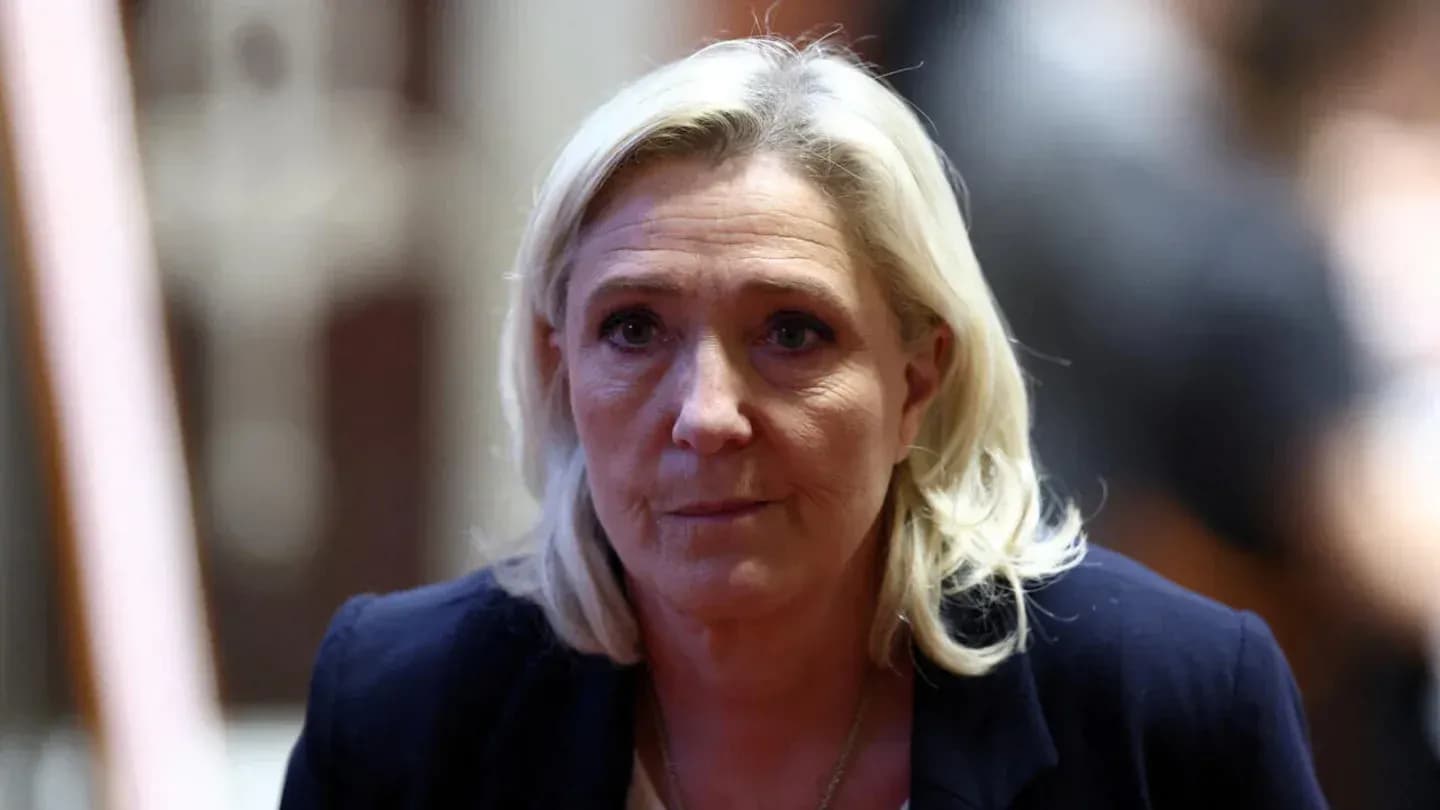
In this configuration France leaving the donor circle is not a gesture but arithmetic. The fewer participants, the heavier the burden on each — and the easier it is for the next sceptic to say “no”. That is why the position of a candidate who holds no office yet is already changing negotiations in Brussels: every “no” from Central Europe sounds more confident when the EU's second-largest economy may quit the donor club after the election.
The ambassador's courtesy and silence on the main point
The Ukrainian side's reaction is a separate part of this story. Hours after the meeting Omelchenko wrote on X that he was “happy” to meet Ms Le Pen at the Ukrainian Cultural and Information Centre in France, and thanked her for her “constant support for Ukraine in the European Parliament and the National Assembly, as well as for the solidarity of her voters”. The embassy's message lists the topics: support for Ukraine, prospects of EU and NATO membership, post-war reconstruction, cooperation in digital technology, nuclear energy and defence. On the main point — the end of financial aid — Kyiv's diplomatic messages stay silent. Whether Zelensky accepted the invitation to Paris or Brussels is unknown: the ambassador only confirmed he would pass the offer on, and that he himself invited Le Pen to Ukraine.
Macron answered earlier and harder. On 14 November he published a message: those who want to “ration Ukraine's means” are in fact pushing it towards an “unjust peace” and a “lasting weakening” of all Europe. On 15 November his circle added: if Le Pen “decides to cut everything for Ukraine, she will isolate us in Europe… these people are anti-patriotic”. Le Pen replied symmetrically: had the president “not ruined our country over ten years”, there would still be room to continue financial aid to Kyiv.
A campaign in which Ukraine is a line of spending
The day after meeting the ambassador, Le Pen turned her position into official campaign material: on 17 November she presented her pension counter-reform — repealing Elisabeth Borne's law from 1 January 2028, retirement at 62 with 42 years of contributions or at 60 with 40, a mandatory funded pillar, stricter rules for validating quarters and a doubled penalty for incomplete careers. Bruno Retailleau called the project “a catalogue of contradictions”, Édouard Philippe “lying, costly and anti-social”. The same day Le Monde ran an editorial titled “Marine Le Pen and Ukraine, between hypocrisy and cowardice”: refusing aid, the paper argues, would leave France diplomatically isolated and economically vulnerable.
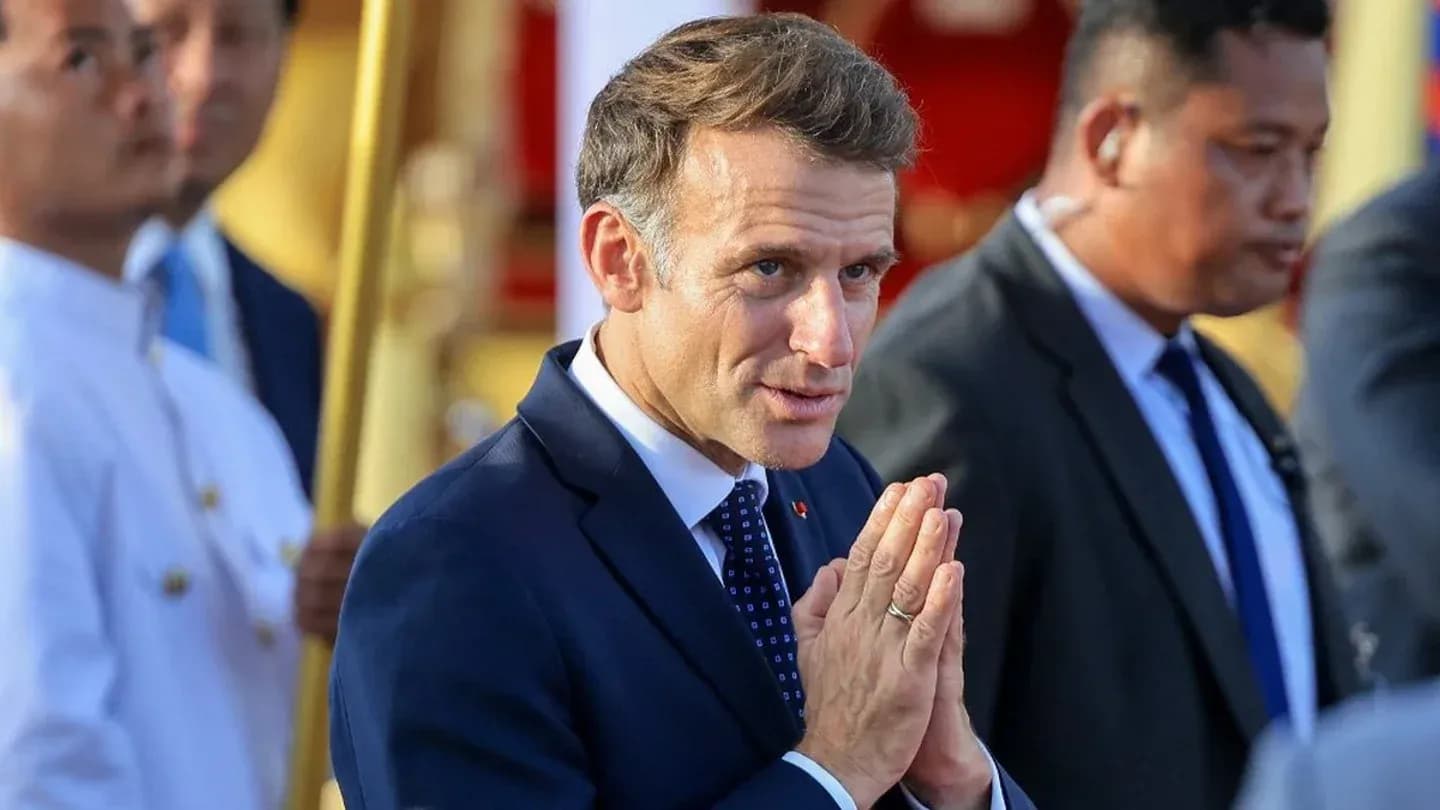
The coincidence of dates is exact: the position on Ukraine became a line in an election programme built on the promise to redistribute scarce public money in favour of the French. Mid-November polls give Le Pen 36% of those who want her as president against 34% for Jordan Bardella; Macron's approval has fallen to a record low of 14%. For Kyiv this means the question of French aid will be decided not in diplomatic offices but at polling stations — and Ukrainian diplomacy meets that moment with a single public instrument: the ambassador's courteous post.
The nearest checkpoint is the EU Council decision on allocating the remaining €45 billion of the loan for 2027: it will be taken after the meeting with the ambassador and will show whether the promise given to Omelchenko holds without Le Pen in the Élysée. The second is the fate of the new €45 billion loan being discussed by the 27 governments. The question for Kyiv is simple and uncomfortable: what is the plan if the promise does not hold?
Primary sources
Documents and statements this story is based on.
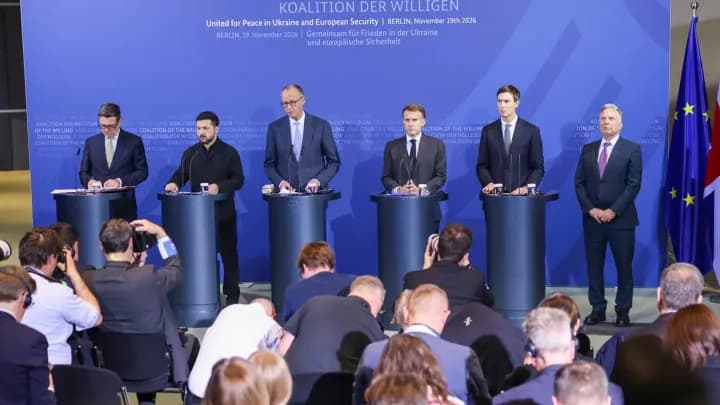
Trump, From Air Force One, Chided Europe Over Billions for Ukraine. Berlin Answered With the Memory of Yalta
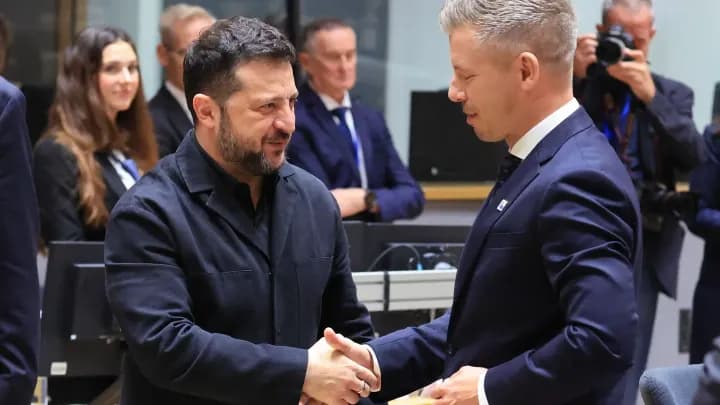
EU ambassadors approve screening of Ukraine's last two clusters: Hungary lifts veto without a single demand
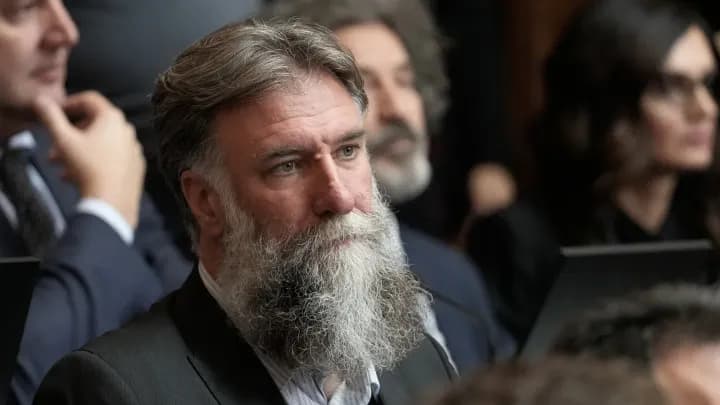
140 votes and the acting presidency: Serbia's parliament elects lecturer-farmer Čupić as speaker
Czechia shuts its border to Russian hockey players despite the CAS ruling