Trump, From Air Force One, Chided Europe Over Billions for Ukraine. Berlin Answered With the Memory of Yalta
Five European officials confirmed the substance of Trump's call into the Berlin summit: ending the war would save lives and money. Some witnesses heard a sharply critical tone toward support for Ukraine; the White House denies it, Kushner says Putin is "comfortable" with Article 5-style guarantees, and Russia launched about 500 missiles and drones at Ukraine that same night.
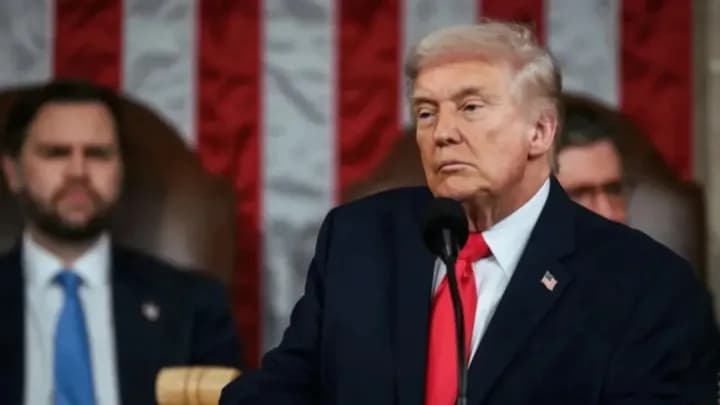
On 19 November, Donald Trump called the Berlin summit of Ukraine's allies from aboard Air Force One, on his way home from meetings with Vladimir Putin and Xi Jinping. European leaders heard from the US president that ending the war would save not only lives but money: five European officials briefed on the discussion confirmed its substance. Three of them, granted anonymity to describe a private meeting, relayed his lament about the waste of billions on weapons and cash for Ukraine in a conflict that is killing so many people. Some of the officials familiar with the call described Trump's tone as strongly critical of Europe's ongoing support for Kyiv; others said he was merely communicating in his usual forthright style. The White House rejects that reading.
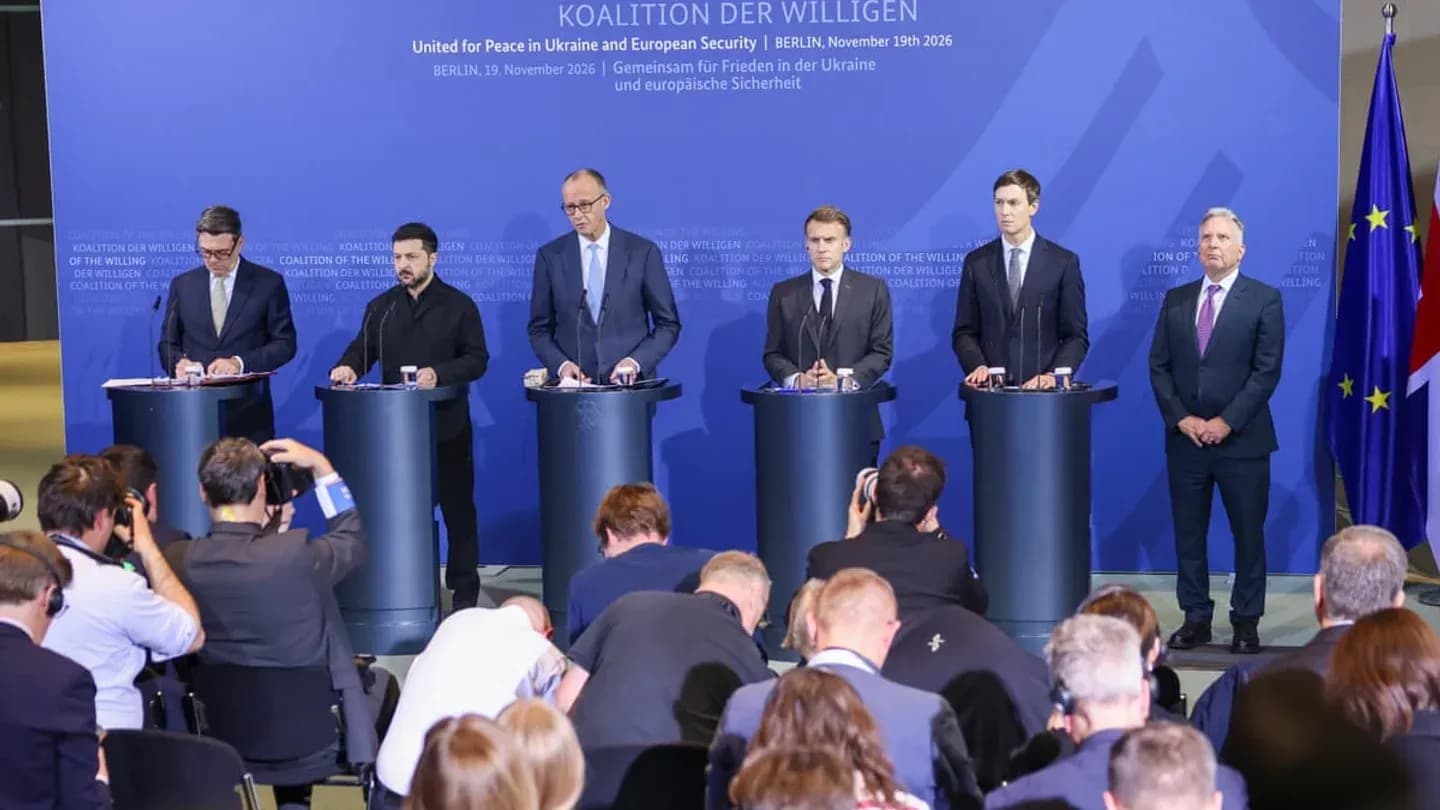
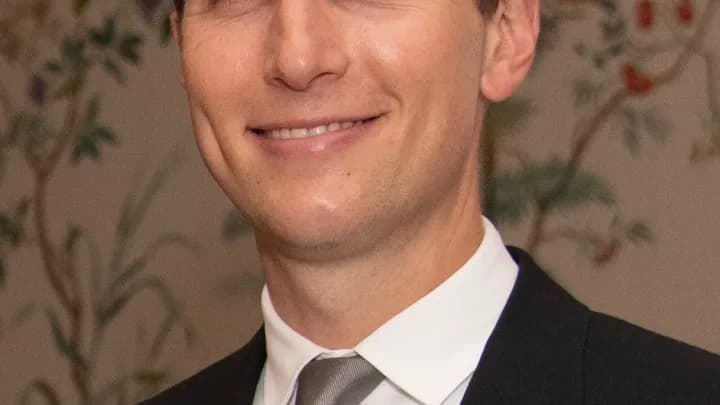
That same day, at the press conference wrapping up the Berlin meeting, US special envoy Jared Kushner announced that Moscow is now ready to accept the very idea of security guarantees for Ukraine modelled on NATO's Article 5. The following night, Russia fired about a hundred missiles and four hundred drones at Ukraine; eight people were killed. It is this gap between the talk of peace and the strikes on Ukrainian cities that will determine whether the "Article 5" formula turns into real guarantees — and who pays for Ukraine's defence in 2027.
A call everyone heard differently
Accounts of what came through the phone diverge. Three anonymous European officials relayed Trump's lament about wasting billions, while some of the witnesses to the call described his tone as strongly critical of support for Kyiv; others insisted the president had merely emphasized how much all countries could save if the war ended and Europe no longer had to pay for aid to Ukraine. A US official briefed on the call called the suggestion that the president urged leaders to stop funding Ukraine "not accurate": Trump, he said, was merely restating his long-held wish to end the conflict. A White House official put it more firmly: the president "was super upbeat about the prospects for peace and praised the leaders in the room", stressing that the war is extremely costly in human lives and financing, and that peace would save money for countries' own defence and prosperity.
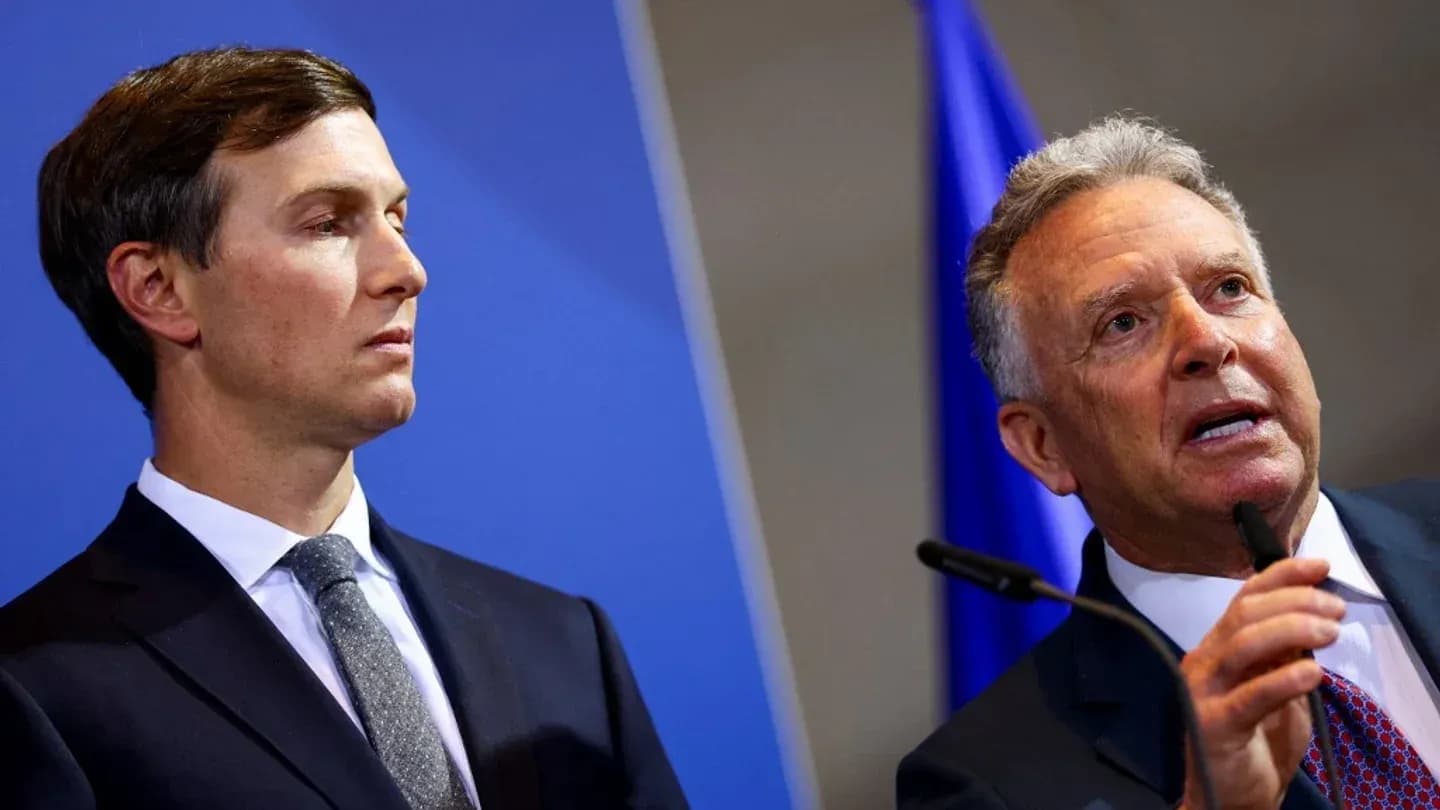
British Prime Minister Andy Burnham, asked whether Trump's view of Putin's appetite for peace was too rosy, answered "quite the opposite": the US president, he said, spoke passionately about the "horrific" loss of life in the nearly five-year war. Special envoy Steve Witkoff added that Trump had "adamantly supported" a peaceful end to the war and instructed him and Kushner to do everything possible within the coalition. The dispute over the tone of the call is not a trifle: it decides whether European governments will treat Washington's pressure on their budgets as official US policy or as an episode they can afford to ignore.
"Article 5" without American soldiers
Kushner's central message from Berlin: the US has supposedly brought the Kremlin to a point where it is "comfortable" with the concept that any security guarantee for Ukraine would be based on an Article 5-type mechanism — NATO's collective defence. "From America's perspective, giving an Article Five-like security guarantee is a really, really big deal. And I think that's something that President Trump is open to," Kushner said, immediately adding: only if it serves America's interest and forms part of a broader security package. He acknowledged that scepticism and distrust of the idea remain in Moscow, and called for restarting dialogue between Europe and Russia.
Volodymyr Zelenskyy answered the formula with a question: "What does it mean, Article 5? That there are some forces of partners on your land. So, my question is: What about American soldiers?" He said Ukraine "would be happy" if the US put bases in the country "like in the Middle East", and repeated that NATO membership remains the best guarantee for Ukraine and the rest of Europe. Emmanuel Macron, facing Russia's maximalist demands, called for reopening the discussion of Ukraine's NATO accession.
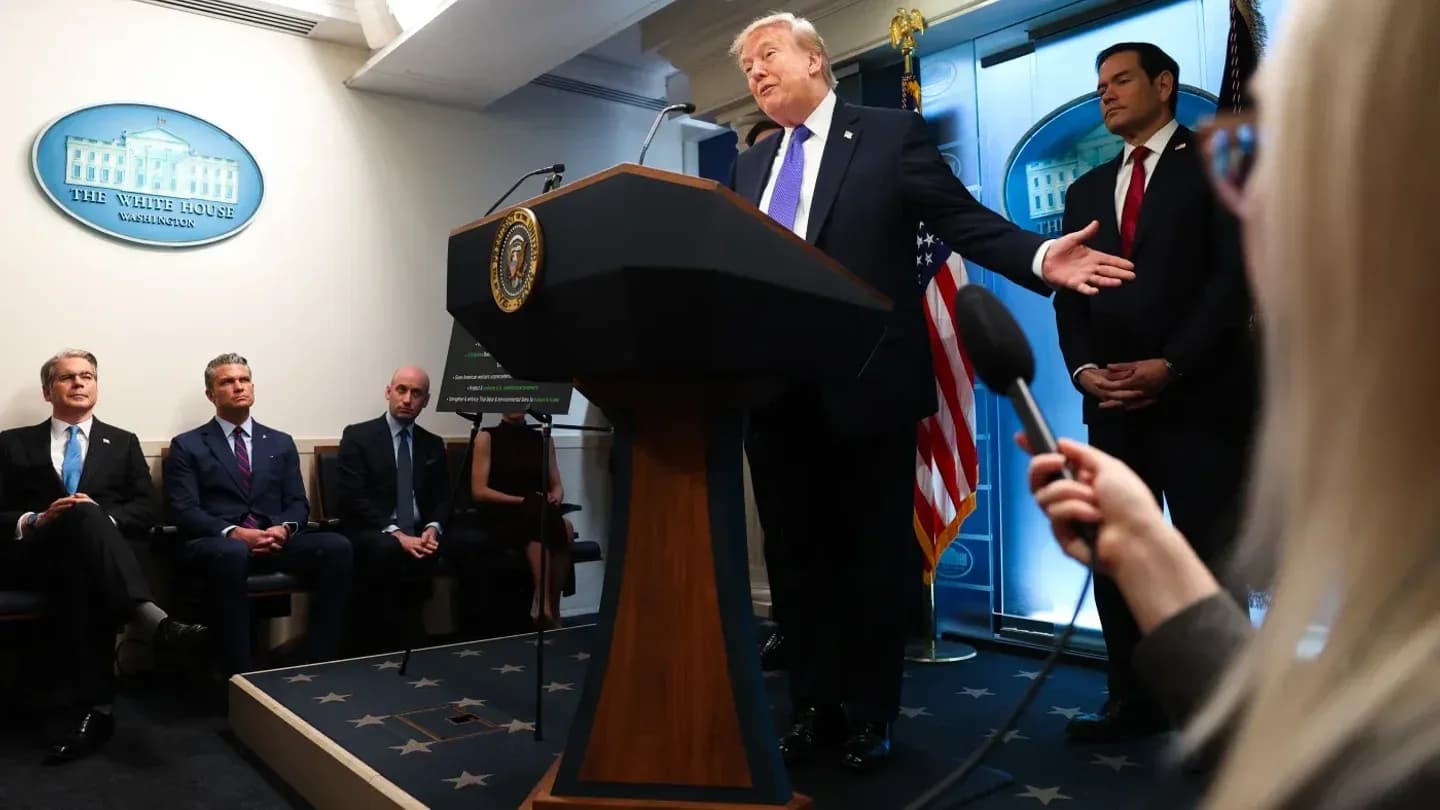
Donald Trump himself, at his Washington press conference on 20 November, never specified what guarantees the US is ready to give: "I don't want to talk about security guarantees, because first we have to make a deal. When we have a deal, we'll join that process." So the formula "Putin is comfortable with Article 5" still rests on the words of an American envoy, while the US president defers the substance of the guarantees until after a deal is signed — a deal that does not yet exist.
A piece of the Berlin Wall against "Yalta"
Berlin answered the risk of a new partition of spheres of influence with a symbol and a procedure. Opening the meeting, Friedrich Merz declared that "a Yalta format will not bring about peace", and gave each guest a piece of the Berlin Wall as a reminder of what the Yalta arrangement meant for this city. "Today, we say to President Putin: end the war in Ukraine," Merz repeated, echoing Reagan's address to Gorbachev. The chancellor stressed that Europe funds Ukraine's defence not to prolong the war but to negotiate from a position of strength.
Donald Tusk, after his call with Trump, was more sceptical: the US president's faith in Putin's goodwill "seems unshakable, even though so far there are no facts to support it", and Russia is unlikely to sit down at the negotiating table in any serious way "before the winter is over". Burnham fixed Europe's red line: "It's not for the aggressor in this conflict to set out wide-ranging and unrealistic security demands." Macron recalled that the peace declaration signed in Shenzhen by Trump, Putin and Xi "does not lead to a reorganisation of the world": in his sequence, guarantees for Ukraine come first, territorial questions next, and a peace agreement only after that.
Procedurally, Europe is trying to cement itself into the process: working groups involving the US, Ukraine, NATO and European institutions — the informal "E5" — are to prepare the documents for the next round of negotiations, probably in Abu Dhabi. "There will be no new round if it does not provide for European participation," stresses a source familiar with the organization of the talks. Merz confirmed the plan for multilateral talks with Ukraine, Russia, the US and Europe, and named the UAE among possible venues.
A €70 billion gap and a night of 500 targets
The money question around which Trump's irritation flared has a concrete size. Kyiv and Brussels estimate Ukraine's additional financing gap for 2027 at €70 billion: €40 billion for defence, €30 billion for the budget. On 18 November the European Commission proposed a new loan of up to €45 billion: up to €25 billion for weapons, including air defence and drones, and up to €20 billion for budget support tied to reforms. The decision requires unanimity of all 27 EU countries on budget guarantees, and leaders will discuss the initiative at a special summit on 26–27 November. The existing €90 billion loan for 2026–2027 was calculated on the assumption that the war would end by the end of 2026. It did not.
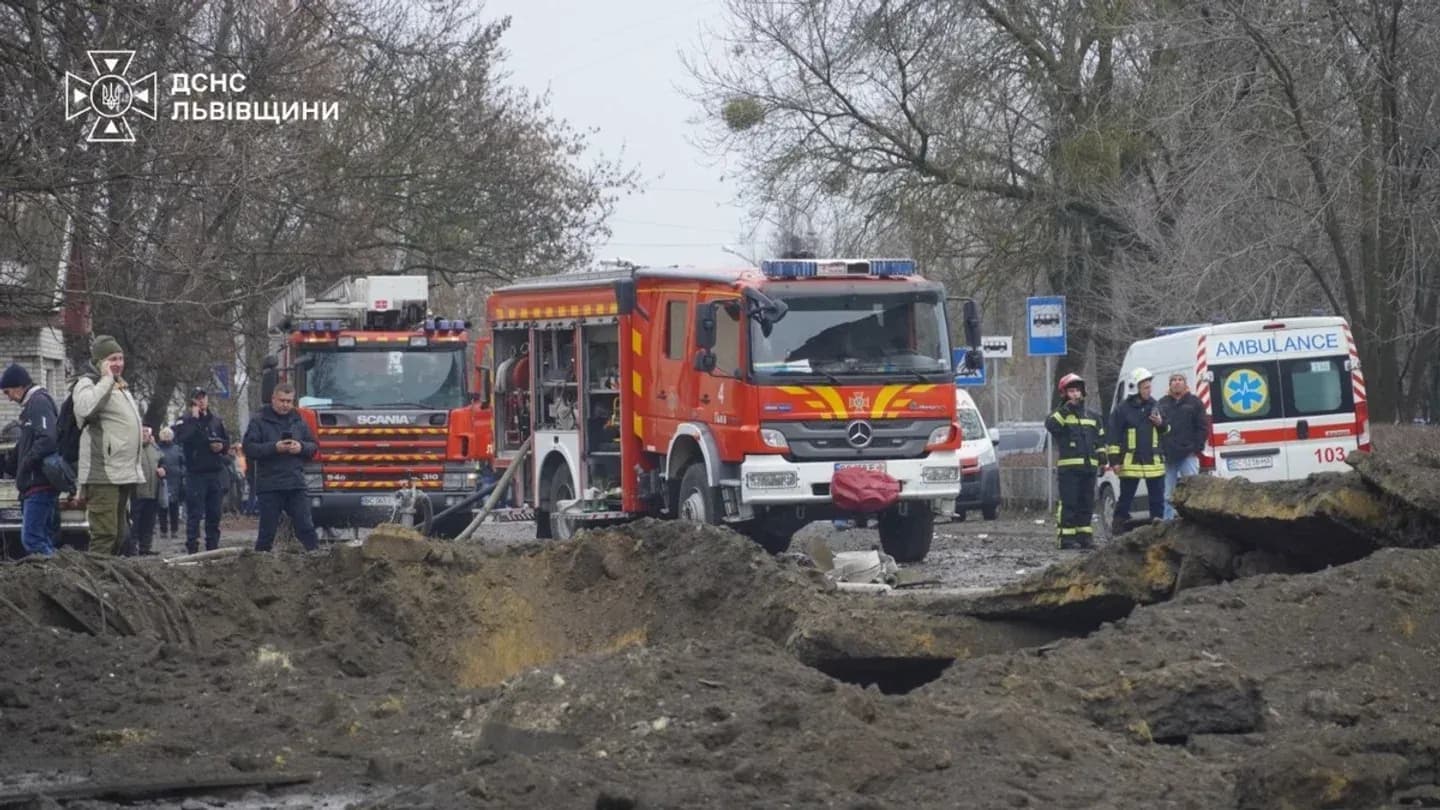
The night after the Berlin meeting and the Shenzhen summit showed what the "peace" Russia is ready for looks like in practice: 84 Kh-101 and Kalibr cruise missiles, up to two dozen ballistic missiles and about four hundred drones — against bridges, energy infrastructure and cities. Air defence neutralized 462 targets, but hits were recorded at 23 locations. Eight people were killed: six in Kyiv and two in the strike on the railway station in Lviv; a hospital was damaged in Kharkiv. One missile probably crossed the border into Poland. Zelenskyy called the strike demonstrative — after Putin's weak meetings in China and the failure of his attempt to "redivide" the world — and instructed the foreign ministry to accelerate air-defence deliveries from partners' packages, while discussing PAC-2 and PAC-3 missiles with the Pentagon.
A separate signal of haste: according to people briefed on the matter, the Trump administration told European and Ukrainian officials that it wants a peace deal between Ukraine and Russia by the start of January 2027. In Kyiv, such deadlines are linked to the risk of a deal on Moscow's terms before possible Democratic control of the US Congress; the sources concede that "significant concessions by Ukraine" would be needed for anything close to a deal.
The coming weeks will show whose words carry weight: the European officials who heard criticism of aid to Ukraine from Air Force One, or the White House that denies that tone. The first checkpoint is the EU summit on 26–27 November, where the €45 billion loan requires unanimity; the second is the next negotiating round, which Europe promises not to hold without itself. For Ukraine this is no abstraction: the answer determines whether the "Article 5" formula becomes soldiers, bases and interceptors on its soil, or remains a phrase whose content the US president refuses to explain until a deal is signed.
Primary sources
Documents and statements this story is based on.