
EU ambassadors approve screening of Ukraine's last two clusters: Hungary lifts veto without a single demand
On 20 November Coreper endorsed the screening results for clusters 4 and 5 for Ukraine and Moldova without debate. Hungary, which had held up the decision since 20 October, tabled no demands. All six clusters are now expected to open in December, but every next step requires unanimity among the 27, and the real brake is Kyiv's unmet rule-of-law interim benchmarks, which Moldova has already cleared.
The EU Committee of Permanent Representatives on Friday, 20 November, approved the screening results of Ukrainian legislation under cluster 4 ("Green agenda and sustainable connectivity") and cluster 5 ("Resources, agriculture and cohesion policy") — the last two of the six negotiating clusters that had remained unopened. Both items went on the agenda as points without discussion after Hungary, which had been holding up the decision since 20 October, signalled that it was ready to move on. This time the documents bypassed the Council's working group on enlargement and went straight to the ambassadors.
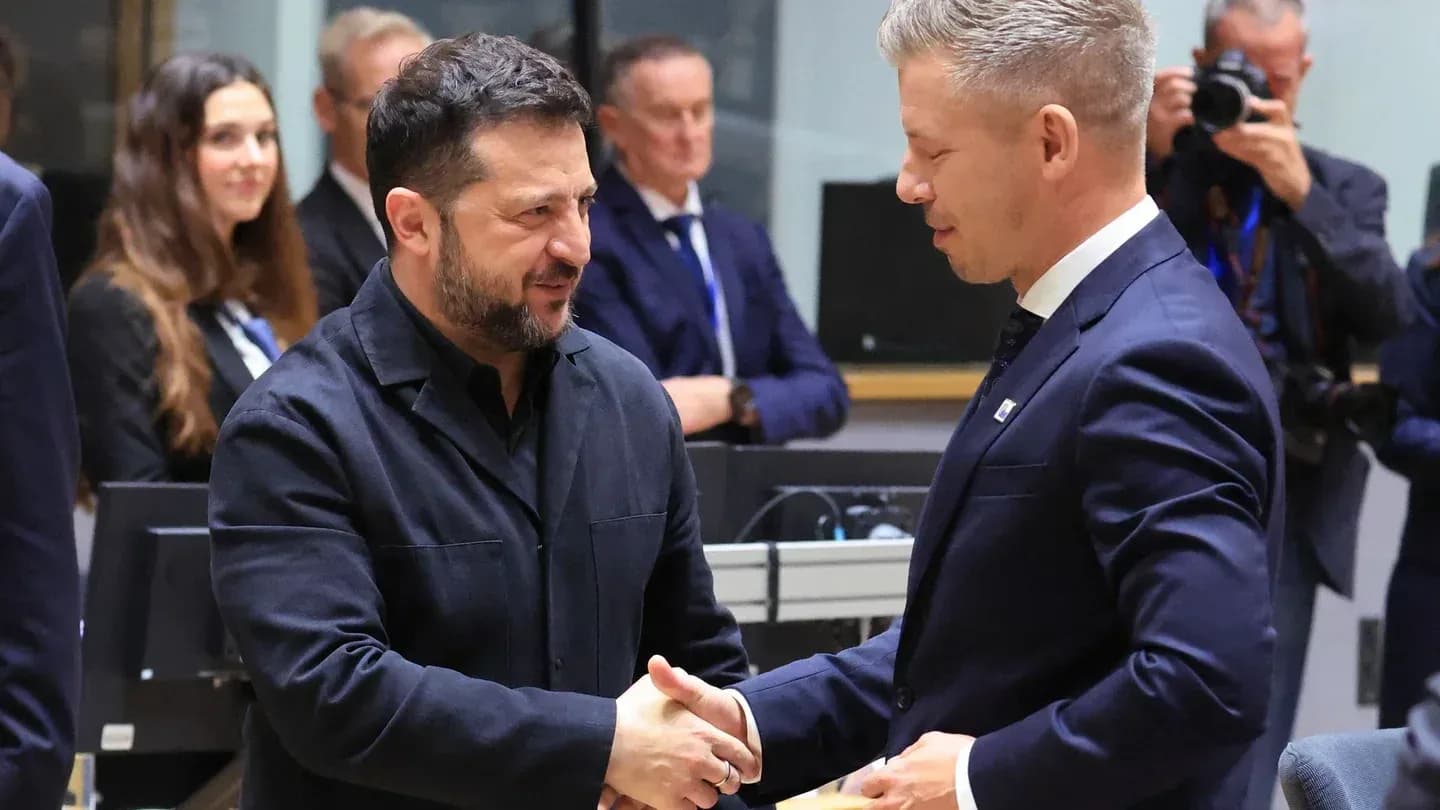
Identical decisions were taken for Moldova. At this step there are no recorded objections left, and the opening of all six clusters for Ukraine is expected in December. The procedure itself, however, is still ahead: Kyiv and Chisinau will receive official letters inviting them to submit their negotiating positions; the EU must then prepare and agree its own common negotiating position on each cluster — and adopting those requires the unanimous consent of all 27 member states. Only after that can the Ukraine–EU and Moldova–EU intergovernmental conferences formally open the clusters. The next General Affairs Council, on the margins of which such conferences are held, is scheduled for 15 December, although a conference could take place earlier if member states manage to agree the common positions in time. In other words, the veto lifted on 20 November concerns only the first decision in that chain.
A veto with no price tag
One telling detail: through a month of blocking, Budapest never formulated a single demand to Kyiv. Objections were raised at working group meetings on 20 and 27 October and on 3 and 10 November — each time without explanation and without a list of conditions. Ukraine's representative to the EU, Taras Kachka, stated as early as the beginning of November that there were no substantive requirements, disagreements or concerns, and that Hungary had only asked for extra time to study the documents. The issue of national minority rights, for years Budapest's lever, was closed by Kyiv on 12 October, when the Verkhovna Rada adopted amendments to the education law (266 votes in favour) — and the very next day, on 13 October, the fourth Ukraine–EU intergovernmental conference officially opened clusters 2 and 3.

EU diplomats explain that pause by Hungary's domestic politics: after the anti-Ukrainian rhetoric of Viktor Orbán's government, Péter Magyar's new team did not want to look too soft on Kyiv. In other words, the veto was a pause for a domestic audience rather than a bargaining chip — and it was lifted without any concessions from Ukraine either. For Kyiv that is a sobering signal: the Hungarian fuse was waited out, without negotiations and without a price, but also without any guarantee that it will not be used again — at every next step requiring unanimity among the 27, Budapest keeps exactly the same option.
A counter the veto cannot switch off
The ambassadors' decision removes one obstacle from the agenda — but not the one that sets the real pace of the talks. Opening clusters is only the entrance to the negotiations: not a single chapter can be provisionally closed until Ukraine meets the interim benchmarks under chapters 23 ("Judiciary and fundamental rights") and 24 ("Justice, freedom and security") and receives a positive European Commission assessment of their implementation — the IBAR report. That counter is not switched on or off by a veto: it counts adopted laws, filled vacancies in the justice system and cases carried through to a verdict.

Moldova has already crossed that line: on 19 November the European Commission sent the Council a report positively assessing Moldova's fulfilment of the interim requirements in rule of law and democratic institutions. Commission spokesman Guillaume Mercier said at a briefing in Brussels that this is now a matter for the Council and the member states: it is for them to examine the report and decide whether the reforms and conditions for this stage have been met. He described Chisinau's pace as "extremely high". Ukraine is far from that. Independent monitoring by the Ukrainian Centre for European Policy, as of the end of the first half of 2026, counted 20.9% implementation of the interim indicators: 29.1% on anti-corruption, 24.9% on fighting organised crime, 11.9% on fundamental rights and 11% on migration, asylum and Schengen. The authors' own caveat matters more than the percentage: Ukraine only received the official list of benchmarks in June 2026, so these figures are a starting point rather than a substitute for the EU's official assessment.
The same figures expose the mechanism of the slowdown. More than 30 bills needed for the interim benchmarks sit in the Verkhovna Rada, only five have passed a first reading, and three were automatically withdrawn after the government's resignation in July 2026 and have not been resubmitted. The Anti-Corruption Strategy for 2026–2030, required simultaneously for the benchmarks, for the 10-point reform plan agreed with the European Commission and for the Ukraine Facility programme, has still not been placed on parliament's agenda. Legislative change is the most common type of task: around three quarters of the interim benchmarks and their components call for, among other things, amendments to legislation. The worst scores, however, belong to tasks where a law alone is not enough: they require sustained investigations, final convictions in high-level corruption cases and real sums of frozen and confiscated assets.

The Ukrainian side does not accept those accusations in silence. Responding to charges of dragging out the European integration bills, Ukraine's representative to the EU, Taras Kachka, rejected suggestions of deliberate foot-dragging and pointed to wartime conditions: parliamentary sessions are interrupted by air-raid alerts and Russian strikes on Kyiv. He also argued that cooperation between the Cabinet of Ministers and the Verkhovna Rada has intensified in recent weeks. Testing that claim is a matter of the plenary hall: three bills withdrawn after the government's resignation and an anti-corruption strategy still absent from the agenda are documents, not circumstances.
The prosecutor general, the constitution and martial law
EU Ambassador to Ukraine Katarína Mathernová outlined in mid-November the knot Kyiv must untie itself: a positive IBAR is possible only after the procedure for selecting the prosecutor general is changed — more transparent and merit-based. Ukraine will not be able to amend the Constitution under martial law even if the votes exist, so the joint EU–Ukraine task force is looking for a lawful workaround; in the estimate of one EU diplomat, it can triple the pace of reforms. Earlier, Vsevolod Chentsov, Deputy Prime Minister for European and Euro-Atlantic Integration, publicly denied the need for a competitive selection for the prosecutor general, arguing that no such practice exists in Europe. The government's position and the EU's requirement still diverge — and that divergence has a name and a job title.
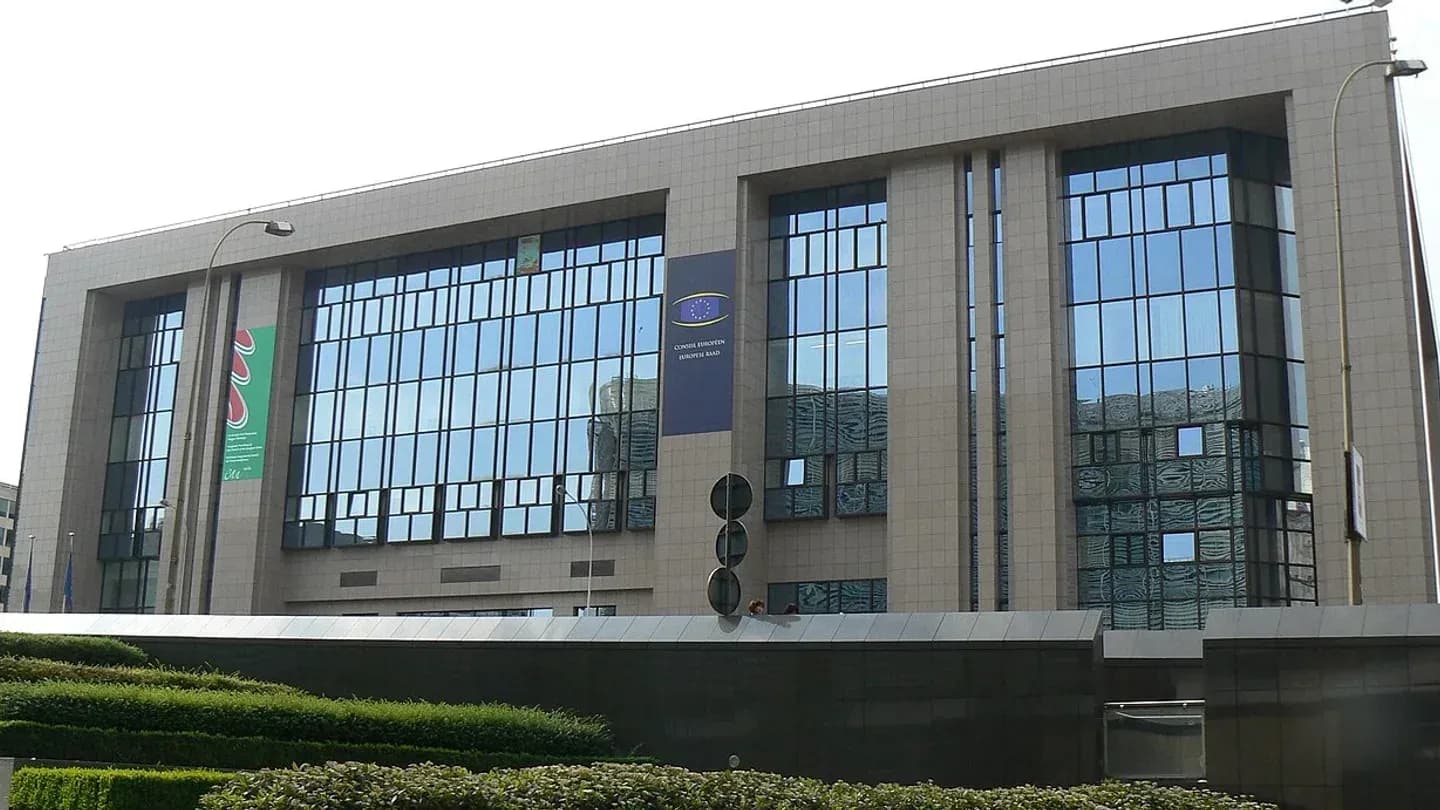
Enlargement Commissioner Marta Kos and Lithuanian Foreign Minister Kęstutis Budrys say they hope to bring Ukraine through these reforms by the end of Lithuania's Council presidency, which finishes in June 2027. Kyiv, for its part, declares a different horizon: according to Kachka, Ukraine aspires to complete the accession negotiations by 2027 or 2028, possibly even earlier if internal reforms move faster than expected. Separately, the diplomat speaks of a calculation that all the necessary legislation will be adopted by the end of 2027 and hopes the European Commission's enlargement assessment will confirm Ukraine's ability to do so. The gap between those two dates — between the end of the Lithuanian presidency in June 2027 and the finish of the talks in 2027 or 2028 — depends not on the presiding country but on parliament's agenda.
What changes for Ukraine
The Coreper decision does not permanently remove any external risk: the common negotiating positions, like the opening of the clusters, require unanimity among all 27 member states, and Budapest keeps its vote at every next step. But from here on the pace is set above all in Kyiv — in the Verkhovna Rada's agenda, in three withdrawn bills that have never been resubmitted, in an anti-corruption strategy for 2026–2030 that has still not made that list, and in the procedure for selecting the prosecutor general, where the government and the EU are speaking different languages. Diplomats expect EU countries to examine the report on Moldova's fulfilment of the interim requirements, sent on 19 November, during the week starting 23 November — a plain illustration of the difference between a candidate that has done its homework and one that still has to write it.
Primary sources
Documents and statements this story is based on.

Czechia shuts its border to Russian hockey players despite the CAS ruling
Ferapontov at the IAEA: why Kyiv's protest came a day before the Board convened
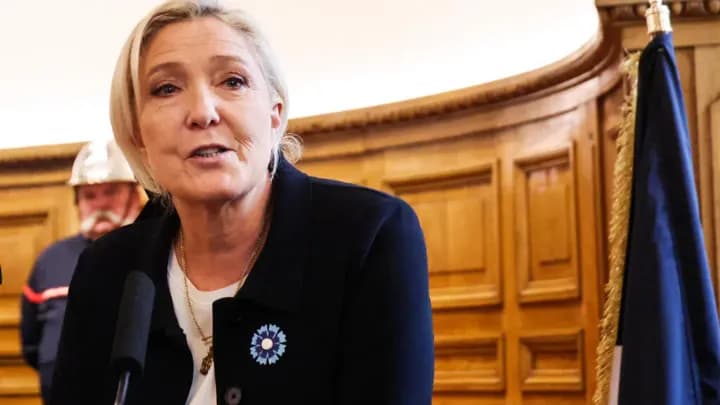
Le Pen to Ukraine's ambassador: France can no longer fund Kyiv, but the EU's €90bn loan pledge will be honoured
Hungary again blocks Ukraine's last two clusters on the path to EU membership