Hungary again blocks Ukraine's last two clusters on the path to EU membership
On November 10 the EU Council's enlargement working party again withheld approval of the cluster 4 and 5 screening — for Ukraine and for Moldova alike. Budapest names no formal requirements, while Brussels' own roadmaps already cast Chisinau as the front-runner: up to 25 chapters closed in 2027, against a closing start for Kyiv only from late in the first quarter.
On Tuesday, November 10, at the meeting of the EU Council working party on enlargement (COELA), Hungary once again declined to approve the screening results for clusters 4 and 5 — the last two of the six negotiating blocs the European Union has yet to open for Ukraine. EU diplomats in Brussels described Budapest's position in two words: 'no change'. That same day the screening of these clusters was not approved for Moldova either: both candidate countries still have their fourth and fifth blocs closed.
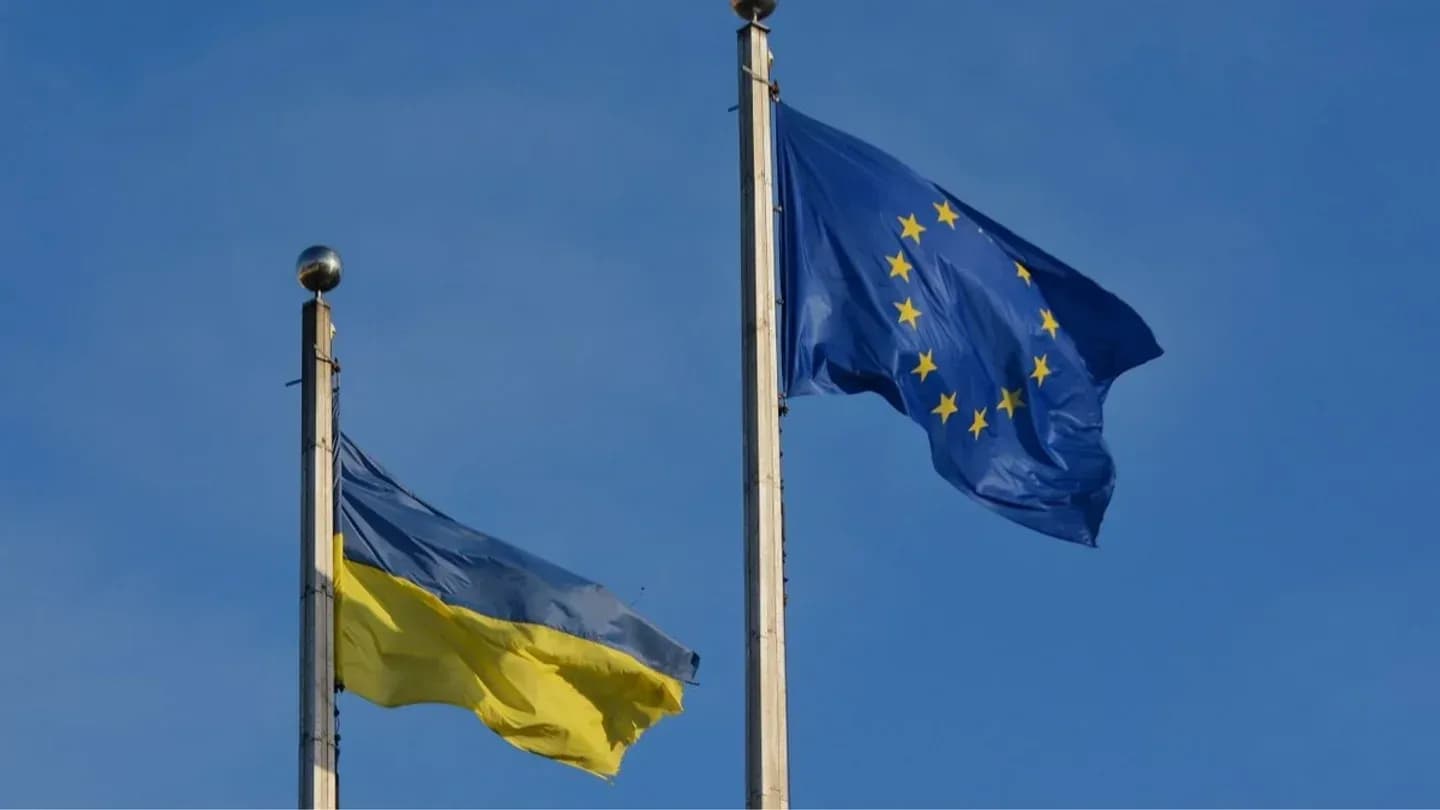
Cluster 4, 'Green agenda and sustainable connectivity', covers transport, energy, trans-European networks, the environment and climate policy; cluster 5, 'Resources, agriculture and cohesion', covers agriculture, fisheries, regional policy and budgetary provisions. Until the Council approves the screening, these blocs cannot be opened — and without opening them, Ukraine cannot even begin closing the corresponding chapters. It is chapter closure that measures real progress toward membership.
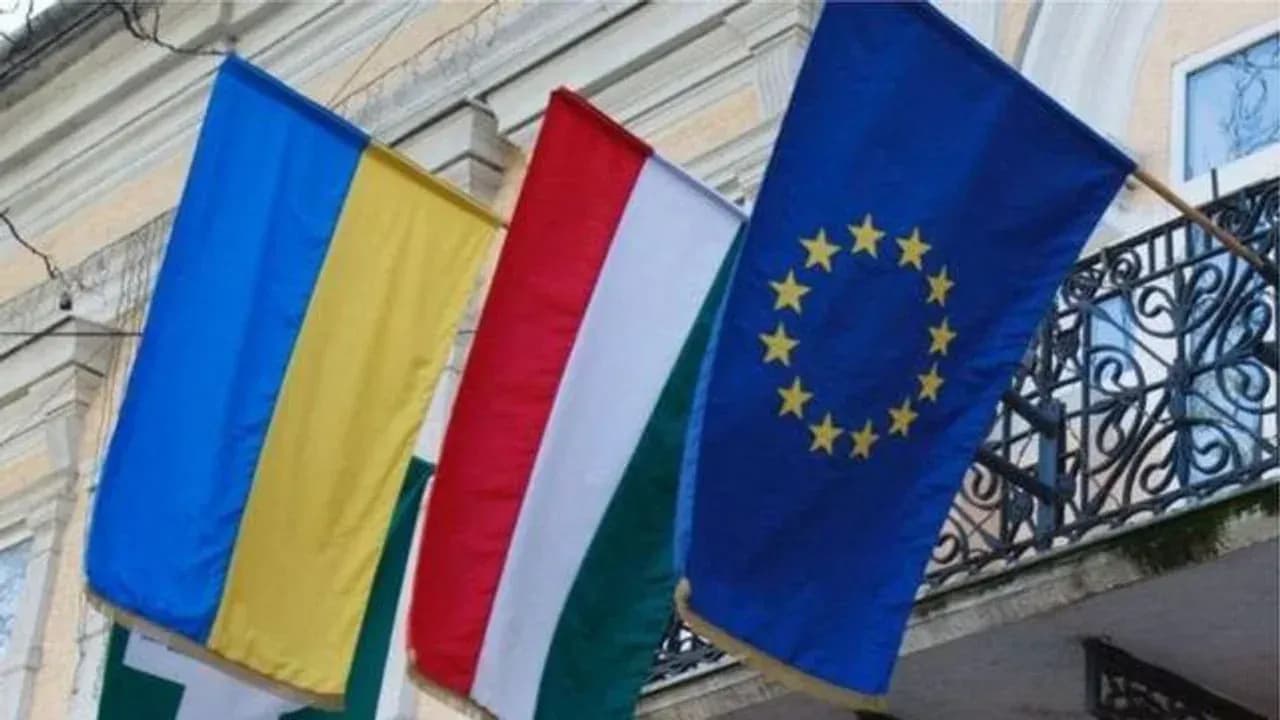
October had promised a breakthrough. After Ukraine's parliament adopted amendments to the education law that Hungary had demanded, Budapest lifted its veto on October 7, and on October 13 the EU formally opened clusters 2 and 3: 'Internal market' and 'Competitiveness and inclusive growth'. Four of six clusters are therefore already in play. But the screening of the last two is going nowhere: on October 20 and 27 and on November 3 and 10, the Hungarian delegation refused each time to approve the results at COELA meetings, naming no additional requirements whose fulfilment would unblock the process.
Kyiv insists this is not a blockade. 'I think the word "blocking" misleads us. Indeed, Hungary asked for additional time to review and discuss certain decisions', said Taras Kachka, Ukraine's permanent representative to the EU, on November 3. According to him, the Hungarian side needs to work through several hundred pages of material, there are no substantive disagreements over national minority rights, and Kyiv and Budapest have 'full mutual understanding' — what remains is agreeing on timing. Ukraine expects to open both clusters by the end of 2026. Kachka also acknowledged that agriculture will remain one of the hardest accession topics, but rejected the need for long transition periods for Ukrainian agricultural products.
Deputy prime minister for European and Euro-Atlantic integration Vsevolod Chentsov added detail on November 4: Budapest has put forward no new demands on minority rights and explains the delay by the need to refine the cluster documents themselves. 'For certain reasons they were not too involved in front-loading', he said, referring to the preparatory work Brussels and Kyiv carried out even while Hungary's veto was in place. 'After all, we have been ready to open all clusters since the end of last year'. In Chentsov's assessment, under the previous Hungarian government this 'was indeed a blockade'; now there is a 'more constructive approach', albeit one with objections still to be removed.
Budapest's public position is blunter than its procedural explanations. Hungary's foreign minister Anita Orbán said in Vilnius on November 5 that Ukraine's EU accession before 2030 'we do not consider realistic', advocating a 'merit-based process' and opposing any acceleration: 'Every country has to go through the same procedure we went through'. At the same time she acknowledged Ukraine's progress — four of six clusters opened — and linked it to improved bilateral relations and the agreement on the rights of the Hungarian minority in Zakarpattia.
While clusters four and five sit idle, Brussels' own documents record Kyiv falling behind Chisinau. In the European Commission's internal ranking of the four enlargement front-runners, Ukraine places fourth; Moldova is judged 'well advanced' in meeting the fundamental benchmarks (IBAR), and the Commission has already prepared a positive report for it. Moldova's roadmap foresees closing nine chapters in the first half of 2027 and up to 25 within the year; Ukraine's own schedule allows it to start closing chapters only at the end of the first quarter of 2027 — and even that looks ambitious given the currently low progress on IBAR.
Enlargement commissioner Marta Kos summed up in Chisinau on November 9 what that means: if Moldova keeps up the pace, it will close up to 25 chapters in 2027 and catch up with Montenegro, which has already completed 23 of 33 chapters while member states prepare its accession treaty. 'That is why 2027 will be the decisive year for delivering results', Kos said, adding that Moldova has a realistic path to concluding negotiations in early 2028. As for the Council, her expectation is a 'green light' for the two remaining clusters — and she expects Moldova to receive it.
Brussels has cast Ukraine in a more modest scenario: if Kyiv speeds up reforms, negotiations could conclude by the end of 2028, and the Commission may submit an interim report on Ukraine's compliance with the rule-of-law criteria (IBAR) to the Council only in the first half of 2027. Clusters 4 and 5 are the most distant point on that timetable: as long as they remain closed, the agricultural, transport, energy and regional chapters will not appear on the negotiating agenda at all.
This narrowing of the negotiating space coincides with the diplomacy of ending the war. On November 10 the first day of trilateral Ukraine–US–Russia talks ended in Abu Dhabi; foreign minister Andrii Sybiha said Ukraine had handed its partners proposals for ceasefires in the Black Sea and energy spheres and is waiting for Russia's reply. Kachka confirmed that Kyiv holds to the target of completing accession negotiations in 2027–2028 and feels the urgency differently from EU capitals — because of daily shelling and fighting at the front.
No one — not the Hungarian side, not the Ukrainian government, and EU diplomats state this as fact — has named formal requirements whose fulfilment would unblock the clusters. Kyiv's strategy now amounts to arrangements already fulfilled, bilateral dialogue, and waiting until Budapest finishes reading several hundred pages. The next test is calendar-based: the government publicly expects to open both clusters by the end of 2026. If the coming COELA sessions again end in 'no change', Ukraine will enter 2027 with two clusters still shut — precisely when Moldova, under Brussels' plans, will be closing chapters by the dozen.
Primary sources
Documents and statements this story is based on.