
Putin rules out ceasefire talks after third strike of the week on the Crimean Bridge, vows a “far more painful” response
The Shenzhen news conference closed the latest attempt at local truces: after the third strike of the week on the crossing, the Kremlin rejected both ceasefire talks and the moratorium on strikes against energy and the Black Sea. The same day in Berlin, partners called on Russia to accept an energy truce for the whole winter.
Vladimir Putin has publicly answered the strikes on the Crimean Bridge for the first time: at a news conference in Shenzhen after the trilateral meeting with Donald Trump and Xi Jinping, he said Russia would not negotiate a ceasefire and promised a response “far more painful” than Ukraine’s attacks on the crossing.
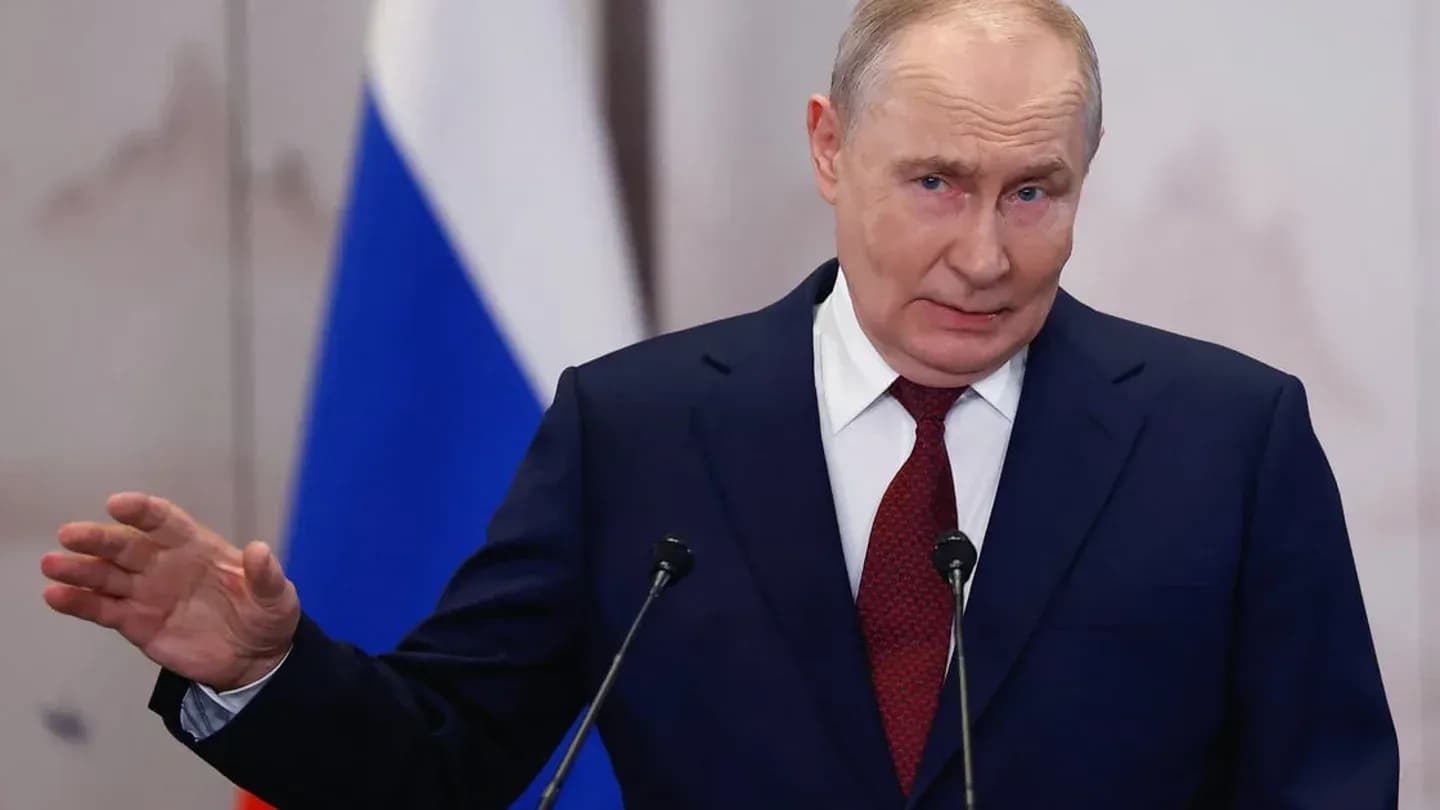
According to Putin, he had discussed a possible pause in attacks — including at sea and against energy infrastructure — with Russia’s Security Council and had “asked everyone to give it further thought and come back to it”, hoping some kind of agreement could be reached. “But after the strikes on the Crimean Bridge, there will be no agreements. We will respond to these strikes,” he said. What that response would be, the Russian president did not specify.
For Ukraine this closes the latest attempt to agree local truces. Those were exactly the proposals Kyiv brought to the Ukraine–US–Russia trilateral talks in Abu Dhabi, whose first day ended on 10 November: Foreign Minister Andrii Sybiha said then that the Ukrainian delegation had handed partners concrete offers of a truce in the Black Sea and in energy and was waiting for Moscow’s answer. That answer has now been delivered in public — a refusal.
The third strike in a week
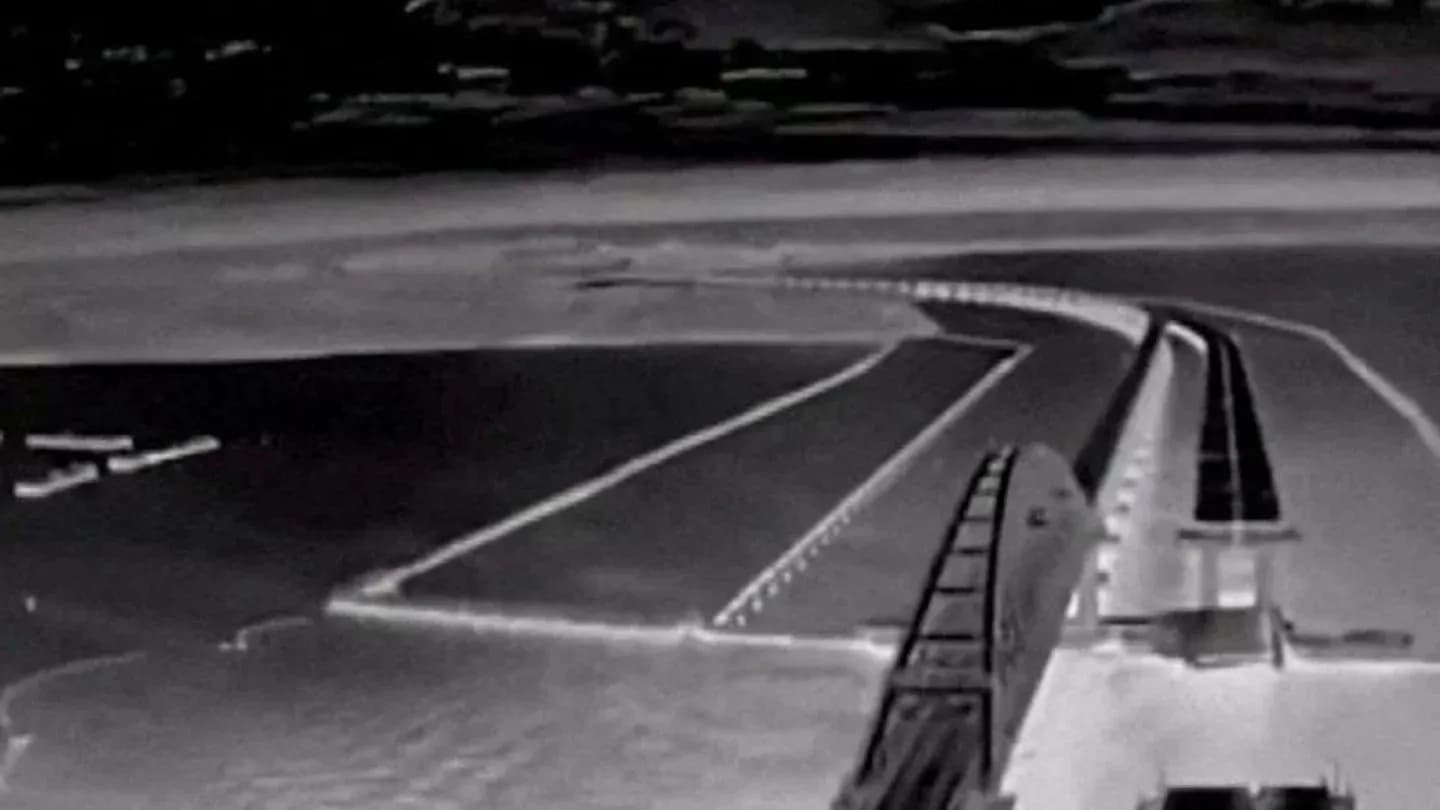
Overnight on 19 November, Ukrainian Navy Neptune coastal missile systems struck the railway infrastructure of the bridge across the Kerch Strait: the tracks were damaged, a hit was recorded near the arch, and train traffic was halted. The General Staff and the Defence Ministry confirmed the strike during the day on 19 November — before Putin commented for the first time in public on the attacks on the crossing. It was the third attack on the bridge in a week: on the morning of 16 November Ukrainian drones hit it at least three times, and overnight on 17 November the Defence Forces delivered at least fifteen strikes, after which one of the metal arches and the road span beneath it collapsed into the sea and the debris blocked the Kerch–Yenikale channel, the main shipping route between the Sea of Azov and the Black Sea.
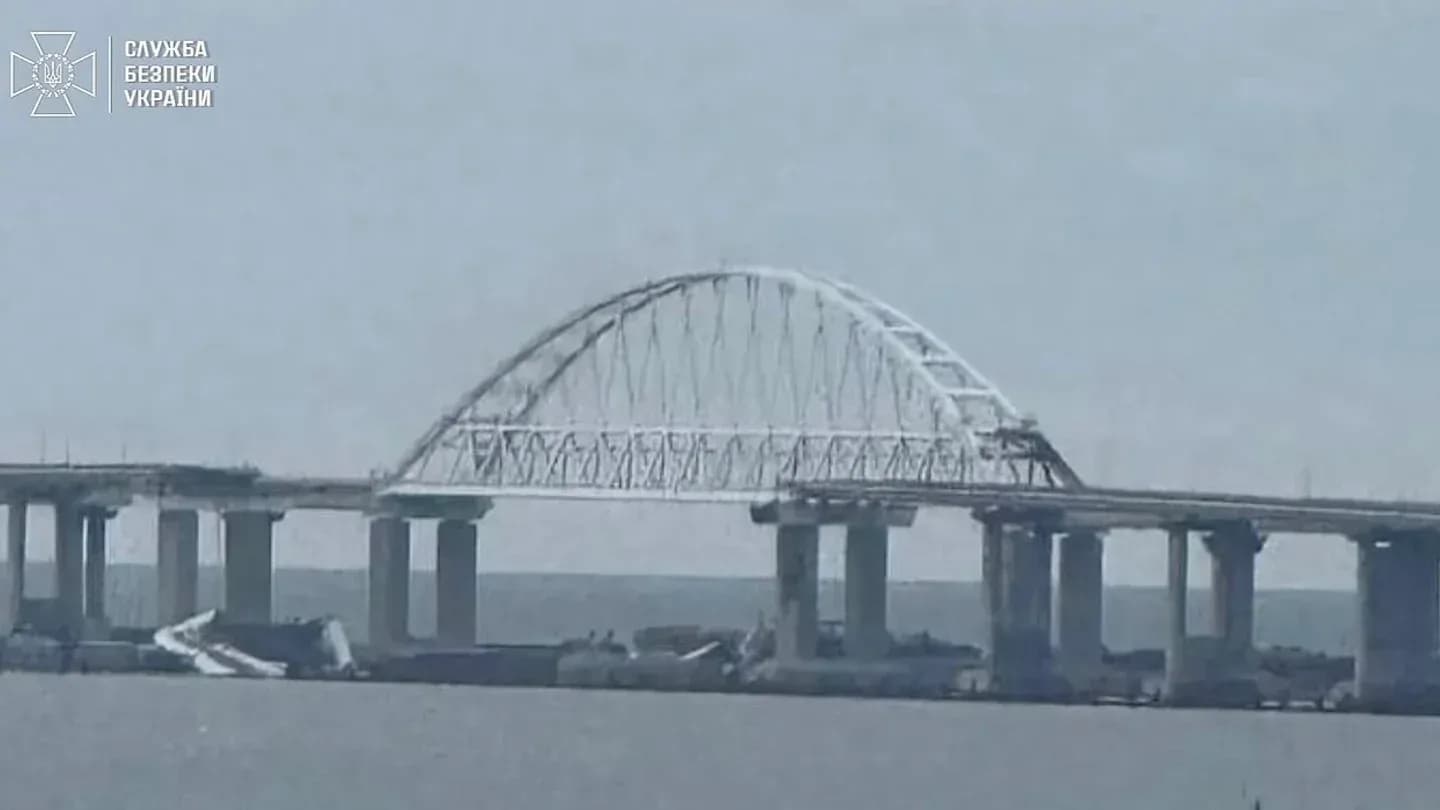
Putin called the bridge an “exclusively civilian facility” that had “long ago” stopped being used to carry military equipment, ammunition or petroleum products, and claimed the railway section had already been restored while the road section suffered “serious damage”. None of these claims can be independently verified. Ukraine’s General Staff describes the crossing in opposite terms: it is the “main land artery” through which the Russian army supplies its occupation groups in the south with fuel, ammunition and equipment. The Defence Ministry counted out loud: “19 kilometres of rails. 38,000 sleepers… And not a single train this morning. For Russia this bridge is a conveyor of war.”
Shenzhen and Berlin on the same day
Putin’s remarks came after the first-ever trilateral meeting of the US, Chinese and Russian leaders on the sidelines of the APEC summit in Shenzhen, and after a separate informal Trump–Putin conversation that lasted about forty minutes. The same day, the “coalition of the willing” met in Berlin: Trump joined by phone from Air Force One and, according to several European officials speaking anonymously, expressed firm scepticism about new billions for military support to Ukraine while insisting that Putin was supposedly serious about peace. British Prime Minister Andy Burnham called that reading “the exact opposite” of reality. Chancellor Friedrich Merz explained the European logic: Europe finances Ukraine’s defence “above all to make peace negotiations possible and to conduct them from a position of strength”.
In Berlin the leaders of Germany, France, the United Kingdom and Ukraine adopted a joint statement calling on Russia to agree to an energy ceasefire for the whole winter as a first step towards ending hostilities, and separately to agree on a Black Sea ceasefire so that shipping and food exports from the region stay safe. They condemned the systematic escalation of Russian missile and drone attacks on civilians and civilian infrastructure, and confirmed that strengthening Ukraine’s air defence — above all with systems able to intercept ballistic missiles — remains a priority. In effect, this was the written version of the very pause in strikes that Putin in Shenzhen declared impossible.
Merz announced that a new round of talks between Ukraine, the US and European countries would take place that same evening of 19 November at the Federal Chancellery in Berlin: the advisers of the three sides, he said, would keep discussing ways to reach a just and lasting peace. The chancellor also said four-way negotiations — Ukraine, Russia, Europe and the United States — could be held in the United Arab Emirates; he answered this way to Putin’s proposal that European representatives first come to Moscow to discuss their positions. “Only negotiations with Ukraine and Europe together can succeed. The Yalta format will probably not bring peace,” Merz said.
Trump himself told journalists after the summit that Putin had been “extremely outraged” at Zelenskyy over the attack on the bridge and that he understood those feelings. At the same time, according to the journalist who spoke with the US president, Trump agreed with Zelenskyy that no final decisions on the war in Ukraine would be taken without the Ukrainian president’s participation.
Volodymyr Zelenskyy, commenting on the operation against the bridge, recalled that Ukraine had repeatedly offered Russia de-escalation steps and had heard only “loud refusals” in return. “Russia strikes our infrastructure every day, including bridges — in Zaporizhzhia, Dnipro, Kyiv and Odesa Oblast. We are restoring our infrastructure. But we are also reminding Russia that war will always return to where it began,” the president said. In Berlin he named the summit’s key topics as covering Ukraine’s budget needs, strengthening air defence and a winter package of ballistic interceptors, and after the meeting stated that Russia had lost 2026 on the battlefield but was trying to “win it back” against civilians through air terror. At the post-summit press conference Zelenskyy added that de-escalation proposals for the Black Sea had reached Moscow through various partners and that Putin had always turned them down, while the intensity of Russian strikes on cities and infrastructure has been growing since summer.
The price of a symbolic strike
The question Kyiv still leaves unanswered in public is not military but strategic. An officer involved in the operation told Western journalists that the 16–17 November strikes were planned as a symbolic gesture ahead of the Trump–Putin–Xi meeting — “to show that Putin is weak”. Neither the General Staff nor the President’s Office has officially explained that calculation.
Things should be called what they are: there was no functioning moratorium on strikes against Ukraine’s energy system even before Shenzhen — Russian missiles and drones hit thermal plants and substations daily, and it is those repeated hits that decide whether regions get through the winter without emergency blackouts. The Kremlin’s refusal therefore does not create the winter threat from scratch: it closes the only mechanism under discussion that could have reduced it, a pause that Berlin, Paris, London and Kyiv were pressing for. That, not merely another destroyed span, is what Ukraine’s power system will have to pay for this winter.
The demonstration of force ahead of the summit took place; whether its authors calculated that the public answer would be a refusal of any winter pause in strikes is a question society is entitled to hear answered by the General Staff and the President’s Office, not only through triumphant operational summaries. The nearest tests of both sides’ intentions are the evening advisers’ round in Berlin announced by Merz and possible four-way talks in the UAE. Putin never said what the promised “far more painful” Russian actions would be; Ukrainian cities are entering winter without any agreement on silence.
Primary sources
Documents and statements this story is based on.
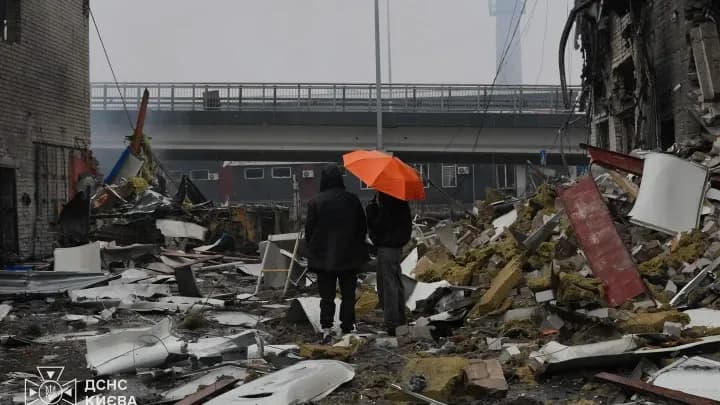
Night of Nov 20: eight killed, Kyiv bridges hit, the west left in the dark
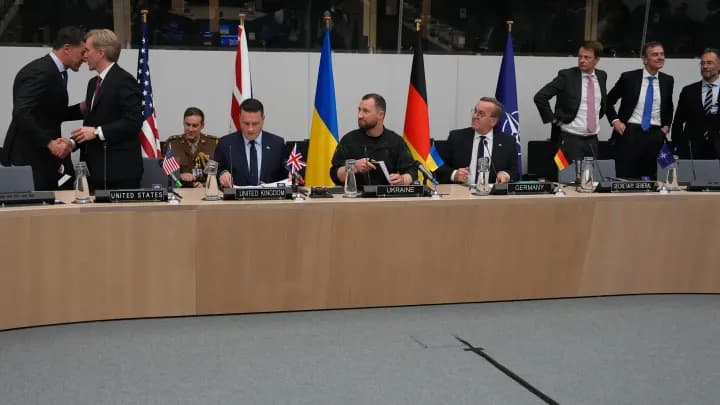
The Pentagon publicly broke with Kyiv: Colby called Wildberries strikes ineffective, allies pushed back
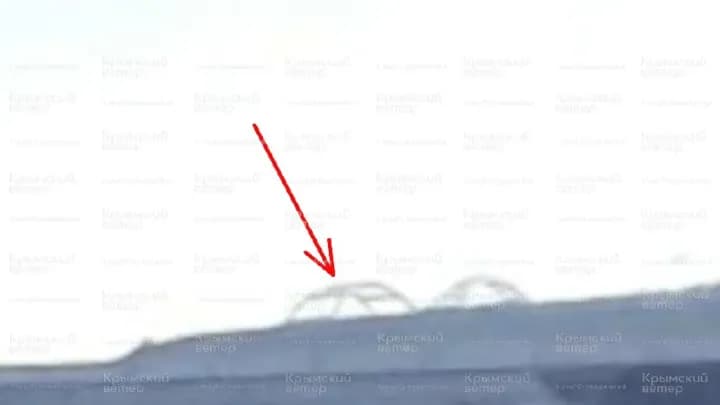
Crimean bridge after the overnight strike: arch 'warped', crossing shut from night to midday, no verified photo

November 5 attack on Vinnytsia region: three injured, fire extinguished