
France ablaze: student protests, torched schools, 2,000 arrests — government blames far-left while education system crumbles
France faces its biggest unrest since the Yellow Vests: over 900 protests, fires in high schools, 1,949 arrests in a single day — and a government blaming the far-left while teacher shortages and crumbling schools remain unaddressed.
The protests started last week in the Paris region. Lycée students walked out, demanding more teachers, smaller classes, and repairs to crumbling school buildings. Within days, the movement spread across the country.
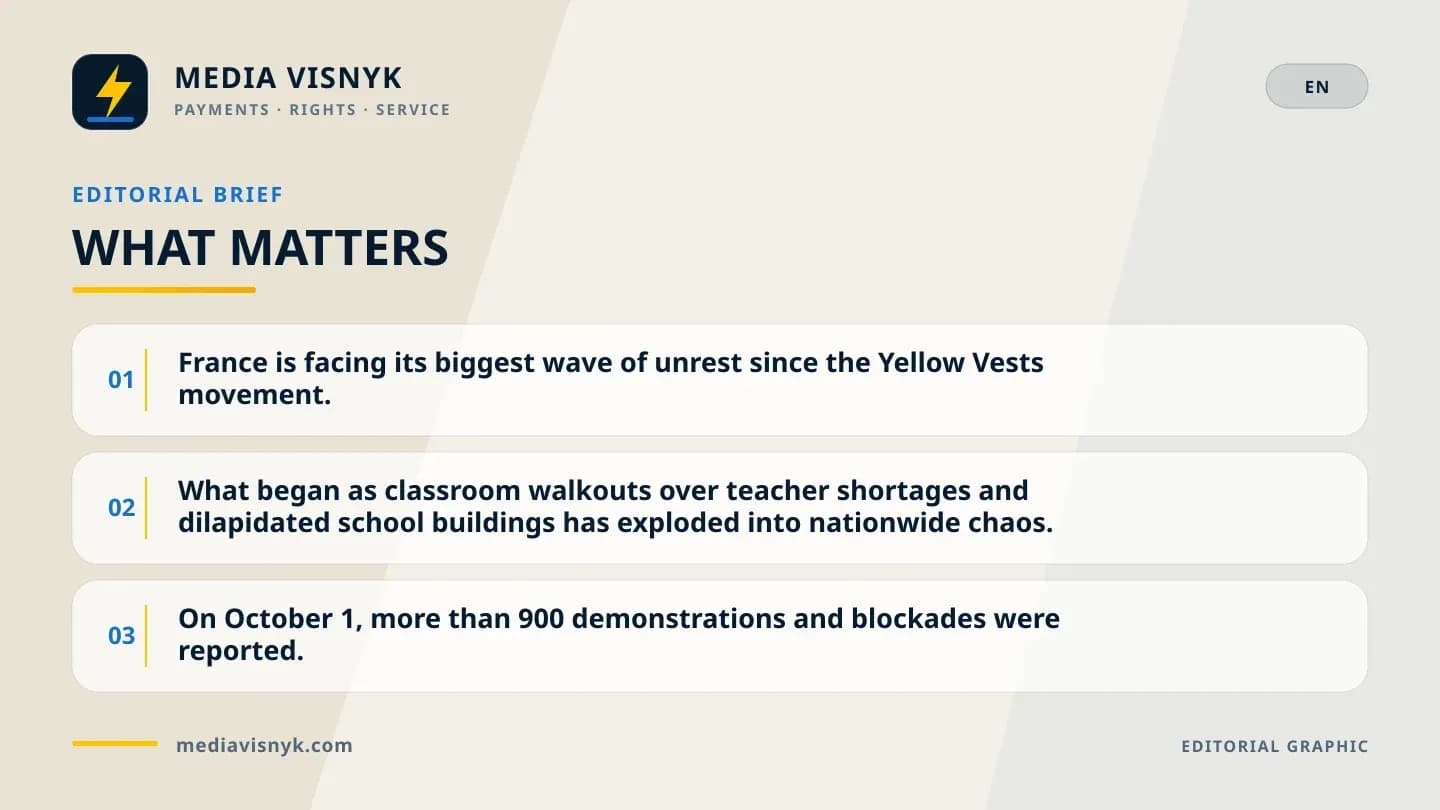
October 1 marked a dramatic escalation. According to the BBC, 1,027 of France’s roughly 3,700 high schools were affected by protests, with 222 blocked. At least 30 universities were also blockaded, including in Rennes and Paris. Public transport in Marseille and Strasbourg was halted due to vandalism and threats of violence.
The violence has been real and disturbing. In Nantes, a fire damaged the lobby of Lycée Nelson Mandela. In Rouen, a school entrance was set alight. In Marseille, staff at Lycée Victor Hugo were doused with petrol. In Auchel, northern France, a school principal was hit in the ear by a firecracker.
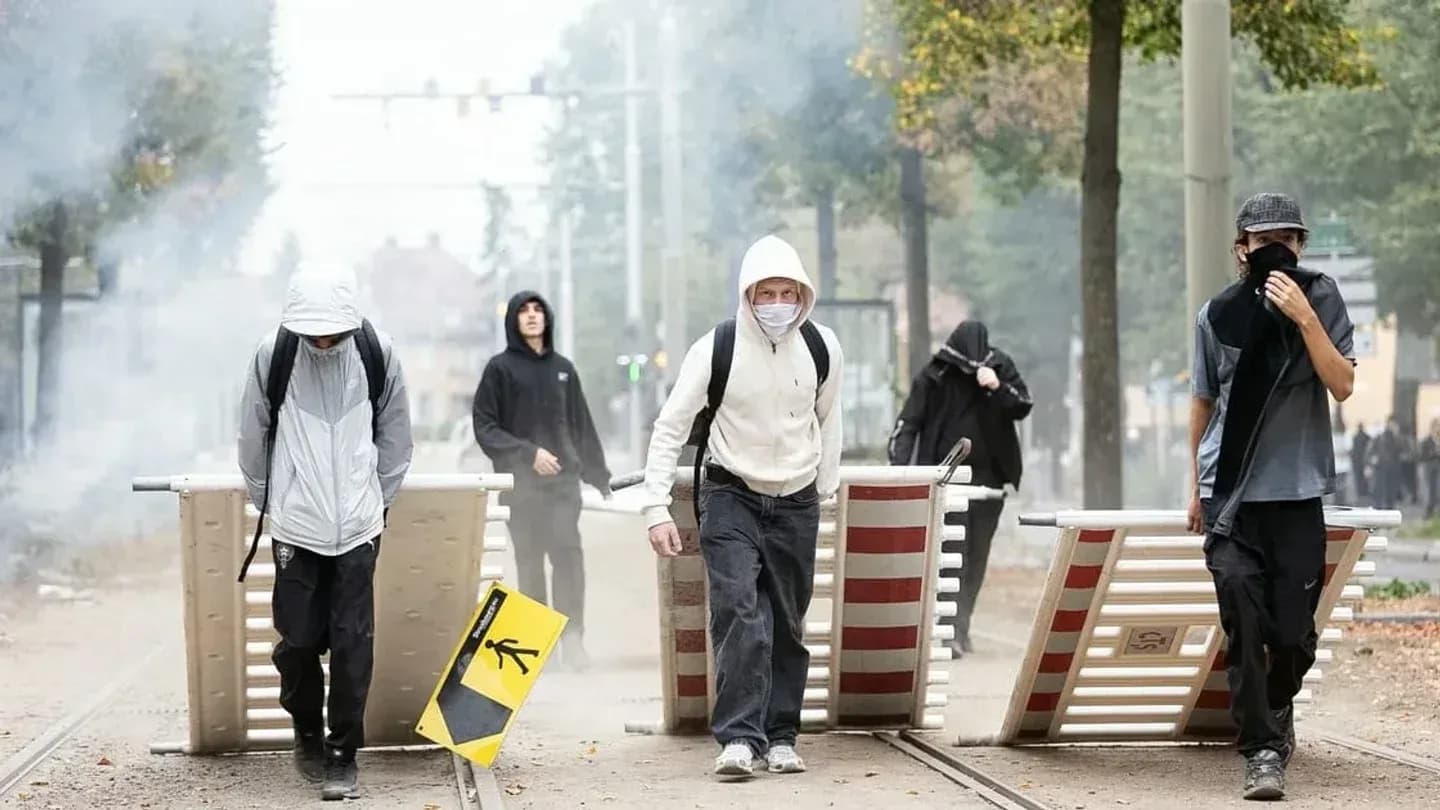
Yet the government’s response has been to frame the unrest as purely criminal — «urban violence» — and to point fingers at the hard-left party La France Insoumise (LFI). Reuters reported that intelligence services briefed the crisis meeting that LFI was behind the protests. Prime Minister Lecornu has not provided independent evidence for this claim.
The political blame game is in full swing. Marine Le Pen, leader of the far-right National Rally, declared: «This is no longer student protests. This is rioting organised by professionals under the supervision of LFI deputies.» She called for a new anti-riot law. Jean-Luc Mélenchon, the LFI leader and presidential candidate, insisted he supports non-violent protest and that accusations won’t solve the problem. One LFI mayor, Bally Bagayoko, defended the idea that violence can be legitimate in certain cases — handing ammunition to the right.
But listen to the students themselves. Raphael, a 17-year-old from Strasbourg, told AFP: «The building is falling apart, the canteen is too small. Zero budget, zero resources, not enough supervisors.» This is not a political manifesto. It is the voice of a generation abandoned by the state.
The context makes the government’s narrative even harder to swallow. The protests erupted as France debates a 2027 budget that includes spending cuts. Instead of investing in schools, the government plans to tighten the purse strings. When students take to the streets, they are met with tear gas and accusations of extremism.
Marseille’s left-wing mayor Benoît Payan condemned the violence but acknowledged the legitimate concerns of young people. Nice’s right-wing mayor Eric Ciotti suggested parents should pay for school repairs — shifting the cost of state failure onto families.
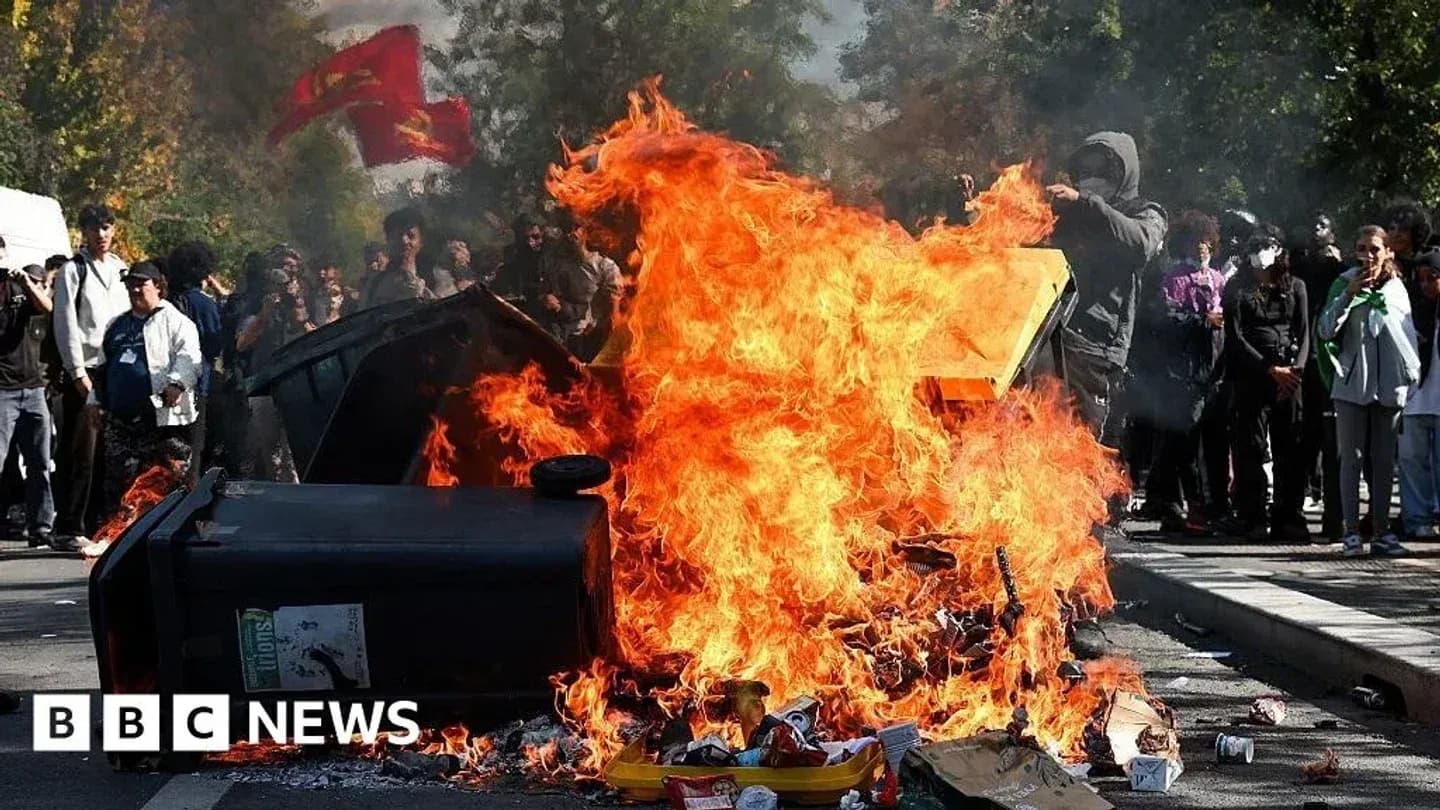
As of October 2, about 400 schools remain closed. The protests show no signs of abating.
France is trapped in a familiar pattern: the government avoids addressing the root causes of social unrest by blaming political opponents. The far-right exploits the chaos to push for repressive laws. Meanwhile, students who simply want a decent education are left with burning buildings and empty promises. Unless the government shifts its focus from finger-pointing to fixing schools, the fire — literal and metaphorical — will keep spreading.
Primary sources
Documents and statements this story is based on.
- BBC News — Fires break out at French schools as students protest nationwide
- Reuters — Attackers douse teacher with petrol as student protests rage across France
- The Guardian — France school protests escalate as PM holds crisis cabinet meeting
- CNN — France protests high schools violence
- France 24 — Hundreds of French schools remain closed as student protests turn violent
- Le Monde — French high school protests spread, hundreds of arrests amid unrest
- Reuters — Student protests and French public sector strike heap pressure on Macron
- AP News — France protests education
- RFI — French school protests spread to universities as blockades intensify
- Politico EU — France government crisis meeting student school blockade
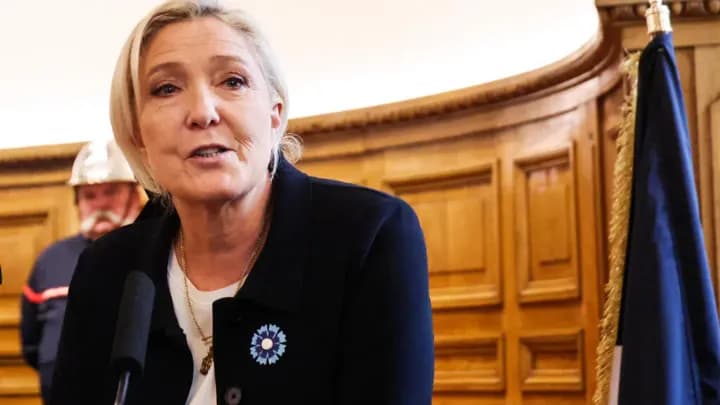
Le Pen to Ukraine's ambassador: France can no longer fund Kyiv, but the EU's €90bn loan pledge will be honoured
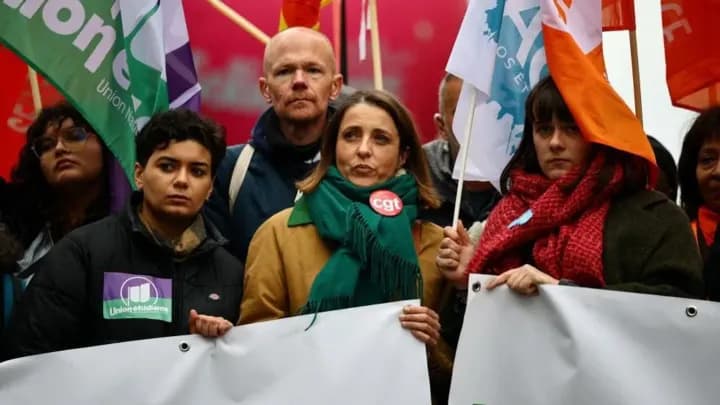
France’s 5 November protests: new turnout estimates and government response
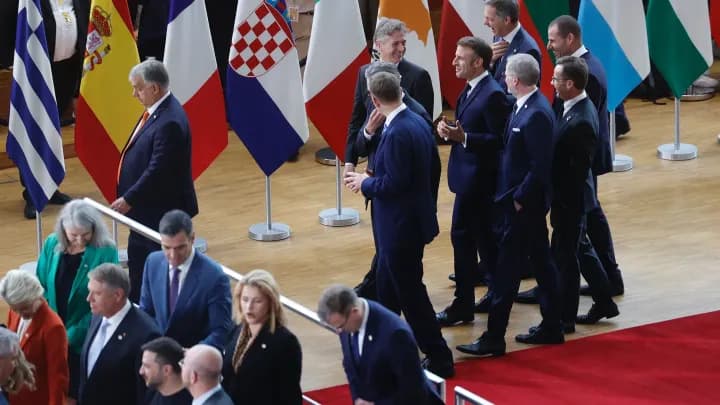
‘I’m bored’: book reveals Macron’s messages about EU leaders
Europe on Fire: 410,000 March in France, Nearly 1,000 Arrested as Cost-of-Living Revolt Engulfs the Continent