While the world watches missiles and oil, Yemen's new fighting has forced more than 100,000 people from their homes
The United Nations says at least 125,000 people have been displaced in Yemen since the beginning of September, while thousands have crossed the sea to Djibouti. UNICEF reports more than 57,000 displaced children, disrupted health facilities and schools, and warns of the dangers of the maritime route.
 1 / 4
1 / 4Tens of thousands displaced in a matter of days
On September 13, the International Organization for Migration said 85,818 people had been displaced in Yemen, including 82,164 since the beginning of September alone.
A day later, the UN Office for the Coordination of Humanitarian Affairs gave a substantially higher estimate: at least 18,000 households, or around 125,000 people, displaced since the start of the month.
Those numbers are not necessarily contradictory.
They reflect different reporting dates and monitoring systems during a rapidly changing crisis.
UNICEF provided another snapshot on September 16: more than 104,000 people had been displaced over two weeks, including more than 57,000 children.
That last figure captures what strategic maps often do not. In a matter of days, tens of thousands of families have again had to abandon their homes.
Taiz and the western front are among the hardest-hit areas
IOM's September 13 figures showed Taiz as the centre of the new displacement wave.
Around 56,000 people had been displaced there, including from the districts of Jabal Habashy, Al Ma'afer, Maqbanah, Mawza and Al Wazi'iyah.
More than 19,000 were recorded in Lahj, more than 8,000 in Al Hodeidah, while Aden was hosting more than 2,500 displaced people.
For some families, this is not their first escape.
IOM says people have been displaced for a second or third time during Yemen's 12 years of conflict.
That matters. Families repeatedly uprooted by war may have far fewer savings, belongings or relatives able to support them than they did the first time they fled.
More than 57,000 displaced children
Children account for a striking share of the latest displacement.
UNICEF says more than 57,000 children have been displaced during the past two weeks.
The disruption extends well beyond housing. Fighting in western Taiz, southern Hudaydah, Marib and other affected areas has interrupted services at 26 UNICEF-supported health facilities.
Another 243 schools have closed or suspended learning, affecting more than 137,000 students.
Since September 3, UNICEF has also reported at least nine children killed, 12 injured and three missing following an attack on the road from Yemen's western coast to Aden.
The humanitarian impact is therefore much larger than the headline displacement total alone suggests.
Aid exists, but reaching people is increasingly difficult
Humanitarian agencies face a basic obstacle: supplies can be available and still fail to reach people who need them.
The UN says insecurity has suspended humanitarian movements into and within several locations along Yemen's western coast. Key roads are restricted or impassable.
On September 11, the UN said 15,000 emergency kits were ready for distribution, but road disruptions had left most of them stuck in Aden.
The port of Mocha sustained significant damage during the fighting and operations there were suspended.
Communications have also been disrupted in affected areas, making both aid delivery and needs assessments harder.
The current displacement totals should therefore not be treated as a final count.
For some families, crossing the sea now looks safer
Perhaps the clearest sign of desperation is that civilians are no longer fleeing only to another part of Yemen.
Some are leaving the country.
IOM said on September 13 that more than 2,000 people fleeing the fighting had reached northern Djibouti, landing at locations near Obock.
The UN put the figure at around 2,300 by September 14.
By September 16, Djibouti's government and the United Nations said more than 2,776 people had arrived in the Obock region, with further arrivals continuing.
Many are women and children.
The maritime journey across the Bab al-Mandab is itself dangerous. UNICEF warns that children making the journey face risks at sea as well as extreme heat, dehydration and lack of safe drinking water.
Families are effectively being pushed toward a choice between war on land and danger at sea.
Who is fighting
The latest displacement has accompanied a rapid Houthi advance along Yemen's Red Sea coast.
The United Nations said the Houthis were continuing their advance towards the Bab al-Mandab Strait and had reportedly seized several islands in the southern Red Sea.
Yemen's internationally recognized government launched a counteroffensive. Clashes were reported across fronts including Marib, Lahj, Al-Jawf, Hajjah, Al-Bayda, Sa'ada and Taiz, with extensive airstrikes also reported.
Reuters has reported Saudi and Yemeni strikes on Houthi positions, while the Houthis have launched missile and drone attacks against targets in Saudi Arabia.
The Houthis are backed by Iran. Tehran denies directly directing their military operations. Reuters, citing Yemeni, Iranian and regional sources, has reported Iranian weapons and advice supporting the Houthi offensive.
Why this escalation is different
Yemen's war is more than a decade old.
After a UN-brokered truce in 2022, fighting on many major frontlines became significantly less intense, even though no lasting political settlement followed.
Now the frontlines are moving again.
The Houthi advance along the Red Sea coast has brought them towards the Bab al-Mandab Strait, one of the world's most important maritime routes, while government forces are attempting to recover lost territory.
That explains the global focus on shipping, oil markets, missiles and strategic islands.
Those issues matter internationally.
But for Yemen's civilians, the most immediate change is simpler: a war whose frontlines had remained relatively stable in many areas is once again forcing families out of their homes.
The crisis did not begin in September
Even before the latest escalation, Yemen was already one of the world's most severe humanitarian emergencies.
UNHCR estimates that 22.3 million people — more than half of the country's population — will require humanitarian assistance in 2026. Around 5.2 million people were already internally displaced.
The latest 100,000 to 125,000 displaced people are therefore not the beginning of a crisis.
They are a new layer of displacement on top of a protracted one.
That is why IOM's description of families fleeing for a second or third time is particularly significant.
What happens next
The United Nations expects more people to arrive in Djibouti if the fighting continues. Aid agencies are calling on all sides to protect civilians and allow safe and unimpeded humanitarian access.
For now, the trend is moving in the opposite direction: frontlines are expanding, key roads are harder to use, humanitarian supplies are under pressure and families continue to leave.
Control of the Bab al-Mandab Strait matters to global trade.
For thousands of Yemeni families, the same stretch of water now means something much more immediate: a dangerous sea crossing they are willing to attempt because staying home appears even less safe.
Primary sources
Documents and statements this story is based on.
- International Organization for Migration / United Nations in Yemen — Yemen Displacement Tops 85,000 as Conflict Continues, 2,000 Flee to Djibouti
- United Nations — Daily Press Briefing, September 14, 2026
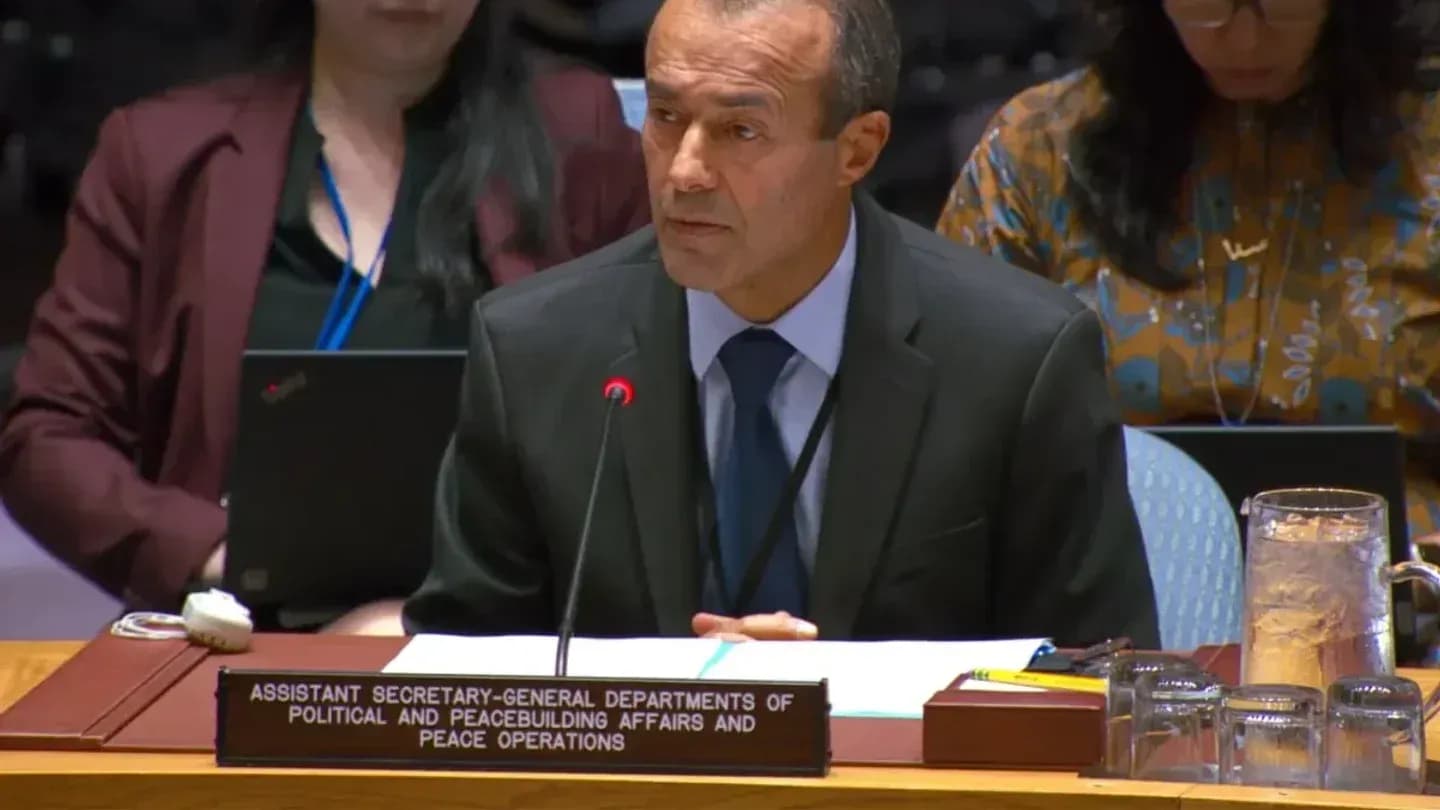
- United Nations — Security Council briefing on Yemen
- UNICEF — Renewed hostilities in Yemen push over 12 million children deeper into crisis
- UNICEF Djibouti — UNICEF is working alongside the Government of Djibouti to support children arriving from Yemen
- United Nations in Djibouti — International support appeal over arrivals from Yemen
- United Nations — Daily Press Briefing, 11 September 2026
- UNHCR — Yemen
- Reuters — Yemen conflict displaces over 100,000 people, UN says
- Reuters — Alarmed Yemenis flee south as Houthis keep up attacks
- Reuters — Iranian arms and advice helped Yemen's Houthis seize key Red Sea city, sources say