
Houthis target Riyadh as Saudi conflict puts oil routes under new pressure
Saudi Arabia confirmed that its air defenses intercepted a Houthi ballistic missile heading toward Riyadh on September 19. The Houthis claimed attacks on “sensitive” targets in the capital and oil infrastructure in Yanbu, but the claimed scale of damage has not been independently confirmed. The conflict is also putting pressure on two key oil-export corridors: the Strait of Hormuz and the Red Sea route through Bab el-Mandeb.
 1 / 4
1 / 4Saudi Arabia confirms the missile launch toward Riyadh
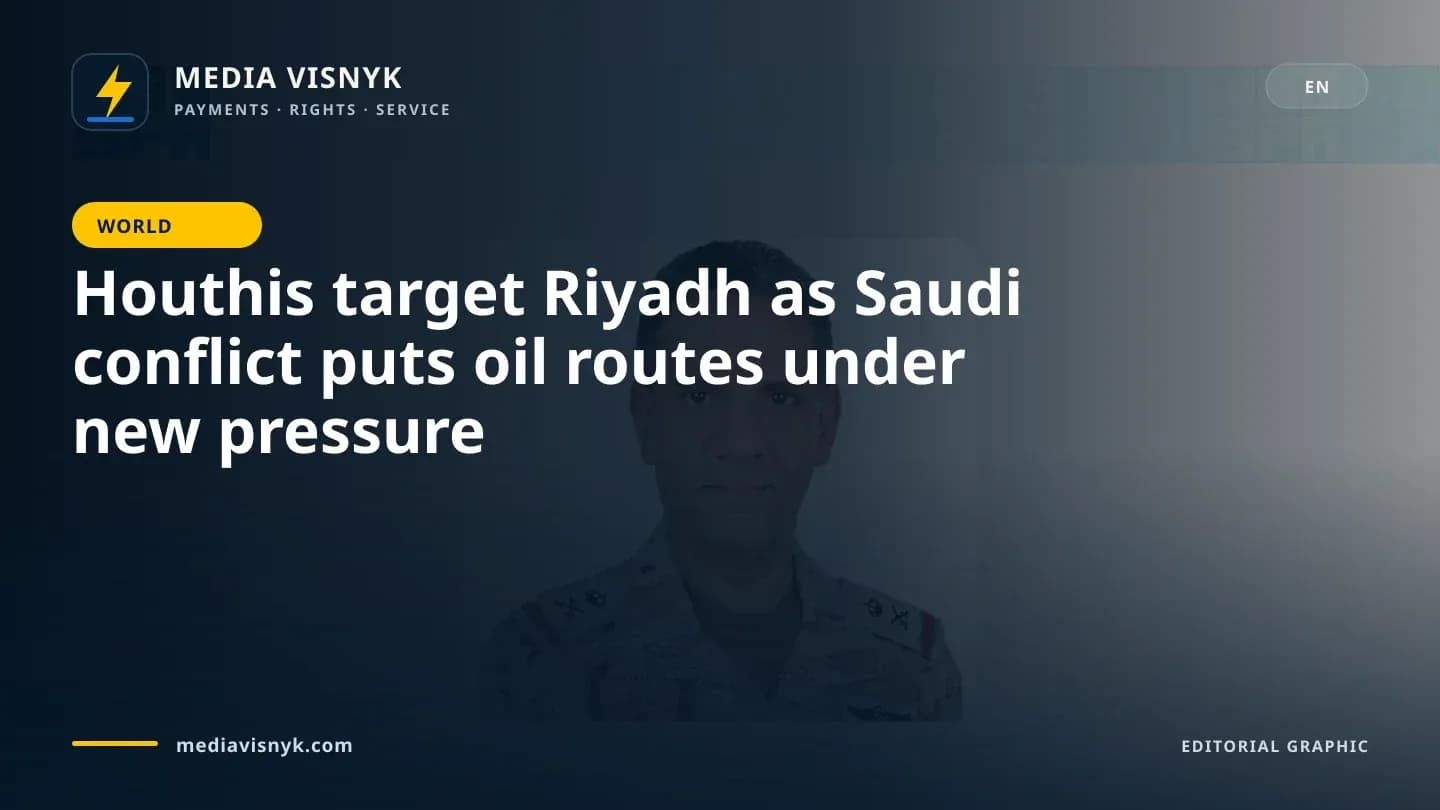
Turki al-Malki, spokesman for the Saudi-led coalition fighting the Houthis in Yemen, said Saudi air defenses intercepted and destroyed a ballistic missile launched toward Riyadh at dawn on September 19.
The coalition also said attempted attacks on Yanbu, Taif, Bish and Farasan had been thwarted. Its statement did not confirm the scale of damage later claimed by the Houthis.
The Associated Press reported that people in Riyadh heard an explosion and later saw a plume of smoke near the airport. At the time, there were no reports of casualties or confirmed damage in the capital.
Smoke near the airport does not by itself confirm a successful strike
Reuters footage and photographs showed a large column of black smoke near King Khalid International Airport. Flames could be seen behind what appeared to be fuel tanks in part of the footage, but Reuters had not established the cause of the fire.
The Houthis said they had used missiles and drones against “sensitive” targets in Riyadh and had also attacked a Saudi Aramco facility in Yanbu. They claimed major fires, but did not provide evidence sufficient to independently verify the scale of the alleged damage. AP said it could not independently verify the claims.
The confirmed picture is therefore narrower than the Houthi account: a ballistic missile was launched toward Riyadh and, according to the Saudi-led coalition, intercepted. Available evidence does not establish that all of the smoke seen near the airport resulted from a successful Houthi missile or drone strike.
Gulf stocks fell, but Saudi markets did not collapse
Major Gulf stock markets closed lower on September 20 as investors reacted to the attacks and the risk of further regional escalation.
Saudi Arabia's benchmark TASI index ended 0.3% lower, while Qatar's main index lost 1.1%. Saudi Aramco, however, recovered from early losses and finished 1.3% higher.
That distinction matters. The attacks clearly weighed on sentiment, but the market response was not a uniform panic.
Oil fell even after the Riyadh attack
The oil market provided an even clearer example on September 21.
Brent futures touched their lowest level since September 10 and were trading at about $101.18 a barrel at 12:54 GMT, down 2.6%. U.S. West Texas Intermediate also declined. Reuters cited expectations of possible diplomatic progress in the Iran conflict and a partial recovery in Saudi exports among the factors pressuring prices.
A missile attack on Riyadh therefore does not automatically translate into higher crude prices. Traders are simultaneously assessing military risk, actual physical supply and the prospects for diplomatic de-escalation.
The larger risk is pressure on two shipping corridors at once
Saudi Arabia's problem extends well beyond a single attack on its capital.
Disruption affecting the route to the Red Sea port of Yanbu has pushed Saudi Aramco to increase exports through the Strait of Hormuz. Satellite data cited by Reuters showed Saudi oil shipments through Hormuz averaging about 2.9 million barrels per day over six days, compared with roughly 700,000 barrels per day in August.
That matters because Saudi Arabia's east-west export system and Yanbu have long provided an alternative to routes through Hormuz. Pressure on the Red Sea outlet makes the kingdom more dependent again on the very strait it has sought to bypass.
At the same time, Houthi forces have advanced toward Bab el-Mandeb and positions around Perim Island at the entrance to the Red Sea. Reuters has reported that these developments are increasing risks around another strategically important shipping corridor.
Saudi Arabia is therefore increasing its reliance on Hormuz at a moment when Hormuz itself remains a risky and more expensive route for shipping.
The economic issue is now logistics as much as oil production
For global consumers, the critical question is not simply whether the next missile reaches its target.
It is also how much oil can physically leave the Gulf, which routes remain usable, what shipowners and insurers charge for operating in conflict zones and whether alternative corridors can absorb disrupted flows.
For now, the market has continued to adapt. Higher Saudi shipments through Hormuz have partly offset disruption on the Red Sea side and helped contain crude prices. But that adaptation increasingly depends on routes that are themselves exposed to military risk.
That is why the Riyadh attack matters beyond Saudi Arabia. The expanding conflict is tying together the security of major cities, energy infrastructure and international shipping in ways that can affect fuel and transport costs far from the battlefield.
Primary sources
Documents and statements this story is based on.
- Saudi Press Agency — coalition statement on the missile toward Riyadh
- Associated Press — Saudi Arabia confirms Yemen’s Houthi rebels tried to attack its capital
- Reuters — Flames, smoke seen near Riyadh airport; Houthis claim attacks on Saudi capital
- Reuters — Saudi, Gulf stocks fall after Houthis claim Riyadh attacks
- Reuters — Oil prices slide to 11-day low on hopes of US-Iran diplomacy, Saudi exports
- Reuters — Houthis push for control of Yemen highlands
- Reuters — Gulf oil threatened anew as Houthis reach key island and pipeline is shut down
Only three ships cross Hormuz as Yemen fighting raises risk around Bab el-Mandeb
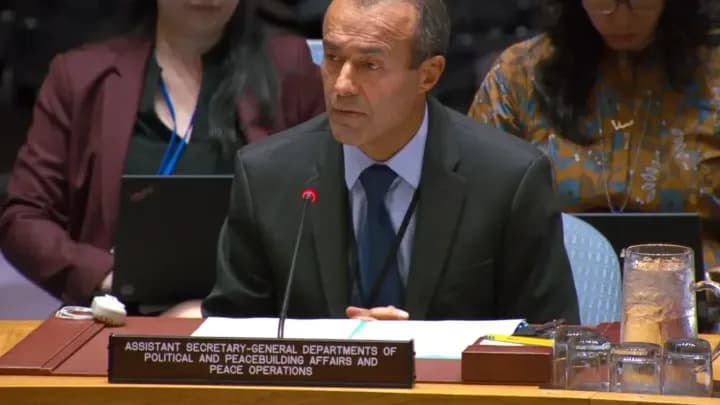
While the world watches missiles and oil, Yemen's new fighting has forced more than 100,000 people from their homes
The $38 Billion Iran War Bill Is Only Part of the Cost, CBO Says

Hormuz Is Now the Negotiating Table: Iran Sets Its Price for Reopening the Strait