
Ukraine’s drone war is pushing NATO to speed up procurement and rethink training
Reuters reports concerns about NATO’s pace of adaptation, while the Alliance’s own documents show faster procurement targets, the Drone Edge programme and Ukrainian combat experience entering NATO training through JATEC.
 1 / 4
1 / 4The battlefield is changing faster than traditional acquisition cycles
Reuters, citing five Ukrainian and Western defence officials, reported that some NATO systems and tactics risk becoming outdated faster than the Alliance can adapt them.
That is the assessment of the agency’s sources, not an official NATO finding about the Alliance’s overall readiness.
NATO’s own policy documents nevertheless show that the speed of technology adoption has become a formal concern.
Under the Rapid Adoption Action Plan endorsed in 2025, Allies set a general objective of moving a new technological product from an identified requirement to acquisition and initial integration within a maximum of 24 months.
The plan also sets general targets of about 12 months for testing, evaluation and integration work and around three months for market research.
The significance is not that NATO has already achieved those timelines.
It is that the Alliance has formally acknowledged the need for more flexible acquisition processes and faster movement of successful technologies from experimentation into military use.
NATO has begun changing its procurement machinery
In July 2026, NATO approved its Innovation Scale-Up Package.
The initiative calls for more agile procurement, clearer routes from experimentation to contracting and greater involvement of smaller and non-traditional technology companies alongside established defence manufacturers.
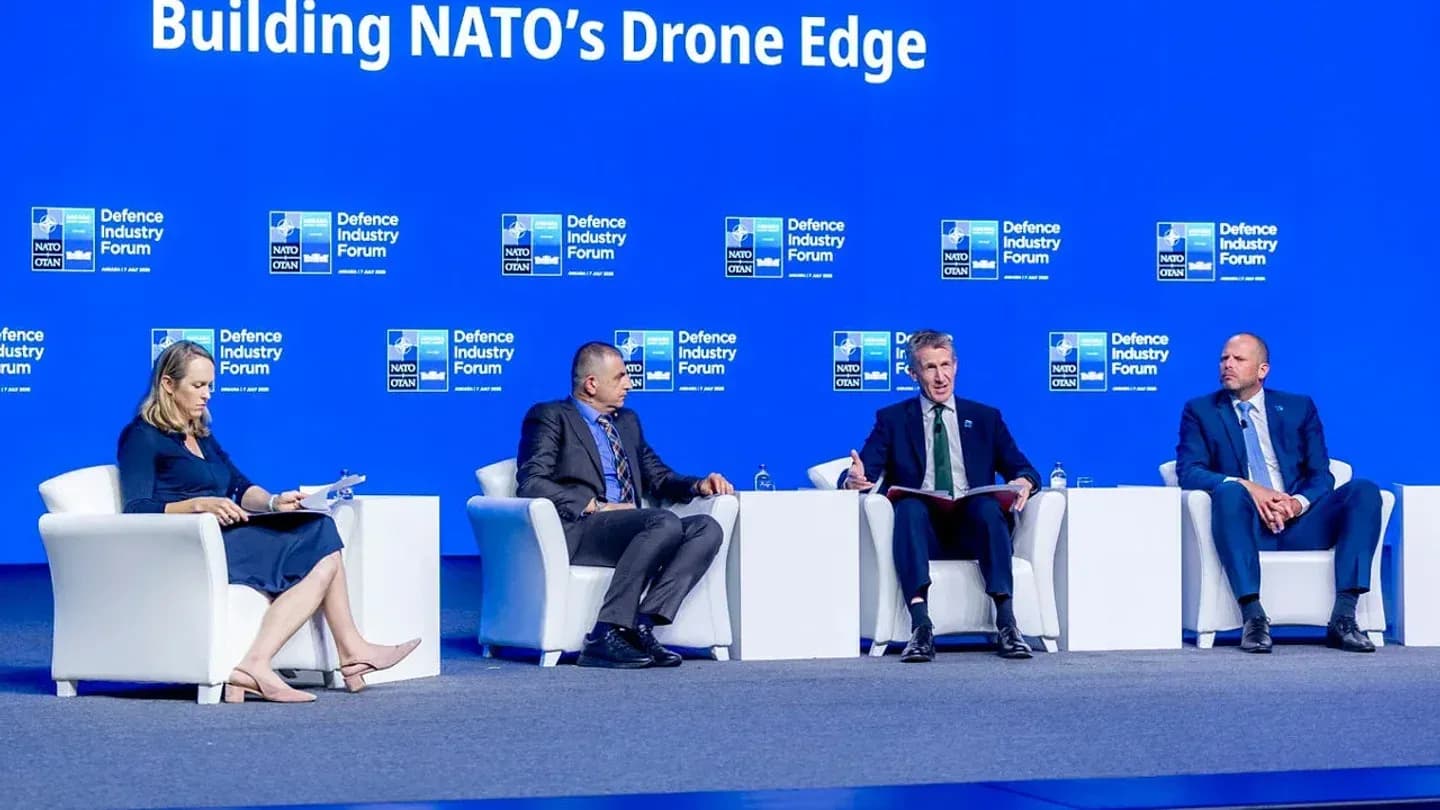
The Alliance has also launched NATO Drone Edge.
According to NATO, Allies plan to invest more than $40 billion in counter-drone capabilities over five years.
They have also set a goal of training five times as many drone operators by the end of 2027.
A dedicated mechanism is intended to make tested counter-drone systems easier to procure at scale.
Those programmes do not prove that NATO has already solved its speed problem.
Instead, their scale illustrates how much the Alliance believes procurement, training and technology adoption need to change.
Ukrainian combat experience is entering NATO training
On September 17, the NATO-Ukraine Joint Analysis, Training and Education Centre, known as JATEC, reported training activities built around Ukrainian combat experience.
Ukrainian personnel worked with Polish and German officers.
The subjects included unmanned systems, electronic warfare, intelligence support and decision-making in a technology-intensive battlefield environment.
JATEC said the lessons demonstrated a need to reconsider established assumptions about manoeuvre, command and control, and the employment of forces.
That illustrates an important change in the relationship between Ukraine and NATO.
Allied countries continue to provide Ukraine with weapons and military training, but battlefield knowledge is increasingly moving in the opposite direction as well.
Ukraine operates much closer to the battlefield feedback loop
Ukraine’s wartime system cannot simply be copied across NATO.
The difference in tempo can nevertheless be seen in initiatives such as Brave1 and other Ukrainian mechanisms for testing military technology.
Ukraine’s Defence Ministry has described simplified codification for some unmanned systems, regular testing with manufacturers and a process in which technologies that demonstrate effectiveness can move toward contracting.
Some funding decisions are also increasingly linked to actual battlefield performance.
NATO operates under very different constraints.
The Alliance consists of 32 countries with separate budgets, laws and procurement systems. It also has to address security standards, certification and interoperability among different armed forces.
A frontline FPV drone modification completed quickly is therefore not directly comparable with acquiring and integrating a complex multinational military capability.
The challenge for NATO is narrowing the gap between those two speeds.
Ukraine is becoming a technology partner as well as an aid recipient
The shift is also visible in joint development programmes.
Under UNITE–Brave NATO, Ukraine and the Alliance launched an initial €10 million competition for teams combining Ukrainian and Allied companies.
The first challenges focus on counter-uncrewed aircraft systems and air defence.
NATO has also said it intends to expand the programme toward €50 million.
None of this establishes that NATO has completely rewritten its doctrine or procurement system around Ukrainian experience.
It does show a clear change in Ukraine’s role.
Ukraine remains a recipient of Western military support while also becoming a source of battlefield lessons that are feeding into Allied training, testing and technology policy.
The next test is implementation: whether NATO’s new rules and programmes can actually shorten the distance between identifying a new threat and putting an effective response into soldiers’ hands.
Primary sources
Documents and statements this story is based on.