Reported Russian spacecraft approach to ICEYE: what is known
A report about a manoeuvre near ICEYE X36 refers to mid-October. The company’s cooperation with Ukraine is documented, but the attack-rehearsal interpretation warrants caution.
The Russian military spacecraft Kosmos-2612 approached X36, a satellite operated by Finnish company ICEYE, in mid-October 2026, according to a report published by Strana on November 5 citing Reuters. The account says the US State Department described the manoeuvre as deliberate and dangerous. It concerns an alleged October episode, not a new approach in November.
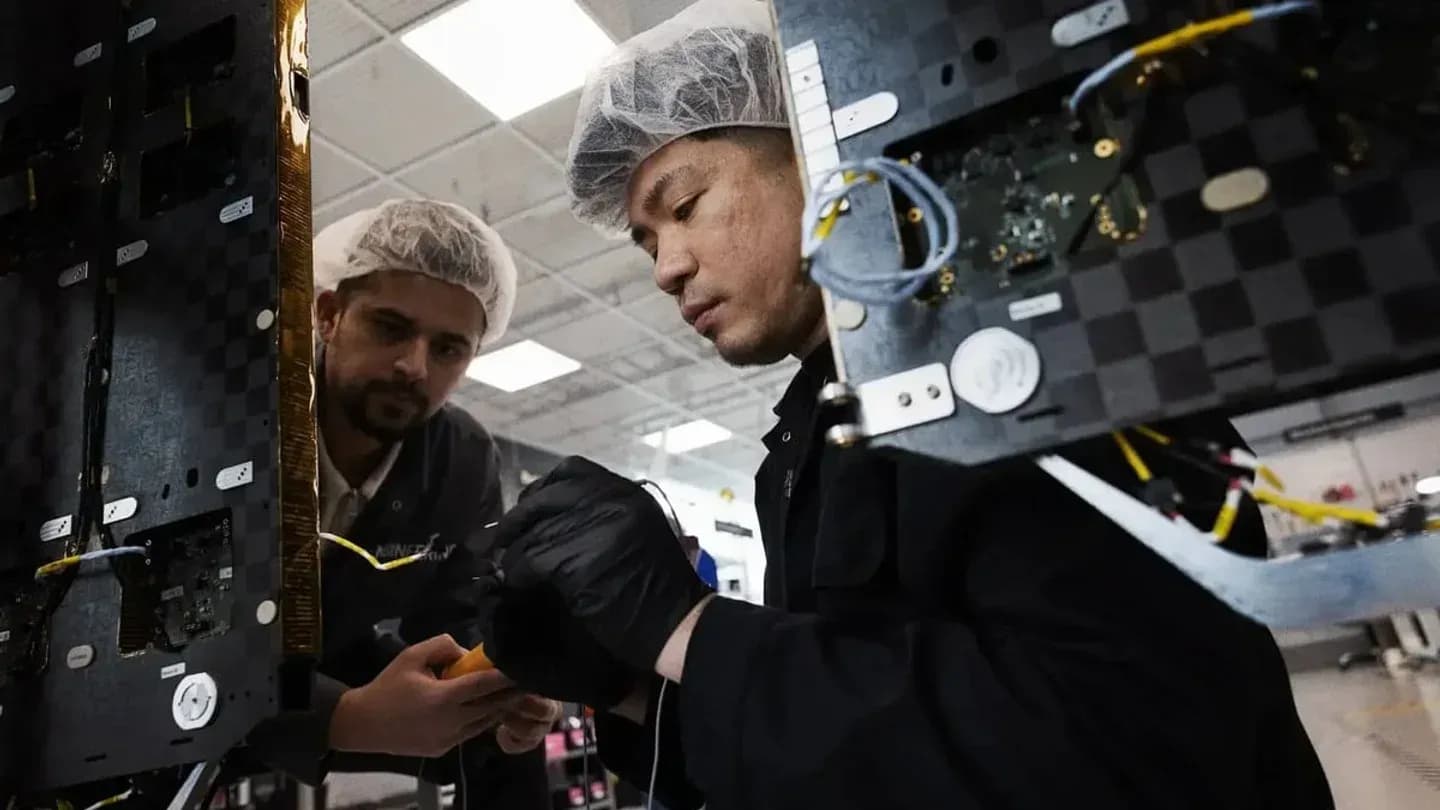
The outlet presents the attack-rehearsal interpretation as a specialist’s assessment, not an established fact. The report itself also notes that an approach does not prove an intention to attack. The circumstances of the manoeuvre, its distance and X36’s condition could not yet be independently confirmed from accessible primary material; the original Reuters report and the corresponding State Department statement are unavailable for verification.
ICEYE’s role in providing Ukraine with satellite imagery is confirmed by the company itself. On August 18, 2022, it announced a contract with the Serhiy Prytula Charity Foundation giving Ukraine’s government the capabilities of one radar satellite already in orbit for use over the region. ICEYE was to operate the spacecraft. The agreement also provided access to its constellation to supply Ukraine’s Armed Forces with imagery of critical locations at a high revisit frequency.
That release does not identify the spacecraft as X36. There is therefore no basis for equating the satellite in the current report with the spacecraft whose capabilities were made available to Ukraine under the 2022 agreement.
ICEYE uses synthetic aperture radar, or SAR. According to the company, it enables imaging of the Earth’s surface by day, at night and through cloud cover. ICEYE’s website describes both defence applications and civilian uses: environmental monitoring, insurance and emergency response. The ability to observe regardless of lighting and cloud cover makes this imagery useful for regularly tracking changes on the ground.
Primary sources
Documents and statements this story is based on.