
Workshops, equipment and stock burned down: “Korolivskyi Smak” halts production entirely after the strike on Vlasivka
The fire at the food plant in Vlasivka burned for more than a day. The company confirmed one death and said there is no way to resume operations. A state mechanism to compensate businesses for war losses still exists only in talks.
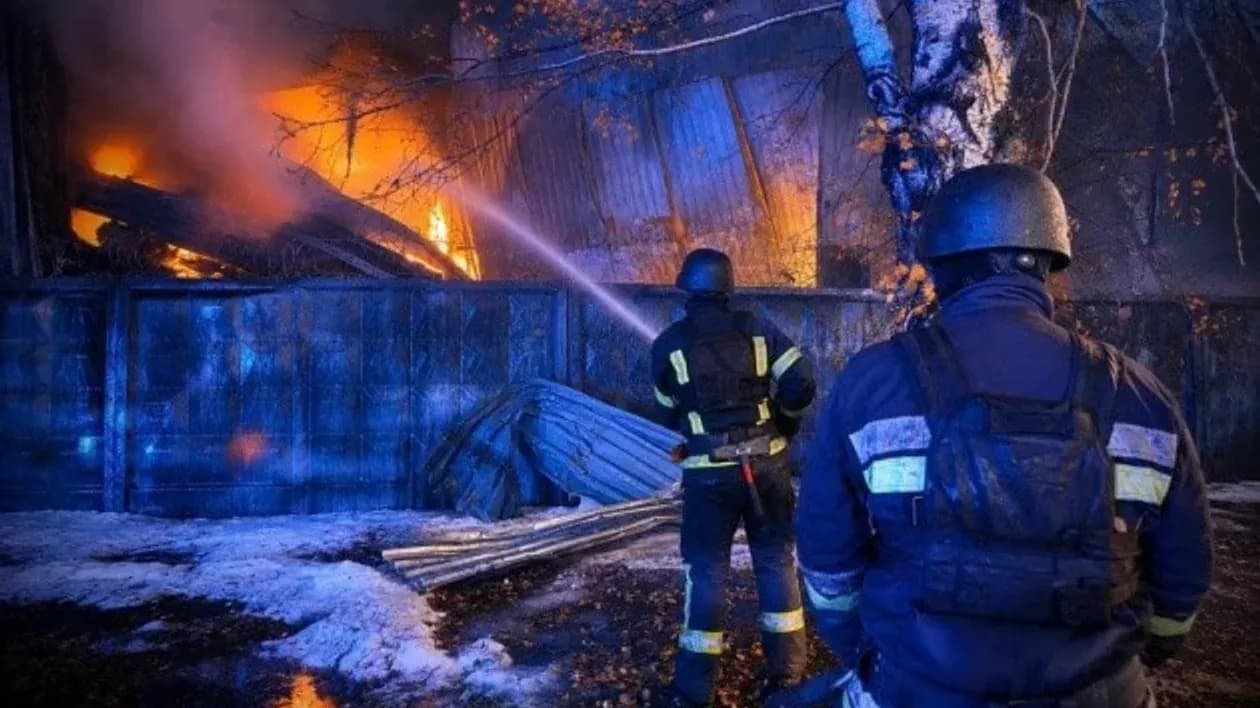
The fire at the food-processing plant in the village of Vlasivka, Kirovohrad region, which broke out after the Russian strike of 16 November, burned for more than a day. On 17 November rescuers reported the fire fully extinguished, and the company “Korolivskyi Smak” announced a death and a complete halt of production. For the Svitlovodsk community this is the loss of a large food plant that had already announced staff cuts three days before the strike; for the government, another test of its promises to shield business from war risks.
More than a day in flames
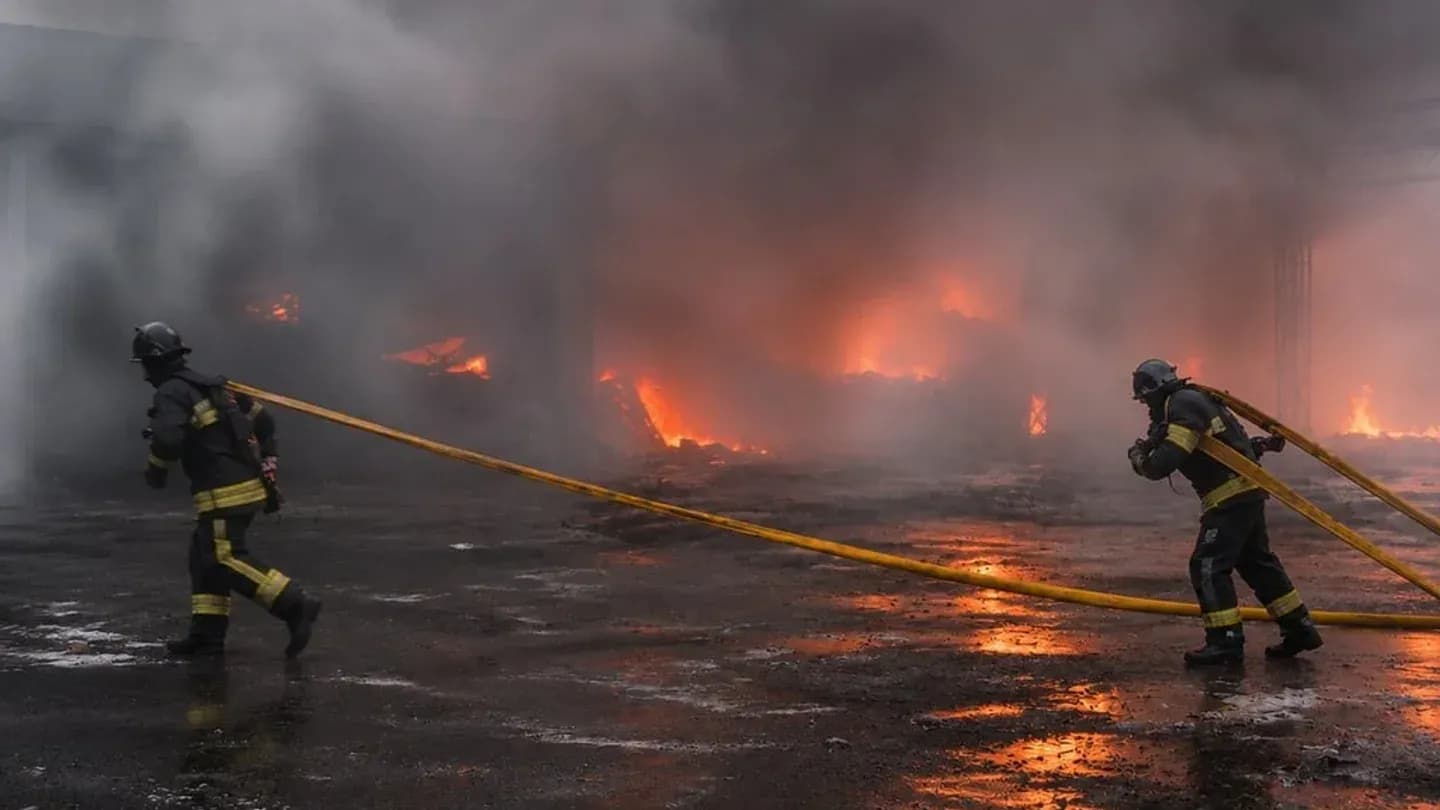
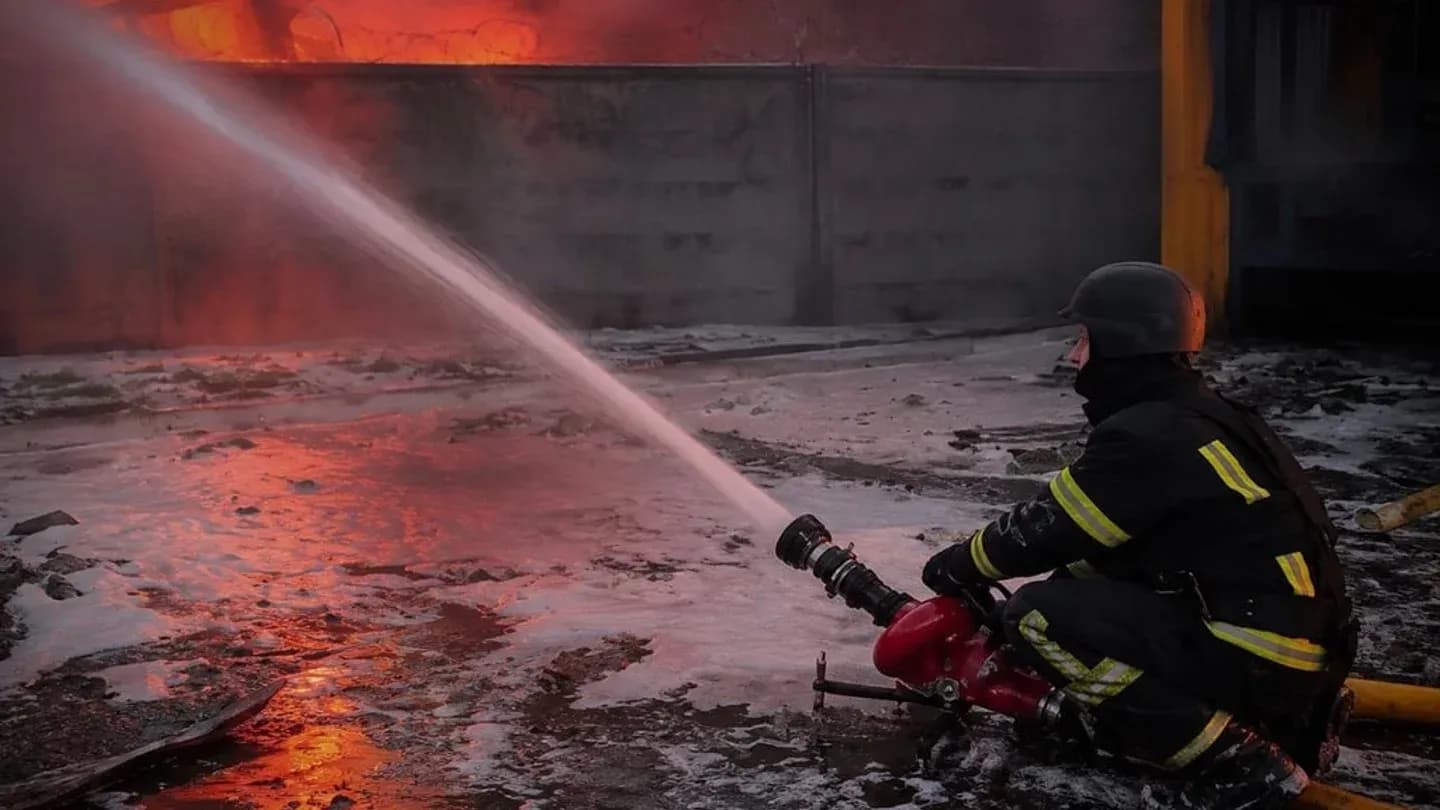
The strike came on 16 November. The fire covered a large area, and the constant threat of repeat shelling hampered the rescuers: according to Oksana Vaskilkiv, spokesperson for the regional branch of the State Emergency Service, the work went on through the entire night, and by 10:30 on 17 November the spread of the fire had been stopped. Neighbouring communities joined the response — Kremenchuk, Onufriivka and Oleksandria provided equipment and sent their workers. On 17 November the SES reported the fire fully extinguished.
The casualty count shifted over the day. First the head of the Kirovohrad regional military administration, Andrii Raikovych, reported two injured; then the secretary of the Svitlovodsk city council, Maksym Bakumenko, reported three. On 17 November Raikovych updated the information: one person had died, two more were injured. The company confirmed the human loss: “The greatest tragedy of this event is the human loss. Unfortunately, despite all safety measures, there is a fatality. We express our sincere condolences to the family and friends. No material damage can be compared with a human life.”
“Today there is no possibility of resuming operations”
The company’s public relations director Hennadii Tertychnyi published video from the site: charred frames of the workshops, destroyed equipment. “Unfortunately, despite all the rescuers’ efforts, the fire could not be contained. Overnight it grew to a scale that completely destroyed the products, production capacities and premises of the enterprise,” the company’s statement said. Citing the scale of destruction and colossal losses, management decided to stop production entirely: as of today there is no way to resume work.
The private enterprise “Victor i K” processes sunflower and soy in Vlasivka. The “Korolivskyi Smak” trademark was registered in 2001, the enterprise itself in April 2003; its statutory fund exceeds 58 million hryvnias, and its founder and ultimate beneficial owner is Viktor Korol. The brand covers sunflower oil, mayonnaise, ketchup, mustard, sauces, pasta, halva and canned vegetables. In autumn the company was preparing a reconstruction: an oil-press workshop rated at 600 tonnes of sunflower seed per day and a preparation workshop designed for a thousand tonnes of rapeseed and 700 tonnes of soy daily. The company does not name the exact size of the fire damage, possible timelines for recovery, or the future of its workforce.
A shutdown that began before the strike
A telling detail: the plant had begun winding down before anything hit it. On 13 November the company announced a forced stop of production, a full halt to purchases of all oilseed crops, and staff cuts. The reasons given then were the critical power-supply situation and the constant threat of missile and drone strikes. “The hardest part of this situation is that we are forced to leave people without jobs,” Tertychnyi explained.
So on the night of the strike the plant was already standing with its processes stopped and its team reduced. Its own generation, which would have cut dependence on the grid — a biomass cogeneration plant of up to 8.5 MW of electric capacity — was still, in September, only a planned project in the notification of planned activity filed in the Unified Register of Environmental Impact Assessment: the company intended to build the station alongside the reconstruction of the oil-press and preparation workshops and to run it on sunflower, soy and buckwheat husks. Why the food plant in Vlasivka still had no protected capacities and no underground reserve, the company has not explained publicly. The general rule here works against civilian business: the Cabinet of Ministers opened the way for private companies to build underground production facilities only in October, and only for the needs of the defence-industrial complex — with the right to later sell such premises or lease them to weapons manufacturers.
Who pays for the burned-down plant
The strike on Vlasivka is not a one-off but part of a wave. After mass Russian strikes on processing enterprises, the agricultural holding Kernel stopped all of its oil-extraction plants and seed purchases: a hit on running equipment, its press service explained, creates a direct threat of a major fire and danger to workers’ lives. In Kremenchuk, two food-industry companies — “Kremenchukkhlib Plus” and “Skovoroda Plus” — announced they were ceasing production because of constant power outages and the threat of missile and drone strikes. Both made bakery, confectionery and pasta products and, by their own account, can no longer keep production running steadily.
The money question is especially sharp. By the government’s own estimate, businesses’ direct losses in 2026 may reach $8 billion, which is why Prime Minister Serhii Koretskyi called protecting enterprises from war risks one of the priorities. On the very day “Korolivskyi Smak” announced its shutdown and cuts — 13 November — he reported a conversation with Anna Bjerde, the World Bank’s Managing Director for Operations. Ukraine and the World Bank are working on a war-risk insurance fund that would combine support for accessible insurance with mechanisms of partial compensation for losses; the two sides discussed how it might be financed with different instruments. Earlier the prime minister had already discussed the fund’s model with industry representatives — it is planned for launch in 2027. A plant that burned down in November 2026 falls into the gap between the loss and a mechanism promised for next year.
In parallel, Kyiv is putting together an emergency winter support package with the EU: generators, charging stations, buses, and help with arranging bridges and crossings to keep traffic moving between the banks of the Dnipro. On 15 November Koretskyi announced a conversation with European Commission President Ursula von der Leyen in Brussels on 16 November to settle the details, and said he expected the decision to be finally agreed and the first consignments to arrive as soon as possible. That is assistance for the resilience of cities and communities, not compensation for destroyed production capacities.
The economist Andrii Novak, head of the NGO “Committee of Economists of Ukraine”, reassures consumers: Ukraine’s agricultural market is highly competitive, and the stocks of retail chains and other producers will cover the loss of one player, so there will be no food shortage. At the same time he allows that companies’ loud announcements of stoppages may also have purely business motives — influence on prices for raw materials and finished goods, or an argument in dealings with creditors if debt obligations have grown too large. For the workers of Vlasivka and the community budget these assessments change nothing: the jobs are already cut, and no new ones will appear on the site of the burned workshops.
What is left for the people
The next recorded step in this story is negotiation: Ukraine and the World Bank will continue working jointly on an effective model of the fund with the involvement of international financial institutions and the insurance market, with a launch planned for 2027. Until then, the losses of “Korolivskyi Smak” and the idle time of its workers remain without a defined source of compensation. That is the price the Svitlovodsk community pays for the fact that in 2026 the war-risk insurance mechanism for business never started working in actual payouts — and for the fact that decisions on protected and underground production sites are taken first for the defence industry, while food processing waits its turn.
Primary sources
Documents and statements this story is based on.
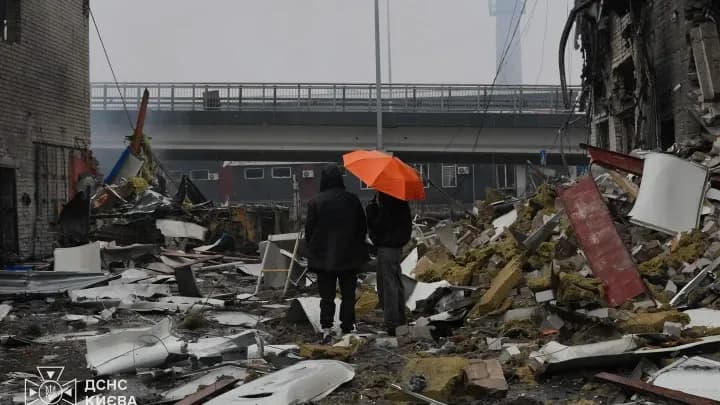
Night of Nov 20: eight killed, Kyiv bridges hit, the west left in the dark

"I don't want to blow your mind, but Zelensky is not always truthful." Musk accuses Kyiv of lying about Starshield
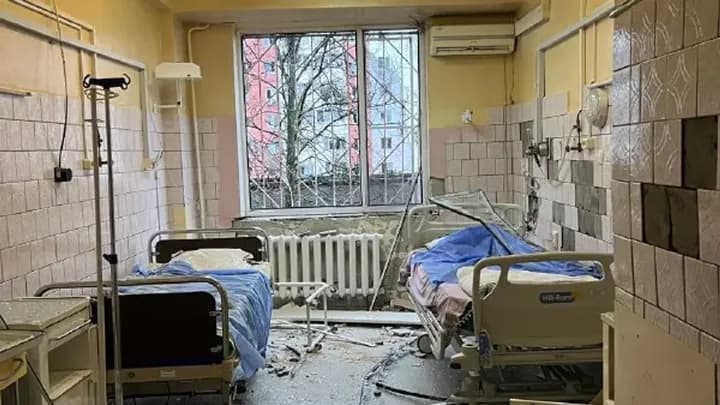
Kharkiv hospital damaged: ministry clarifies figure of 73 affected
‘Software Glitch’ Costs a Life: US Again Failed to Warn Kyiv of Ballistic Strike