50,000 expelled students over 25: the state closes the loophole with consequences, not rules
Since 2025, about 50,000 men over 25 have been expelled from educational institutions. In some private universities they made up to 90% of enrolment — and responsibility for deferment rules still belongs to no one.
Since 2025, Ukrainian educational institutions have expelled about 50,000 men over the age of 25 — for failing to follow their study plans. Education and Science Minister Andriy Butenko explains this as the result of inspections: the ministry, together with the State Service of Education Quality, looks for cases where studying is not actually confirmed, and where there is no proof of attendance, the student is expelled.
The scale of the phenomenon is visible in the proportions. In most universities, according to the minister, the share of students over 25 hovers around 2.5% of enrolment. In some private institutions that figure reached 90% — nine out of ten students were men of conscription age who, before the full-scale invasion, were unlikely to have queued at an admissions office.
From 30,000 to 250,000
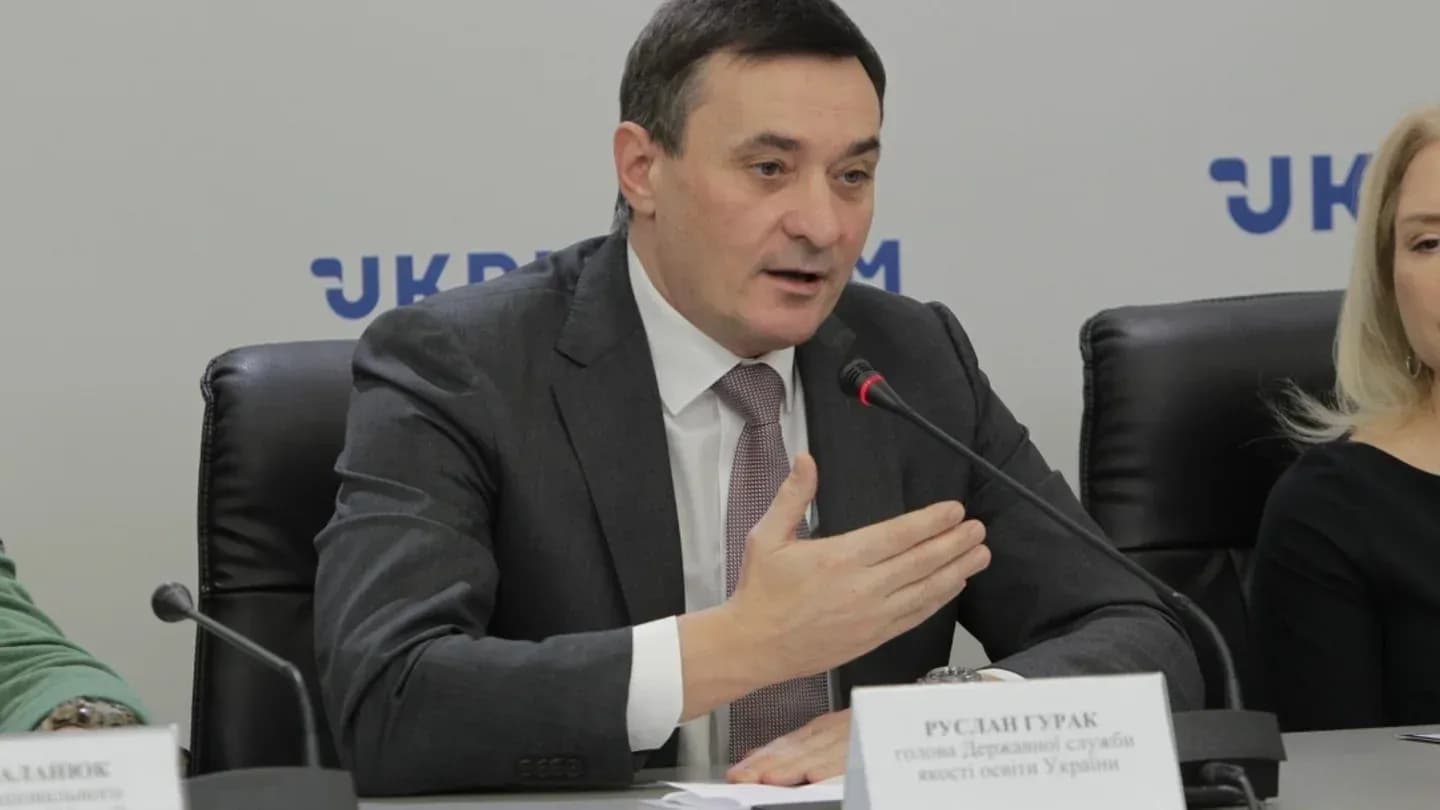
The trend is not new. The surge of interest in diplomas among men over 25 began, in Butenko’s words, in 2022, and peaked in 2024, when more than 100,000 men of this age group enrolled in higher, professional pre-higher and vocational education institutions. The broader picture was outlined earlier by Ruslan Hurak, head of the State Service of Education Quality: for many years Ukraine had a stable cohort of about 30,000 students over 25 across all forms of study — from professional pre-higher education to doctoral programmes — and during the war that cohort grew to 250,000.

It was this growth that the state answered with inspections. About 50 institutions have already been checked; as a result, according to Hurak, almost 50,000 people were expelled, eight criminal proceedings were opened, deans and rectors were detained, and reports were submitted to the ministry on revoking the licences of two institutions. By the start of the next academic year, another 50 colleges and universities are scheduled for inspection — colleges first, because after restrictions on university admissions, older applicants moved there. How many people will lose student status as a result of these checks, the service does not forecast.
The minister stresses that not all older students are fiction. “I am not talking only about higher education, because we also have vocational education. There are more such men in professional pre-higher education — and many of them really do study,” Butenko says. Data from the 2025 admissions campaign show the wave receding: last year 24,819 men over 25 entered professional pre-higher education, against 55,581 in 2024; for master’s programmes the figures were 9,084 against 26,164.
A deferment per semester, not per degree
Student status has one practical value: a deferment from conscription during mobilisation. It is now granted for one semester but no longer than six months, and only to those studying full-time or in dual form while observing the sequence of levels: bachelor’s after school, master’s after a bachelor’s, doctoral studies after a master’s. The deferment is not issued automatically for the whole period of study — it must be renewed every semester, and where registry data do not match, the right has to be proven with a certificate from the institution. Part-time and evening students have no right to a deferment at all: they can be conscripted on general grounds.

Attempts to rewrite these rules have already passed through the parliamentary chamber. Bill No. 13574, amending Article 23 of the mobilisation law and submitted by the government in July 2025, failed in January 2026 to gather votes for cancelling the deferment for those who began studying after the age of 24, and returned to committee for a repeat second reading. On 11 February 2026 parliament adopted it in full; on 9 March the law was signed. In other words, the discussion that the education minister describes as ongoing in the Defence Ministry and other agencies has already had a legislative finale — but the argument over who should filter “students” at the entrance to education has not stopped.
“Regrettable” with no addressee
It is regrettable that education has become a place where people go not for knowledge but to hide. It is regrettable when the values of the university itself are not clear or strong enough to create a natural filter.
This assessment by Andriy Butenko is the most honest acknowledgement of the problem from the authorities in four years of war. But the minister then moves the question of the rules out of his own remit: legally, the right to a deferment on educational grounds can only be changed by amendments to mobilisation legislation, “however, this is no longer a question about education but about the rights of a citizen”. The ministry that sees 90-per-cent conscript cohorts in private institutions has only one tool of its own — expulsion after the fact, when the status has already been bought, the semesters “sat through” and the money paid.
The ministry separately clarifies that any possible changes to admission rules would not affect the deferment rights of current students. And Butenko repeats a principle that is hard to dispute: no one can limit a person’s pursuit of knowledge if they genuinely study and meet the educational requirements — that is visible. The question is only why, for years, this “visible” came so late that the state had to expel tens of thousands of people instead of preventing the sale of status in the first place.

A grey zone for fifty thousand
The state, which since 2022 watched private colleges and universities grow their cohorts of men over 25 to 90%, is closing the loophole by fighting the consequences: expulsions, inspections, threats to revoke licences. Responsibility for the rules themselves is blurred between the Defence Ministry, the Education Ministry and parliament, and none of these bodies claims it as its own. And every expelled person is someone who loses a deferment and becomes liable for conscription on general grounds — including those who paid a private institution for studies that an inspection later declared non-existent.
The fate of the eight criminal proceedings against deans and rectors reported by the State Service of Education Quality at the end of 2025 remains unknown: there are no reports of verdicts, nor of refunds to people who bought “fictional” studies. The next checkpoint is the start of the new academic year, when inspections reach another roughly 50 colleges and universities. Until then, tens of thousands of men over 25 will live between two statuses: student — until the first inspection finds no proof of attendance; conscript — from the day of the expulsion order.
Primary sources
Documents and statements this story is based on.