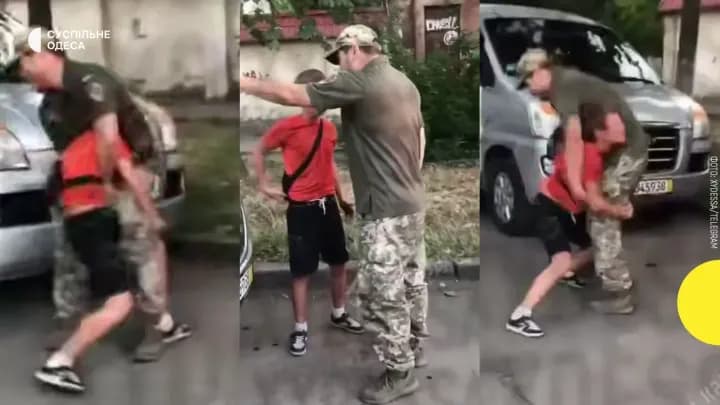
Came for a Deferment Certificate, Got a Combat Draft Notice: Courts Overturn Student Mobilization in Ukraine
At least two recent court rulings in Ukraine confirm a pattern: territorial recruitment centers mobilize students without waiting for their deferment applications to be processed, and courts must undo the damage afterwards — when the person is already in uniform.
 1 / 4
1 / 4Case One: Zakarpattia — Student with a Valid Deferment in the “Reserve+” System
A student at a professional college of Kherson National Technical University (full-time, junior bachelor’s degree, “Light Industry Technologies”) was studying from September 1, 2024, to June 30, 2027. He had obtained a deferment, and the state’s “Reserve+” system listed him as “exercising the right to deferment.”
On July 2, 2026, police detained the man in the Zakarpattia region and brought him to a TCC. The next day, July 3, he was conscripted and sent to a military unit. The TCC admitted that the registry showed his deferment status but argued that the student had allegedly “failed to confirm” his right during questioning.
The Zakarpattia District Administrative Court ruled the conscription unlawful. It annulled the mobilization order and ordered the military unit to resolve the issue of his discharge. The military unit objected, claiming the order was legal and the conscript was receiving pay. The court disagreed.
Case Two: Dnipro — Came for a Certificate, Got a Draft Notice
An even more striking case comes from Dnipro. A master’s student at Kryvyi Rih National University (enrolled August 2024, full-time) submitted a deferment application along with his original student ID to the TCC on September 5. The TCC received the documents on September 10 but never made a decision.
On October 1, the student went to the TCC, received a referral for a medical exam, and was deemed fit for service. On October 7, he returned to get his military registration document and a deferment certificate. Instead, due to “technical reasons,” he was handed a summons for the next day. On October 8, he received a combat draft notice. He objected, to no avail. On October 10, the TCC issued a mobilization order, and on October 11, he was assigned to a military unit.
On September 23, 2026, the Dnipropetrovsk District Administrative Court (case No. 140022228) annulled both the TCC’s mobilization order and the military unit’s assignment order, and ordered the student’s discharge. The court found that the TCC was obliged to review the deferment application before conducting the medical exam and issuing the draft order. At the time of conscription, the plaintiff was still a master’s student. The court also ordered each defendant to pay 968.96 hryvnias in court costs.
A Systemic Problem, Not an Exception
Both cases share a common thread: the TCCs do not wait for deferment applications to be processed. In the first case, the deferment was already in the state registry — it was ignored. In the second, the application was simply never reviewed, and the student was mobilized regardless. In both instances, the courts found this illegal.
Ukrainian law (Article 23, Part 3, Clause 1 of the Law “On Mobilization Training and Mobilization”) clearly states that full-time students pursuing a higher level of education than previously attained are not subject to conscription. But in practice, this provision only works after a court intervenes.
A person unlawfully mobilized ends up in the army. They may spend weeks or months there before a court rules. This is not a series of isolated incidents — it is a pattern in which draft offices operate on a “shoot first, ask questions later” basis.
What Comes Next?
Court rulings are welcome, but they do not change the underlying practice until TCC officials face consequences for illegal orders. Currently, the only reliable way to protect one’s rights is through litigation — which takes time, money, and nerves. And it cannot undo the days or weeks a person spent in uniform instead of at university.
The question for Ukraine’s leadership is: will there be any accountability for the officials who issued these unlawful decisions? Will instructions to TCCs be changed so that deferments are verified before draft notices are served? So far, there is no answer. Only another court ruling correcting something that should never have happened.
Primary sources
Documents and statements this story is based on.