“Mobilized on Paper Only”: Ukrainian Recruitment Chiefs Charged With Faking Hundreds of Conscriptions in the National Military Registry
Ukraine's National Police charged district recruitment center heads in the Chernivtsi and Zakarpattia regions with entering false mobilization data into the Obrih registry, including records of people who never existed. Investigators documented 631 falsified entries in one case; prosecutors cite at least 857 across five suspects.
 1 / 4
1 / 4Picture a Ukrainian man fined 17,000 hryvnias — roughly $400 — for failing to update his personal data in the Reserv+ app within seven days, as the law requires. Now picture an official sitting on the other side of the very same registry, manually adding entries for men who do not exist. The first one pays. The second one got charged — six months later.
On September 25, Ukraine's National Police disclosed two criminal cases that capture this asymmetry perfectly.
What happened
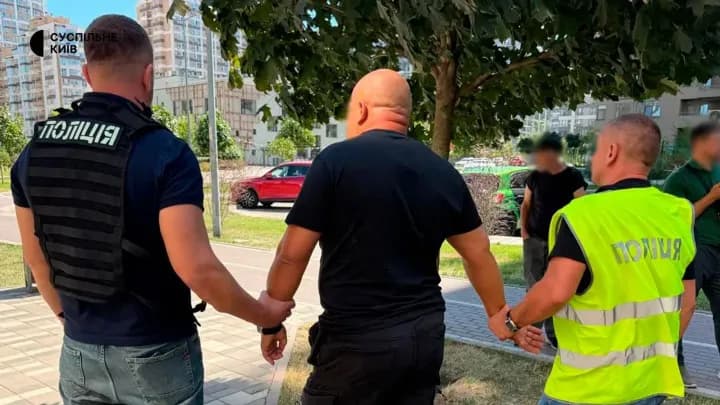
In the Chernivtsi region, a 46-year-old former head of a district territorial recruitment center — known by the Ukrainian abbreviation TCK — has been charged. According to the investigation, he had access to Obrih, the unified state registry of conscripts, reservists and those liable for military service, and edited the registration files of men liable for service. Among them, investigators say, were people who never actually existed: their personal details were used to create the appearance of a completed draft.
To make the fabrication convincing, the ex-official also entered false information into draft orders and by-name lists assigning men to military units. This was not a single fake line in a database — it was an entire paper trail.
The National Police documented 631 instances of false data entry in the Chernivtsi case alone. That is the official figure.
The Zakarpattia case is similar, with one detail that makes it even more telling. A 39-year-old sitting head of a district recruitment center — not a former one, the man currently in the job — is accused of altering registration files to record the supposed delivery of men to the recruitment center, their passing through mobilization procedures and their dispatch to service, none of which actually happened. He certified these entries with his own qualified electronic signature. He did not hack the system — he used it exactly as his position allowed.
The Zakarpattia records included both men who had genuinely been conscripted in earlier periods and men who had never been called up at all.
The charges
In the Chernivtsi case, the charges fall under Parts 1 and 3 of Article 362 of Ukraine's Criminal Code — unauthorized interference with information systems — and Part 1 of Article 366, official forgery. In the Zakarpattia case, Parts 1 and 3 of Article 362. In plain terms: one count for tampering with data, another for lying from a position of authority.
The investigation is led by police detectives with operational support from the Security Service of Ukraine (SBU), under the procedural supervision of specialized defense prosecutors for the western region.
Five chiefs, 857 fake conscripts
The police press release describes two individuals. But on the same day, several Ukrainian outlets, citing prosecutors, reported a broader picture: charges were brought against five current and former heads of district recruitment centers in Zakarpattia and the Chernivtsi region, with the falsifications taking place between December 2025 and February 2026. The total number of fictitious conscriptions, according to these reports, was at least 857.
The figures need honest unpacking. The 631 is the officially documented count of false entries in the Chernivtsi case, from the police press release. The 857 is an aggregate figure for five suspects, reported by media on the authority of prosecutors. How the two numbers relate has not been officially clarified. Korrespondent.net, for instance, wrote that 631 of the 857 entries concerned non-existent citizens — which conflicts with the police version, where 631 refers to documented acts in the Chernivtsi case. The exact breakdown by suspect and region had not been published at the time of writing.
The motive, according to investigators, is simple and all the more dispiriting for it: not money, but metrics. Recruitment center chiefs are graded on meeting mobilization quotas — and fake entries made the quotas look met.
Why this matters beyond two regions
Here is how the system works: Obrih is the central database on all Ukrainians liable for military service. Its data feeds the Reserv+ app, through which every man of conscription age must update his personal details within seven days of any change. Fail to update — face a fine of up to 17,000 hryvnias, halved if paid within 20 days.
In other words, the state has built a strict digital hierarchy: every citizen must keep his data pristine, or face sanctions. It now turns out that the officials running that hierarchy at the local level could invent entries wholesale — and that this went unnoticed for months.
Which raises a question no longer confined to Ukrainian newsrooms: how much of Ukraine's official mobilization statistics can be trusted if some of the “conscripted” existed only in a database? The 857 figure is a minimum, from two regions, over three months. How many such records exist nationwide, over the entire war? Nobody has publicly counted.
There is a human dimension, too. The fake records used the personal details of real men liable for service — including people conscripted long ago or never touched at all. What this meant for them in practice — erroneous summonses, records chaos, document problems — the investigation has not yet disclosed. But the mechanism is clear: when an official can alter your registry entry to beautify a report, trust in the registry collapses for everyone.
What holds up — and what doesn't
In fairness: the fact that the case was made public is the system working, not failing. Police, the SBU and specialized prosecutors publicly charged the leadership of the country's own mobilization apparatus during wartime. For debates about rule of law and Ukraine's EU accession path, that counts in Kyiv's favor.
But there is another side. A charge is not a conviction. It is unknown whether the suspects have been suspended, what bail conditions were imposed, or whether they contest the accusations; their position is absent from public sources. And the system that allowed one man with an electronic signature to insert hundreds of fake records without a single automated alarm has said nothing so far about how that control gap will be fixed.
The next checkpoint is the courts. There it will become clear whether the 857 “paper conscripts” were an episode of local self-advancement by metrics — or a symptom suggesting that Ukraine's entire mobilization reporting needs an independent audit.
Primary sources
Documents and statements this story is based on.
- National Police in Chernivtsi region — official press release “631 mobilized on paper only”
- Molbuk.ua — reprint of the National Police report with details of the Chernivtsi case
- Zaxid.net — on the Zakarpattia case
- LB.ua — on the five suspects and the figure of 857
- Slovo i Dilo — 857 fictitious mobilizations, December 2025 – February 2026 period
- NV.ua — 857 fictitiously mobilized, Zakarpattia and Bukovyna
- Korrespondent.net — interpretation of the composition of the 857 records (631 non-existent citizens)
- Ministry of Defence of Ukraine — explanation of fines for failing to update Reserv+ data
- TSN.ua — the fine amount of 17,000 hryvnias and the 50% discount
- Army.gov.ua — the 7-day rule for updating personal data