$1,500 and $5,000 for a “student” status: two cases expose a persistent weakness in Ukraine’s mobilization deferment system
Two criminal cases reported on September 7, 2026 — a $1,500 fake-enrollment offer in Kyiv and a $5,000 customs scheme in Ternopil region — highlight how student status can be exploited to obtain mobilization deferments, and why the state’s digital registration system cannot by itself verify the honesty of the data it receives.
 1 / 4
1 / 4Ukraine’s wartime mobilization rules give certain students a legal deferment from compulsory mobilization.
That has made one administrative detail unusually valuable during the war: being properly recorded as an eligible student.
The first of the two new cases comes from Kyiv.
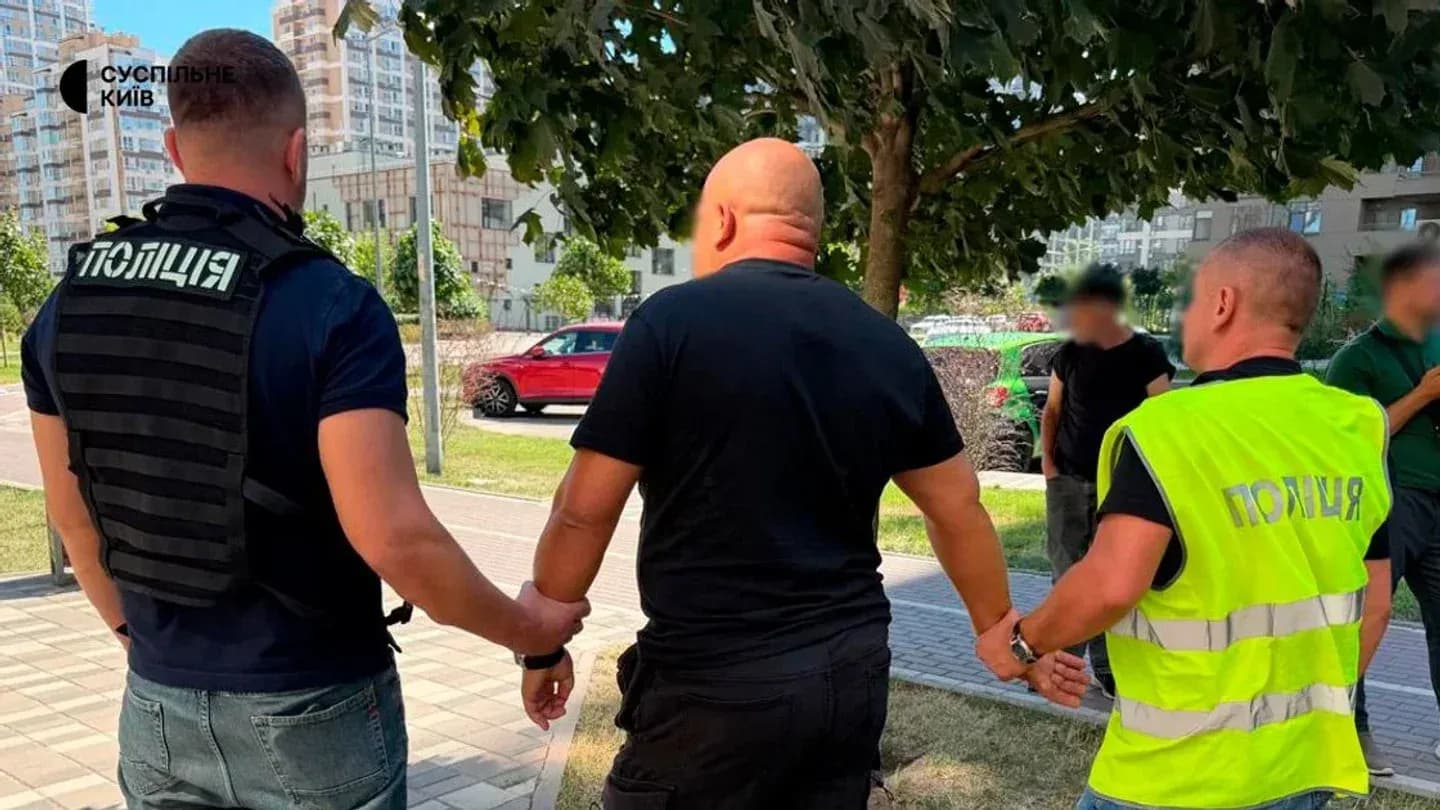
Police say two local men offered to arrange the fictitious enrollment of a military-liable man in a Kyiv university’s full-time program for $1,500.
According to investigators, the suspects claimed they had “connections” inside an educational institution and said the enrollment could be used as the basis for a mobilization deferment.
Police detained both men while they were allegedly receiving the money. They have been notified of suspicion under provisions of Ukraine’s Criminal Code concerning abuse of influence committed by a group. A court ordered them held in custody while the investigation continues.
None of this is a conviction.
The police account is an allegation that still has to be tested through the criminal justice process.
It is also important that investigators have not publicly established that university employees actually participated in the alleged Kyiv arrangement. The suspects’ reported claim that they had connections at a university is not proof that such connections existed.
The second case, reported the same day in Ternopil region, goes further.
Regional prosecutors say a customs employee learned that a military-liable man wanted to enroll in an educational institution and obtain a deferment.
The official allegedly offered to help through acquaintances among teachers.
The alleged price was $5,000.
Investigators say the payment was split into three parts: $3,000 first, another $500 near the educational institution before entrance examinations, and the final $1,500 after the issue had been resolved.
What happened next is the most significant detail.
According to prosecutors, the man was enrolled.
He then updated his information in Reserve+, Ukraine’s official military-registration application, and the system displayed information showing a deferment.
If that account is ultimately proven, the case would illustrate a problem that goes beyond somebody merely promising to “fix” paperwork.
An educational status allegedly obtained through an improper arrangement would have entered the state data system and produced a result in the digital military-registration process.
This is where Ukraine’s growing reliance on automated public registers becomes important.
The Ministry of Defence says Reserve+ checks information contained in state databases, including Ukraine’s Unified State Electronic Database on Education, known by its Ukrainian acronym EDEBO.
This reduces opportunities for arbitrary decisions at the final stage of processing a deferment.
But automation has an obvious limit.
A digital system can verify what a database says.
It cannot by itself determine whether a person genuinely attended classes, fairly passed an entrance examination or was improperly inserted into the educational system in the first place.
There is another major qualification.
Simply enrolling as a student does not automatically entitle every Ukrainian man to a mobilization deferment.
Under the current version of Article 23 of Ukraine’s Law on Mobilization Preparation and Mobilization, the relevant protection applies, among others, to students in full-time or dual education who are pursuing an educational level higher than one they have already completed.
A person progressing from a bachelor’s degree to a master’s degree is a straightforward example.
Repeating the same educational level does not, by itself, create the same deferment entitlement.
That creates an unresolved issue in the Ternopil case.
The public reports do not state what previous education the man already had or precisely which educational level he entered.
It is therefore impossible from the published information alone to independently determine whether every substantive legal condition for the deferment was satisfied.
What prosecutors do say is that the deferment appeared in Reserve+ after the enrollment.
That remains an allegation from the investigation, not an independently established finding.
The customs employee has been notified of suspicion under Part 3 of Article 368 of Ukraine’s Criminal Code, a provision dealing with improper benefits received by public officials under aggravated circumstances.
Investigators also say they are examining whether employees of the educational institution were involved.
“Examining” is the key word.
The available public information reviewed by Media Visnyk does not establish that specific employees of that institution have been charged in connection with this episode.
Do two criminal cases reported on one day prove that Ukrainian education as a whole is a market for mobilization deferments?
No.
That conclusion would go well beyond the evidence.
But Ukraine’s own education regulator has documented reasons to treat the underlying problem as more than an isolated anomaly.
In July 2025, the State Service of Education Quality reported that people aged over 25 accounted for more than 20% of full-time bachelor’s, master’s and postgraduate students during the previous three years. In the 2021/2022 academic year, the figure had been only 4%.
It also said more than 50,000 men were expelled from higher education institutions during and after inspections in 2024–2025.
Among the problems identified by the agency were fictitious competitive admissions, artificial extensions of study periods, delayed information in EDEBO, very poor attendance and fictitious full-time study.
In a later interview published by the same government service, its head, Ruslan Hurak, said the number of students aged 25 and over in the relevant parts of the education system had risen from roughly 30,000 before Russia’s full-scale invasion to about 230,000 afterward.
But age itself proves nothing.
An adult Ukrainian has a lawful right to pursue education, and the education regulator itself has described cases in which older students genuinely attended classes and completed coursework.
The concern is not that a 30- or 40-year-old man is studying.
The concern begins when enrollment exists only on paper, entry procedures are manipulated or educational status is allegedly purchased primarily to obtain a military exemption.
That is why the most revealing difference between the two September 7 cases is not $1,500 versus $5,000.
It is what the money was allegedly meant to buy.
In Kyiv, investigators describe a promise to obtain the status.
In Ternopil region, prosecutors say enrollment actually occurred and a deferment then appeared in Reserve+.
If prosecutors can prove that sequence in court, it would show how a fraudulent input at the educational level can potentially travel through otherwise legitimate state systems.
Digital government can automate a decision.
It cannot automatically guarantee that every piece of information entering the system was honestly created.
The next important question in both investigations is therefore not merely who allegedly received the money.
It is who could actually deliver the enrollment — and whether anyone inside the educational institutions participated.
There is no public evidence yet establishing such participation in the Kyiv case.
In the Ternopil investigation, law enforcement says that question is still being examined.
Until courts determine guilt, those distinctions matter.
But official audits, tens of thousands of expulsions and repeated criminal investigations also mean that dismissing education-related mobilization schemes as a purely hypothetical problem is no longer credible.
Primary sources
Documents and statements this story is based on.
- Suspilne Kyiv — “Fictitious university enrollment: two Kyiv residents suspected of receiving a bribe for aiding evasion of mobilization”
- Suspilne Ternopil — “Enrollment in education for $5,000: a Ternopil region resident was notified of suspicion”
- Main Department of the National Police in Kyiv — official Telegram channel
- Law of Ukraine ‘On Mobilisation Preparation and Mobilisation’
- Ministry of Defence of Ukraine / Reserve+ — rules for processing deferments
- State Service of Education Quality of Ukraine — inspection results
- State Service of Education Quality of Ukraine — interview with Ruslan Hurak