‘Tusk = dictator’ banner: a Sejm protest and the Tribunal dispute
A banner targeting Tusk appeared in the Sejm. Behind the political slogan lies a dispute over the Constitutional Tribunal and the role of police.
On 6 November 2026, the news outlet Strana reported that Poland’s opposition had unfurled a ‘Tusk = dictator’ banner in parliament. The photograph it published shows Donald Tusk in the foreground, with people behind him in the chamber holding a black banner reading TUSK = DICTATOR in English. The date the photograph was taken and the organisers of the protest have not been independently established.
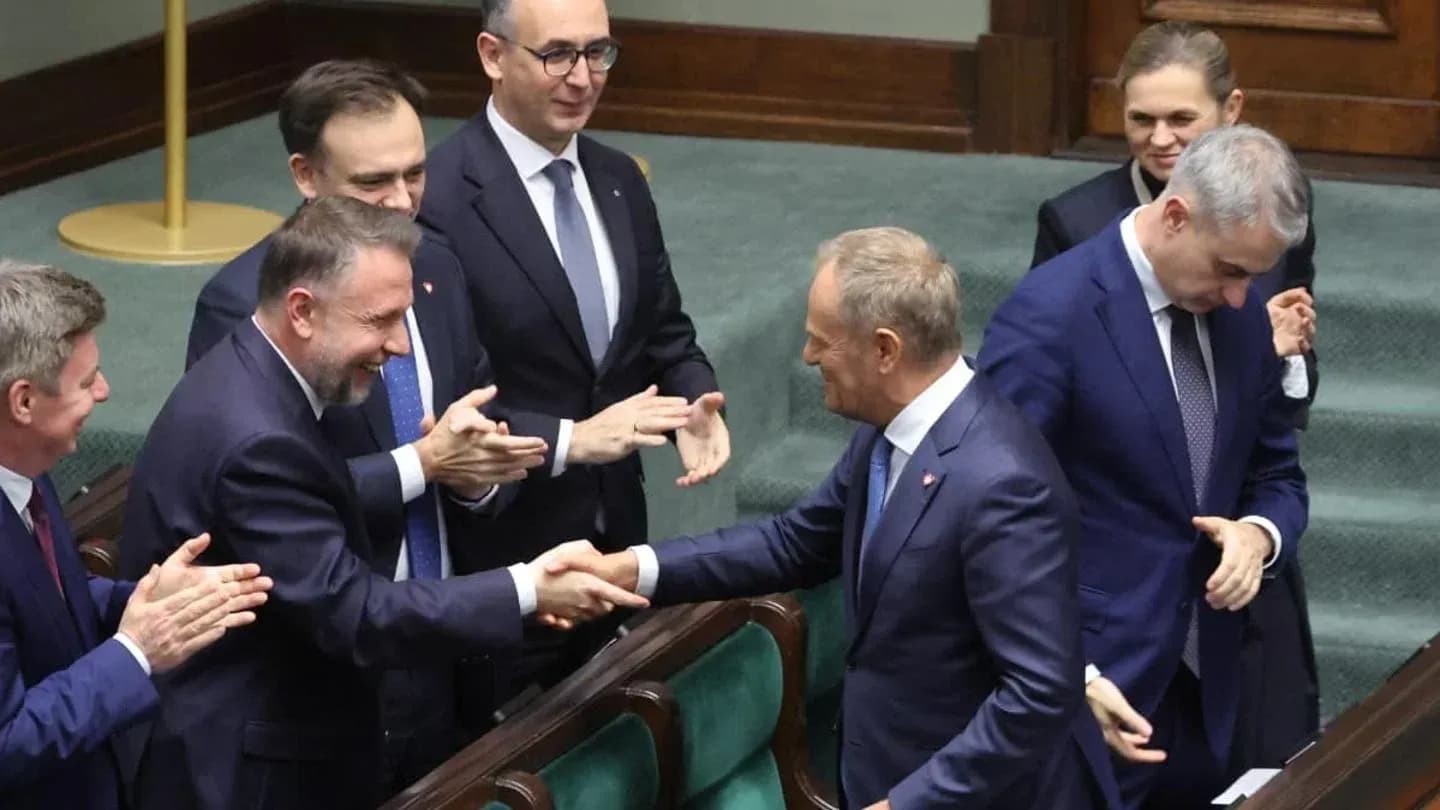
The outlet links the protest to the conflict over the Constitutional Tribunal. However, its account that supporters of the prime minister ‘seized’ the building with police assistance and removed its previous leadership has not been verified by this newsroom. The government offers the opposite explanation for the police intervention: protecting judges who had been prevented from starting work.
In an address on 31 October, Tusk discussed clashes outside the Tribunal the previous day, 30 October. According to his account, judges elected by the Sejm had taken an oath, but President Karol Nawrocki refused to receive it, while Tribunal president Bogdan Święczkowski blocked them from beginning work. The prime minister said the new judges were attacked when they decided to take up their duties, and that police protected the Tribunal. This is the position of a head of government involved in the conflict, not an independent finding on the legality of either side’s actions.
The dispute therefore goes beyond a harsh slogan against the prime minister: the sides give different accounts of who is entitled to work in the Tribunal and whom police were protecting. The banner itself expresses a political accusation but does not settle the dispute over judicial authority. Assessing the government’s actions requires the grounds for admitting judges and deploying police, rather than the participants’ party affiliations.
On 6 November, the conflict was also accompanied by a parliamentary attempt to dismiss Interior and Administration Minister Marcin Kierwiński. According to the prime minister’s office, the Sejm rejected the no-confidence motion, the third unsuccessful attempt to remove him. Defending the minister, Tusk described allegations of a coup as grotesque. Kierwiński retained his post and responsibility for the ministry overseeing the police.
Primary sources
Documents and statements this story is based on.