
"Zelenskyy is not the person": Trump publicly disavows Ukrainian president, says Putin is easier to deal with
Donald Trump told Newsmax on October 16 that Zelenskyy is "not the person we should be dealing with" and that Putin is easier to negotiate with. It follows a diesel deal with the Kremlin, Starshield restrictions, and a bipartisan letter from 22 congressmen demanding sanctions under the Graham Act.
 1 / 4
1 / 4Start with the headline. On October 16, Donald Trump sat down with Newsmax and said what Kyiv would rather not hear. "Zelenskyy is not the person we should be dealing with," the U.S. president stated. He added: "Dealing with Zelenskyy is harder than dealing with Putin."
Formally, it's an interview. In substance, it's a public repudiation of the leader of a country the U.S. still calls an ally.
Trump didn't stop there. He called Ukraine's strikes on Russian oil refineries "a disgrace," accused Zelenskyy of "not doing the world any favors," and repeated his demand for elections — suggesting Ukraine needs a new president who will cut a deal.
This is not the first warning. Over the past week, the Trump administration has taken several steps that together look like a systematic dismantling of support for Ukraine.
On October 9, Trump announced a "diesel deal" with Putin: lifting sanctions on Russian diesel in exchange for 300,000 tonnes of fuel. On October 13, speed restrictions were imposed on Starshield terminals used by the Ukrainian military. On October 15, Reuters reported that the order came from inside the White House.
And now — direct public discrediting of Ukraine's president by the U.S. leader.
The Kremlin quickly picked up the rhetoric. On October 12, Peskov rejected the 60-day ceasefire that Zelenskyy had offered as a condition for elections. Instead, Moscow proposed a ceasefire only on election day — effectively demanding capitulation.
And what about Kyiv? On October 14, Zelenskyy told Piers Morgan that Ukraine is "losing a strong partner" and feels betrayed. But the next day, Ukraine resumed strikes on Russian refineries, as if nothing had happened. As of publication, the Presidential Office has not issued an official response to Trump's October 16 interview.
The impression is that the authorities in Kyiv are trying not to notice the scale of the catastrophe. Or they simply don't know what to do.
Trump, meanwhile, keeps going. In the interview, he also mentioned Crimea — "the most valuable part of Ukraine," which was "given away under Obama," — and blamed Zelenskyy for a "very bad" meeting with Putin.
Reminder: on October 15, a bipartisan group of 22 U.S. congressmen sent Trump a letter demanding he implement the "Graham Act" — sanctions against Russia and Iran — and cancel the diesel deal. The deadline is October 18. Whether this will change Trump's position is an open question.
For now, the signal from the White House is clear: Zelenskyy is a problem, not a partner. And if this logic translates into a decision to cut military aid, Ukraine will find itself in a situation no one prepared for.
Does Trump's statement mean the U.S. has definitively switched to Russia's side? Not directly. But a public comparison favoring Putin, calls for a change of leadership, and restrictions on technology — this is no longer just rhetoric. It is policy.
And it hits Ukraine hard.
Primary sources
Documents and statements this story is based on.
Lutsk in Darkness, Kyiv Under Emergency Blackouts: 370,000 Subscribers Without Power After Russian Night Strike
Record Russian drone attack: 850+ UAVs in 33 hours, 360 on Kirovohrad region, strike on Naftogaz gas facility. The “energy truce” was a reloading pause
“Enough Is Enough”: Zelenskyy Lifts Ban on Strikes on Russian Refineries, Breaks Trump’s “Energy Truce”
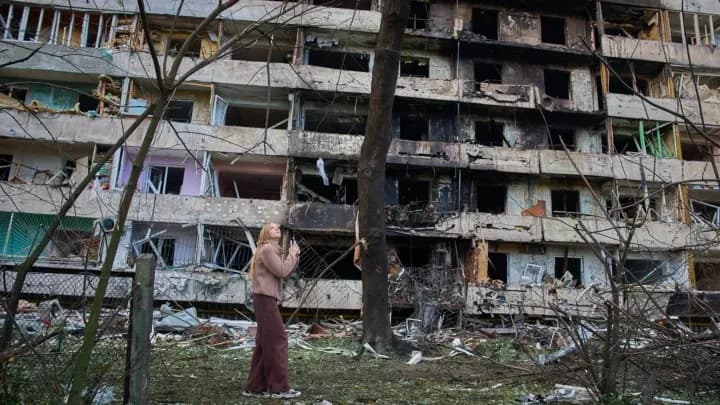
Starlink Throttled, Intel Withheld: US Left Ukraine Blind Ahead of 39-Ballistic Strike — 6 Dead, 600,000 Without Power