Melania Trump meets Ukrainian and Russian delegations on Oleshky
After the November 5 meeting, Lubinets explained the shared seating and Oleshky negotiations. The first evacuees have completed treatment; expanding the mission still requires agreements.
Updated November 8, 2026. This update clarifies the White House seating arrangements, the humanitarian negotiations and support for evacuees after treatment.
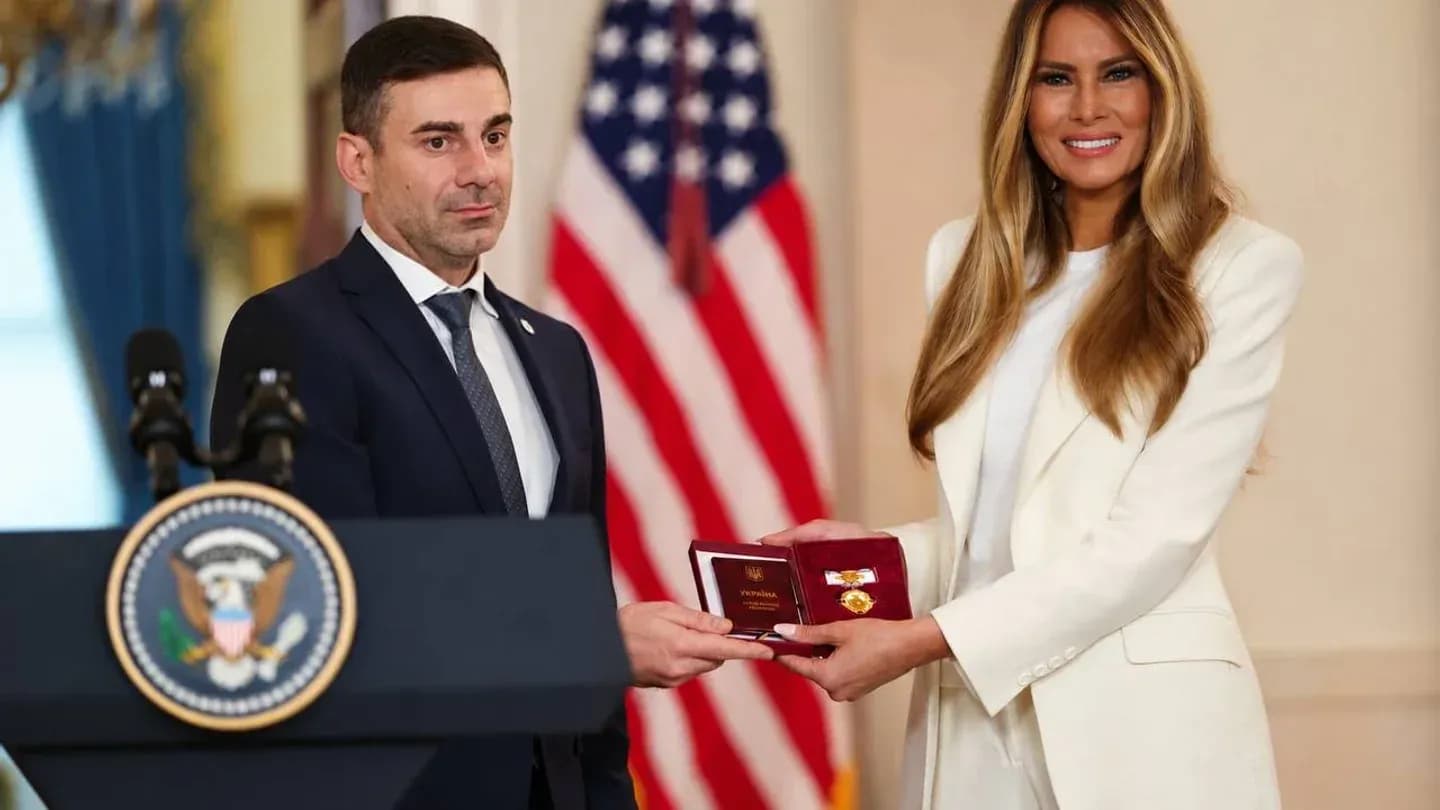
US First Lady Melania Trump met representatives of Ukraine and Russia at the White House on November 5, 2026, following the humanitarian operation in occupied Oleshky in the Kherson region. After the meeting, Ukrainian ombudsman Dmytro Lubinets confirmed that he had sat beside Russian human rights commissioner Yana Lantratova: he said White House protocol, not the Ukrainian delegation, had determined the seating arrangements.
Lubinets explained that a direct channel for humanitarian negotiations with Lantratova had been operating before the ceremony. For residents who need a safe way out, what matters is the result of those contacts — the ability to leave a dangerous area and receive help, rather than the symbolism of adjacent seats.

At the meeting, Melania Trump expressed hope that the mission would mark the beginning of a ceasefire process in Russia’s war against Ukraine. She said she had joined the effort in September, using contacts with both sides established to secure the return of Ukrainian children who had been unlawfully taken away. Lubinets presented her with the Order of Princess Olga, First Class, awarded by Volodymyr Zelenskyy for humanitarian assistance and support for saving and evacuating civilians. The first lady thanked him for the award and handed over a letter to Zelenskyy.
In an official statement on November 6, the ombudsman’s office also specified that the first lady’s adviser Marc Beckman had received the presidential Golden Heart award for his role in humanitarian efforts in Oleshky. The office put the number of children returned with Melania Trump’s assistance since October 2025 at 30. This is a separate effort, not the number of people evacuated from Oleshky.
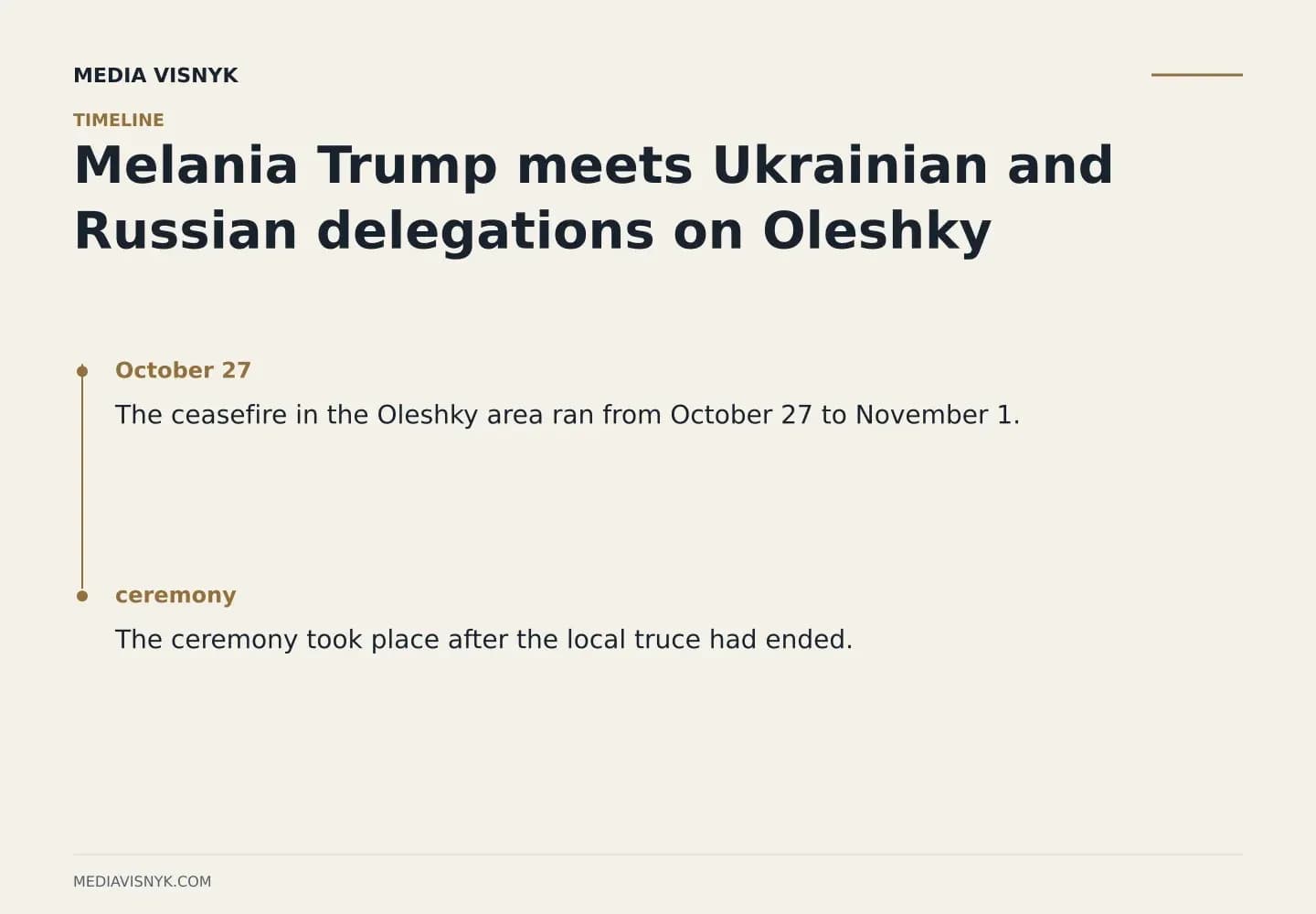
The ceremony took place after the local truce had ended. The ceasefire in the Oleshky area ran from October 27 to November 1. On November 2, the ombudsman’s office reported a ceasefire lasting five days, 19 hours and 59 minutes, which allowed civilians to be evacuated, humanitarian aid to be delivered and repatriation measures to be carried out. The office had announced that Oleshky residents had crossed the border on October 31; Lubinets reached the agreements enabling the mission with Lantratova, with Melania Trump’s assistance.
Later, at a press conference at the Ukrainian embassy in Washington, Lubinets described how the mediation had worked: he passed Ukrainian proposals to Beckman, who informed Melania Trump; the American side contacted Russian representatives, and Kyiv then received a response. The ombudsman said negotiations had taken place almost daily. To monitor implementation of the agreements, Ukraine proposed having representatives of the parties physically present on site; Lubinets himself was on occupied territory.
Zelenskyy had earlier said that Lubinets and Davyd Arakhamiia were to raise the possibility of extending the Oleshky approach to other occupied territories at the White House. At the time, the president did not know how the United States and Russia would respond. Lubinets now reports new requests from Oleshky residents for evacuation and a positive Russian response to discussions of potential next steps. The date and terms of a new mission have not yet been announced.
Lubinets also said the Ukrainian delegation had presented Melania Trump with proposals to secure the return of civilians unlawfully held by Russia, alongside continued work on children and support for people in occupied territories. Discussion of these areas does not mean that a new humanitarian corridor or a general ceasefire has already been agreed.
On November 7, Lubinets said the first evacuated Oleshky residents had completed treatment and left to join relatives. He specified that those discharged had relatives or acquaintances on Ukrainian-controlled territory. Others continue to receive medical, social and psychological assistance. People are receiving help to replace passports and other documents, obtain bank cards and displacement certificates, and apply for living assistance.
Temporary housing options have been identified for those unable to stay with loved ones. In the week beginning November 9, the ombudsman’s office intends to help evacuees travel to their chosen regions and settle in; care and longer-term accommodation for people with limited mobility are being arranged separately. Lubinets has assigned his representative Olha Altunina to coordinate this support.
Primary sources
Documents and statements this story is based on.