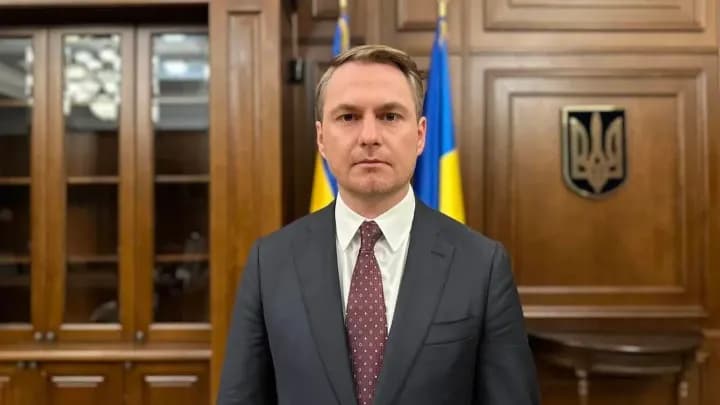
Kravchenko announced a suspicion notice against the NABU chief. Hours later, his own office said it had no procedural effect
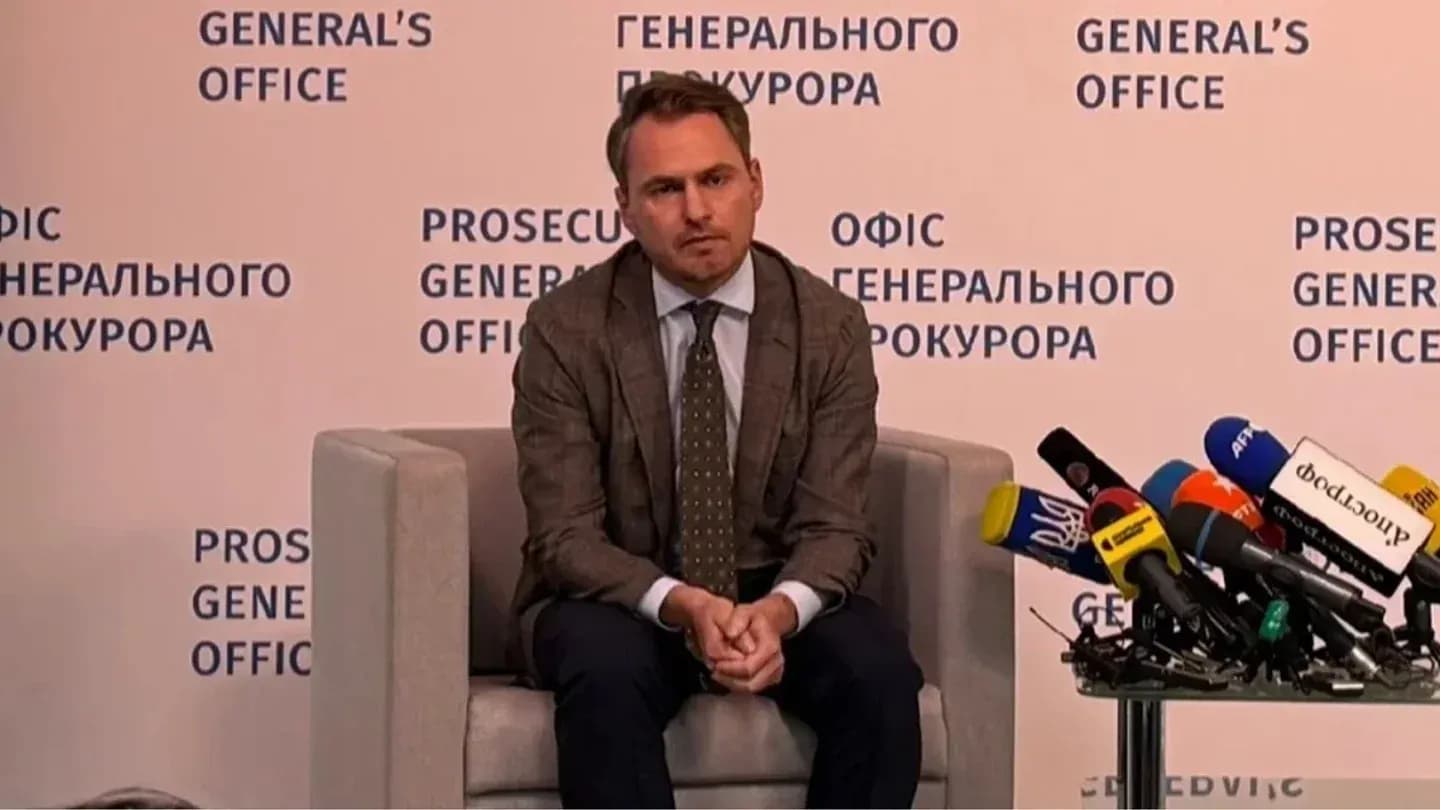
Kravchenko said he signed a suspicion notice against NABU chief Semen Kryvonos and published over 30 pages. By evening, his own office said no lawful notification occurred and the register entries were cancelled.
 1 / 4
1 / 4The confrontation began before the accusations against Kryvonos
Looking only at September 14 produces a deceptively simple story: Ukraine's prosecutor general accuses the head of NABU, President Volodymyr Zelenskyy demands the prosecutor general's removal, and parliament prepares to vote.
The confrontation began earlier.
On September 5, NABU and the Specialized Anti-Corruption Prosecutor's Office, or SAPO, announced that they had uncovered an alleged criminal organization led, according to investigators, by a senior official of the Prosecutor General's Office.
Investigators allege that members systematically received illicit payments from fraudulent call centers in return for allowing them to operate and then laundered the proceeds. NABU identified five alleged participants.
That investigation is central to understanding what followed.
It reached directly into the institution headed by Kravchenko.
But it is important not to exaggerate what investigators have established.
Reuters reported that Kravchenko himself had not been formally charged. He has denied involvement in the alleged corruption scheme.
It would therefore be premature to present as fact the politically powerful narrative that NABU “caught” the prosecutor general and that he then retaliated against NABU's director.
What is established is narrower: NABU and SAPO investigated senior personnel inside the Prosecutor General's Office, and days later Kravchenko publicly advanced criminal allegations against the head of NABU.
The sequence raises an obvious question about motive.
It does not answer it.
Kravchenko had already submitted his resignation
The timing of Kravchenko's departure is equally important.
He announced his resignation on the evening of September 7 — a full week before releasing the allegations against Kryvonos.
Earlier the same day, Kravchenko had told journalists that he did not intend to resign voluntarily. His position changed after a meeting involving the president, and that evening he described his resignation as a political decision.
That means the process of removing Kravchenko did not begin simply because he targeted the NABU director on September 14.
It had already started.
The September 14 confrontation, however, clearly accelerated and intensified the political crisis.
What Kravchenko accused the NABU director of
On the morning of September 14, Kravchenko said he had signed a written notice of suspicion against Semen Kryvonos.
He later published more than 30 pages of material.
The allegations concern several episodes.
One relates to events dating back to 2008 and documents concerning paternity. According to the version published by Kravchenko, falsified documents allegedly allowed Kryvonos to obtain an amnesty in an earlier criminal case.
Another part of the material concerns a land-related episode and an alleged improper benefit.
Those are serious allegations.
But they remain allegations advanced publicly by Kravchenko. They are not court findings establishing Kryvonos's guilt.
Kryvonos rejected the accusations. At a joint briefing with SAPO chief Oleksandr Klymenko, he said he had not seen a written suspicion notice, that nobody had personally served one on him and that no such document had been delivered to NABU or SAPO.
Then Kravchenko's own office contradicted the central claim
Initially, the dispute appeared to be about service.
Kravchenko said the document had been signed and officially sent.
Kryvonos said he had received nothing.
By the evening of September 14, however, the Prosecutor General's Office had taken a much stronger position.
It said that nobody in the criminal proceeding — including the head of the anti-corruption body — had been notified of suspicion according to the procedure required by the Criminal Procedure Code.
The office also said there were no legal grounds for such notification and that the corresponding entries in Ukraine's Unified Register of Pre-Trial Investigations had been cancelled.
That transformed the story.
The question was no longer merely whether a letter had reached its recipient.
The institution headed by Kravchenko was effectively saying that a legally valid notification of suspicion had not occurred.
Kravchenko insists that it did
Kravchenko disputes that position.
He said that the notice had been personally prepared and signed by the prosecutor general, that the legally required information had been entered into the register and that the document had been sent through an official procedure.
This creates an unusually direct institutional contradiction.
Kravchenko says the procedure was valid.
The Prosecutor General's Office says no lawful notification took place and the register entries were cancelled.
For that reason, describing Kryvonos simply as a “suspect” without explaining the dispute would be misleading.
The most accurate description as of this review is that Kravchenko signed and published a document he considers a notice of suspicion; Kryvonos says it was never served on him; and the Prosecutor General's Office subsequently said there had been no valid notification under the Criminal Procedure Code.
Zelenskyy suspended Kravchenko the same day
On September 14, Zelenskyy called on lawmakers to approve Kravchenko's removal without delay.
Later that day, he signed presidential decree No. 905/2026 suspending Kravchenko from the office of Prosecutor General.
Suspension should not be confused with completed dismissal.
Draft resolution No. 16064 was submitted to the Verkhovna Rada seeking parliament's consent for the president to dismiss Kravchenko.
The parliament's law-enforcement committee considered the proposal and recommended approval.
As of the latest check for this article, at 16:07 Kyiv time on September 15, we had not found a published final result for the vote on resolution No. 16064 in the official materials available to us.
That point must be checked immediately before publication.
Why Brussels is watching
The European Commission did not determine which side is right in the Kryvonos case.
Commission enlargement spokesperson Guillaume Mercier said Brussels does not comment on individual criminal proceedings.
He nevertheless stressed a broader principle: independent anti-corruption institutions are a cornerstone of the rule of law in Ukraine, must be protected and must be allowed to carry out their work effectively.
Fighting corruption remains a key requirement for countries seeking EU membership.
This should not be overstated.
The Commission did not announce a freeze of Ukraine's accession negotiations, sanctions or any automatic penalty connected to this particular confrontation.
The significance is institutional.
The EU's assessment of Ukraine does not depend merely on whether NABU and SAPO formally exist. It also depends on whether they can operate independently when investigations touch powerful institutions.
Retaliation or an ordinary criminal case?
There is not yet enough evidence to answer that question conclusively.
The chronology is striking.
First, NABU and SAPO announce a corruption investigation involving a senior official inside the Prosecutor General's Office.
Kravchenko then submits his resignation.
A week later, he publicly announces a suspicion notice against the director of NABU and links his actions to materials that he alleges the anti-corruption bodies sought to seize or obstruct.
NABU and SAPO describe his actions as part of a systematic attack on independent anti-corruption institutions.
That sequence makes the possibility of retaliation a legitimate journalistic question.
But it does not prove retaliatory intent.
No court or independent investigation cited in the available sources has established that Kravchenko acted out of revenge for Operation Carthage.
The distinction matters.
What is established
NABU and SAPO are investigating an alleged criminal organization involving an official of the Prosecutor General's Office.
Kravchenko published a document accusing NABU director Semen Kryvonos of criminal conduct.
Kryvonos says he was not formally served with that document.
The Prosecutor General's Office later said no valid notification of suspicion occurred under the Criminal Procedure Code and that the relevant register entries were cancelled.
President Zelenskyy suspended Kravchenko, and a parliamentary dismissal procedure was launched.
What has not been established is that Kryvonos committed the crimes described in Kravchenko's material.
Nor has it been established that Kravchenko's actions were retaliation for NABU's investigation.
That line between evidence and interpretation is the central issue.
Within a single day, the headline “Prosecutor General issues suspicion notice to NABU chief” became a far more uncomfortable institutional question.
If the notice was legally valid, why did the Prosecutor General's Office later say it was not?
If the office is correct and no formal suspicion existed, what exactly did Kravchenko announce to the public?
The next reliable answers will have to come from procedural records, court decisions and evidence that survives scrutiny — not from the volume of competing public statements.
Primary sources
Documents and statements this story is based on.
- National Anti-Corruption Bureau of Ukraine — Call center cover-up and money laundering
- Ukrainska Pravda — Kravchenko published a suspicion notice against NABU director Kryvonos
- Ukrainska Pravda — Kravchenko began publishing materials concerning the NABU director
- Interfax-Ukraine — NABU director on the procedural document
- Interfax-Ukraine — position of the Prosecutor General's Office
- Ukrainska Pravda — Kravchenko submitted his resignation
- President of Ukraine — Decree No. 905/2026
- Verkhovna Rada Committee on Law Enforcement Activity
- Reuters — Zelenskiy wants swift exit of Ukraine's prosecutor general as graft clashes plague government
- European Commission position reported by Interfax-Ukraine
- Verkhovna Rada of Ukraine — draft resolution No. 16064
- Law of Ukraine No. 4560-IX — amendments to the Criminal Procedure Code
- Ruslan Kravchenko — original publication