
55+ in the Trenches: Why the State Won’t Let Grandpas Go Home
An opinion column on the stalled demobilization of soldiers aged 55 and older: promises from Kyiv since spring 2026, a bill stuck after first reading, and an “army rejuvenation” that keeps 60-year-olds in the trenches.
 1 / 4
1 / 4Imagine a 58-year-old man. In civilian life, he’d be babysitting grandchildren, tending a vegetable patch, drinking tea on the porch. Instead, he’s spent three years staring through a rifle scope. Not because he enjoys it. Because the state hasn’t found a way to replace him. Or hasn’t bothered to look.
Promises to demobilize soldiers aged 55 and older have been coming from Kyiv since at least spring 2026. A bill was registered in parliament. It passed a first reading? Something like that. Then silence. Committees, amendments, coordination. Meanwhile, people in the trenches are getting older. That’s not a metaphor – it’s literal.
Google autocomplete doesn’t lie: “demobilization 55+”, “will there be demobilization 55+”, “demobilization of 55 and older from the Armed Forces” – steady high search volume. People are looking for answers because the authorities are silent. Military Telegram channels and chat groups are boiling: some say they’re ready to drop their weapons, others say they’ve lost faith in justice. But the worst part is society’s quiet acceptance: “Come on, grandpa, hang in there a little longer.”
And here’s the core absurdity. We call this “army rejuvenation.” Rejuvenation is when 25-year-olds replace 45-year-olds. In Ukraine, it means promising to someday demobilize a 55-year-old while keeping a 60-year-old in the field. Great logic. Especially given the pension age is 60. So a man who is nearly a pensioner is fighting, and the state says, “Wait, we’re working on it.”
Why is the law stalled? The government is afraid. Afraid that letting 55+ go would mean losing a large number of experienced soldiers. And then what? They’d have to mobilize more young people. Young people are voters – they have protest potential. Grandpas? They won’t go to Maidan. They’ll just quietly wait for the war to end in a trench. Convenient, isn’t it?
But there’s another side. People 55+ aren’t just “manpower.” They’re tired, often sick, worn down by war. They fight not because they want to, but because they have no choice. Every day the law is delayed is a day the state tells them, “You’re not needed at home. You’re needed here.”
Of course, someone will ask: “Then who will fight?” That’s a fair question. But the even fairer answer is that the problem isn’t the grandpas – it’s the state’s failure to effectively mobilize younger people. Instead of building a fair system of rotation and demobilization, it clings to those who have already given everything.
While officials in Kyiv “worry about combat effectiveness,” a grandpa with a rifle sits in a trench. He’s waiting. Waiting for a law that was promised in spring. Waiting for justice. But justice, it seems, is stuck in parliamentary committees.
This isn’t a column demanding immediate demobilization of everyone 55+. It’s a column about promises that must be kept. Otherwise, what’s the point? For now, 55+ are in the trenches. And that’s not a joke. It’s the reality we somehow call “army rejuvenation.”
SBU Shuts Down Four Draft-Dodging Schemes. How Many Schemes Are Inside the TCCs?
Ukraine’s SBU dismantles 9 draft-dodging schemes: bribes up to $20,000, military doctors and recruitment chiefs arrested
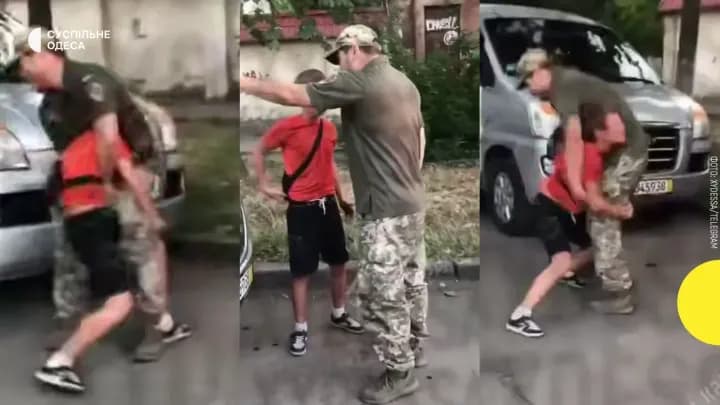
‘I’m completely alone’: viral video of a child after his father was taken by a Ukrainian recruitment centre raises a harder question