When Security Agencies Turn Their Guns on Each Other: What the SBU-HUR Clash Says About Rule of Law in Wartime Ukraine
An armed confrontation between the SBU and HUR in Kyiv left three military intelligence personnel injured and produced two criminal suspects. The deeper question is whether Ukraine's armed security institutions remain subordinate to law rather than institutional loyalty.
 1 / 4
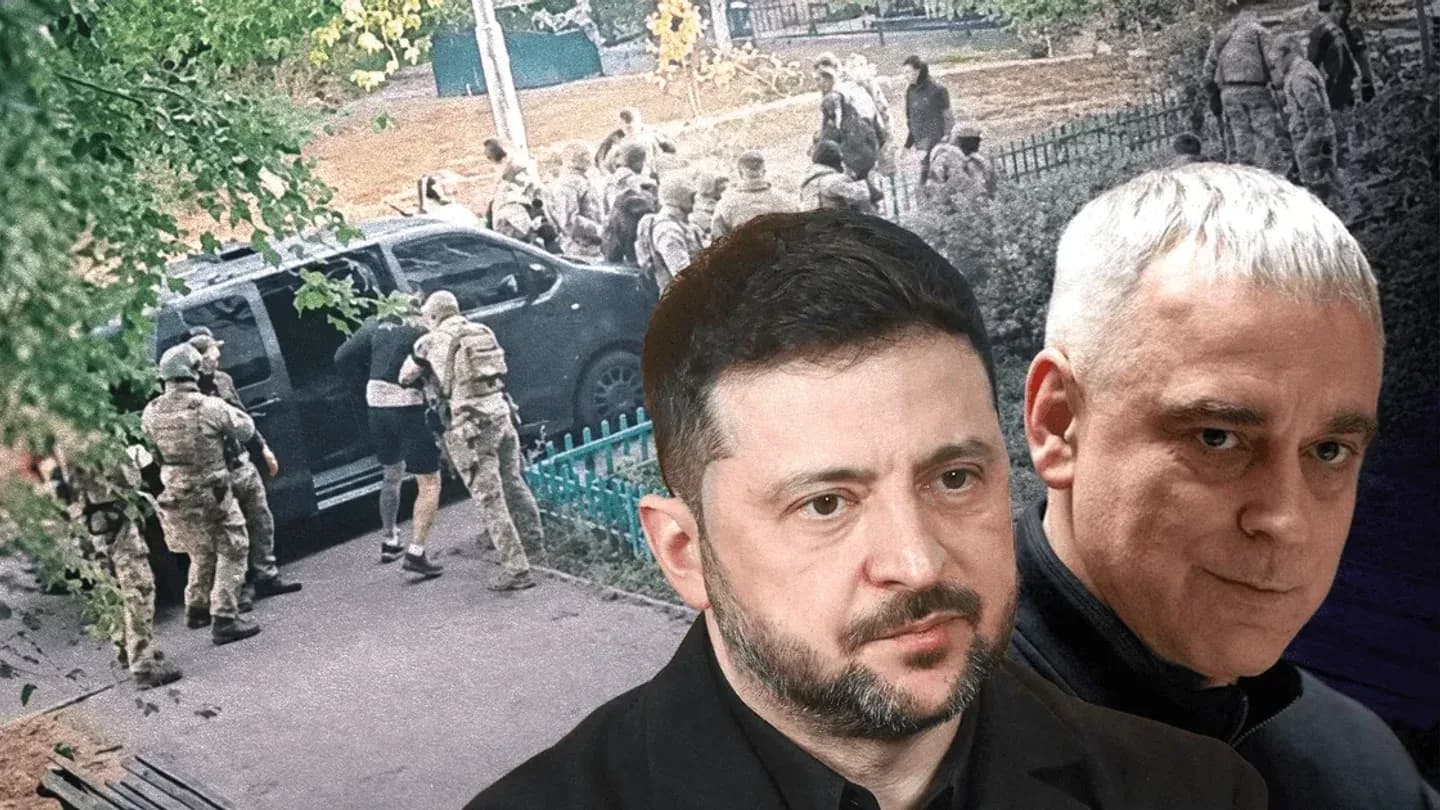
1 / 4Ukraine's Security Service, known as the SBU, is the country's main domestic security and counterintelligence agency. The HUR is the Defence Ministry's military intelligence directorate.
On the night of September 1-2, personnel connected to the two organisations became involved in an armed confrontation in a residential area of Kyiv.
Three HUR members were injured, according to Reuters. Ukraine's State Bureau of Investigation later announced two notices of suspicion over the use of firearms.
The competing explanations are dramatically different.
The SBU says the chain of events originated in an operation to prevent an assassination allegedly organised by Russia's FSB security service.
According to the SBU, Stepan Kaplunov, a deputy commander in the Russian Volunteer Corps serving on Ukraine's side, had contacts with Russian intelligence and was involved in preparations to kill a Russian opposition figure visiting Ukraine.
The SBU says it documented communications with an FSB representative on his phone and that Kaplunov initially acknowledged the contacts.
The service says that while its officers were carrying out investigative actions, an armed group obstructed them, blocked their vehicles and attacked the investigative team. SBU special forces then used weapons while stopping what the agency describes as armed resistance.
Kaplunov tells a radically different story.
He says he was seized on August 23, handcuffed and blindfolded, then held for nine days. He says psychological pressure led him to accept the SBU's version of his alleged Russian contacts, which he later retracted.
His lawyer has questioned whether proper detention procedures and access to legal counsel were provided. These are allegations, not findings established by a court.
But Ukrainian prosecutors have treated the allegation seriously enough to open a separate investigation into Kaplunov's disappearance, including who was involved, the motives and his movements during that period.
That creates an extraordinary institutional problem.
Investigators must determine whether military intelligence personnel attacked SBU officers engaged in a lawful counterintelligence operation.
At the same time, they must examine allegations that members of the SBU itself may previously have acted unlawfully.
This is why describing the episode simply as a "shootout" misses its significance.
A democratic state does not differ from an armed faction because its personnel have uniforms or official badges.
It differs because coercive power is governed by rules.
Who may detain someone?
Under what authority?
Where is the detainee held?
When does a lawyer gain access?
Who authorises searches?
Under what circumstances can firearms be used?
And who investigates security officers when those rules may have been breached?
There is currently no established evidence that this particular confrontation was caused by bribery or a conventional corruption scheme.
Calling it proof of corruption would therefore go beyond the evidence.
The deeper concern is institutional.
A state begins to resemble a system of competing clans when formal procedure becomes weaker than personal or institutional loyalty, when armed agencies behave like separate centres of power, and when accountability depends on internal influence rather than independent law.
The Kyiv incident does not prove that Ukraine has crossed that line.
It does show why the line matters.
The issue also predates the current confrontation.
In its 2025 Ukraine report, the European Commission said there had been no progress during the reporting period in reforming the SBU. It called for a narrower national-security mandate, effective safeguards against abuse and stronger internal and external oversight and anti-corruption mechanisms.
That assessment gives the Kyiv clash wider importance for Ukraine's European integration.
The country is not merely being asked to defeat corruption in the conventional sense. It is being asked to demonstrate that powerful security institutions with extraordinary wartime capabilities remain accountable to law.
There is also a history of distrust between parts of the intelligence establishment.
Ukrainian outlet hromadske has pointed to earlier tensions and to former HUR chief Kyrylo Budanov's public allegations concerning the 2022 death of intelligence officer Denys Kireyev. That historical dispute does not establish any connection to the present case and should not be treated as proof of one. It does, however, show that inter-agency distrust did not begin this week.
Zelenskyy has demanded investigations and said officials in both agencies will face personnel consequences. On September 3, he said deputy heads responsible for the situation would be dismissed and stressed that both institutions must be held accountable.
That is a necessary first step.
It is not yet an answer.
The public still needs to know what legal authority was used in Kaplunov's case, who authorised the relevant operations, who initiated the shooting, whether the force used was lawful and proportionate, and whether responsibility — if investigators find wrongdoing — will extend up the chain of command.
On September 4, Kyiv's Pechersk District Court considered preventive measures for HUR serviceman Serhii Ivanov and SBU serviceman Nazar Verkhola. Neither was ultimately kept in pre-trial detention, while proceedings were held behind closed doors.
Wartime intelligence inevitably requires secrecy.
Ukraine's services are confronting a real Russian intelligence and sabotage threat, and many operational details cannot responsibly be made public.
But secrecy and impunity are not the same thing.
Classified information may protect an operation from an enemy.
It cannot be allowed to remove state coercion from legal accountability.
That is ultimately why this case matters outside Ukraine as well.
The question is not whether Ukrainian intelligence agencies should be powerful during wartime.
They clearly must be.
The question is whether that power remains controlled by institutions strong enough to investigate their own armed personnel when something goes wrong.
If Ukraine can answer that question convincingly, this episode can become evidence that accountability still functions under extreme pressure.
If it cannot, the damage will extend far beyond one street in Kyiv.
It will reinforce the most corrosive belief any society can develop: that ordinary citizens live under one set of rules while powerful armed institutions live under another.
Primary sources
Documents and statements this story is based on.
- State Bureau of Investigation — "SBU-HUR Defence Ministry shootout: two notices of suspicion announced in criminal proceedings"
- Security Service of Ukraine — information on the special operation of September 2
- SBU — September 3 statement on the conflict and the Kaplunov case
- President of Ukraine — address of September 3
- Reuters — Ukraine’s Zelenskiy says investigation underway after clash between two security agencies
- Suspilne — preventive measure for Serhii Ivanov
- Suspilne — preventive measure for Nazar Verkhola
- hromadske — the background of the SBU-HUR conflict
- European Commission — Ukraine Report 2025
- HUR of the Defence Ministry of Ukraine — statement on a disinformation campaign