
$1 Million for Drones: Ukraine's Anti-Corruption Bodies Name New Suspects in Border Service Bribery Case — With a Crypto Trail
NABU and SAP have named new suspects in a $1 million bribery case around a drone supply tender for Ukraine's State Border Guard Service. According to investigators, the money was extorted by the bidder who lost the tender, while a border service official received payments in USDT. The new charges cover bribery and money laundering.
 1 / 4
1 / 4On 23 September 2026, detectives of the National Anti-Corruption Bureau of Ukraine (NABU), under the procedural supervision of the Specialized Anti-Corruption Prosecutor's Office (SAP), reported new suspects in a high-profile case. At its core: a $1 million unlawful benefit demanded in exchange for the unimpeded supply of drones to Ukraine's State Border Guard Service.
The new suspicions cover different offences — giving a bribe and money laundering. In plain terms: the investigation has moved further along the chain, reaching those who passed the money and those who laundered it.
Now, how the scheme worked.
Step one. The State Border Guard Service announces a tender for the supply of FPV drones. The sum is large: according to Ukrainian media, around 760 million hryvnias — roughly $18 million. That scale explains why the "service" of smooth delivery was priced at $1 million.
Step two. Someone wins the tender. The company of one of the case's figures — the owner of a private drone manufacturer — loses.
Step three. And here is the most remarkable part. According to the investigation, it was precisely the entrepreneur whose drones were not selected who began extorting $1 million from the winner. The logic is cynical: the money was meant to preserve his ties with the border service leadership. For the future.
Step four. According to SAP, the $1 million amounted to roughly 5–10% of the value of the future contract. The funds, per the investigation, were to be divided among the scheme's participants and officials.
Step five — the payments. A new episode established by NABU: a border service official received 50,000 USDT for helping a company win the tender. USDT is a cryptocurrency pegged to the US dollar, so this is about $50,000 — more than 2.1 million hryvnias at the National Bank's exchange rate at the time of the operation.
And there is more. According to several Ukrainian outlets, investigators also documented transfers to the same official of over 350,000 USDT. Some media have also reported crypto assets worth around 15 million hryvnias and a Mercedes registered to the official's wife. These details could only be partially verified at the time of writing; the full texts of the suspicion notices were not publicly available.
Now, the key question. How did a company that lost the tender have any leverage over the winner at all?
The investigators' answer is effectively embedded in the wording: ties with the border guards. In other words, the outcome of a public procurement — a procedure with documents, criteria and protocols — could in reality be decided not on paper but in back offices. The tender winner, having secured the contract, faces a simple choice: pay, or expect trouble delivering.
That is the most alarming part of this story. This is not a classic kickback scheme; it is a situation where even a fairly won tender for equipment critical to the front line becomes an object of bargaining.
To be fair, there is a strong counterargument. The very fact that we know about this scheme at all is down to NABU and SAP. The case was uncovered, suspects named, crypto flows traced. Ukraine's independent anti-corruption institutions — under sustained political pressure in recent years — are still functioning.
Also worth noting what this case does not contain. The suspects have not been named publicly; NABU traditionally withholds names until a court verdict. No position from the defence has appeared in public. And a suspicion notice is not a conviction — the presumption of innocence applies.
What next? The investigation continues, and the new cryptocurrency episodes suggest the chain may be longer than it first appeared. The key question is no longer just who received how much, but whether the investigation will reach those who created the very possibility of such a scheme within Ukraine's wartime defence procurement system.
Because as long as a tender winner has to pay the bidder who lost, drones for the border guard remain a secondary concern. And that is the worst thing one can say about procurement in a country at war.
Primary sources
Documents and statements this story is based on.

A $670,000 Dubai Villa, a Vanished Prosecutor General, and Zero Investigations: Ukraine's Integrity Test
Mudra Discussed Bvlgari and Van Cleef; They Were Absent From Her Same-Day Declaration
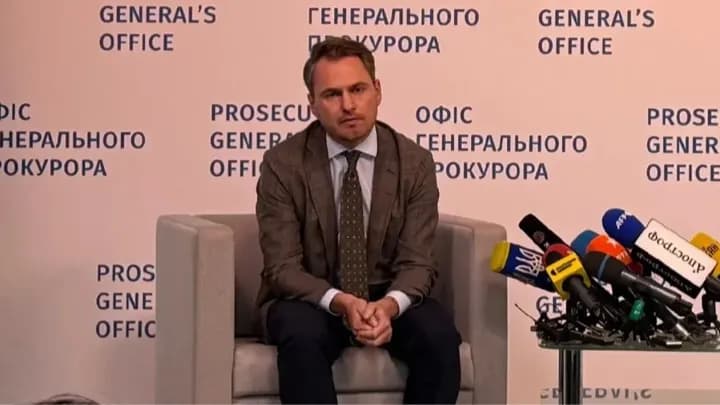
Kravchenko announced a suspicion notice against the NABU chief. Hours later, his own office said it had no procedural effect

Ukraine's prosecutor general offers resignation as “Carthage” investigation reaches his office