
Britain Is Sharing Classified SCALP Know-How With Ukraine — and That Matters More Than Another Missile Delivery
Britain has authorised MBDA to release classified information on British components used in the SCALP long-range cruise missile so France and Ukraine can move ahead with local assembly lines inside Ukraine.
 1 / 4
1 / 4For most of the war, Western missile assistance to Ukraine has followed a familiar model.
A weapon is manufactured abroad.
An allied government approves a transfer.
Ukraine receives a finite number of missiles.
Once they are fired, Kyiv needs another political decision and another delivery.
The British announcement on August 24 points toward a different model.
The UK government said it had agreed that defence company MBDA could release classified information covering British components of the French SCALP long-range missile in order to support local assembly in Ukraine.
The distinction is crucial.
Britain did not say it was handing Ukraine every classified technical detail associated with Storm Shadow or SCALP.
The official wording is narrower: classified information on UK components.
What those components are has not been publicly disclosed.
That is exactly what one would expect when dealing with sensitive missile technology.
But the political significance is clear.
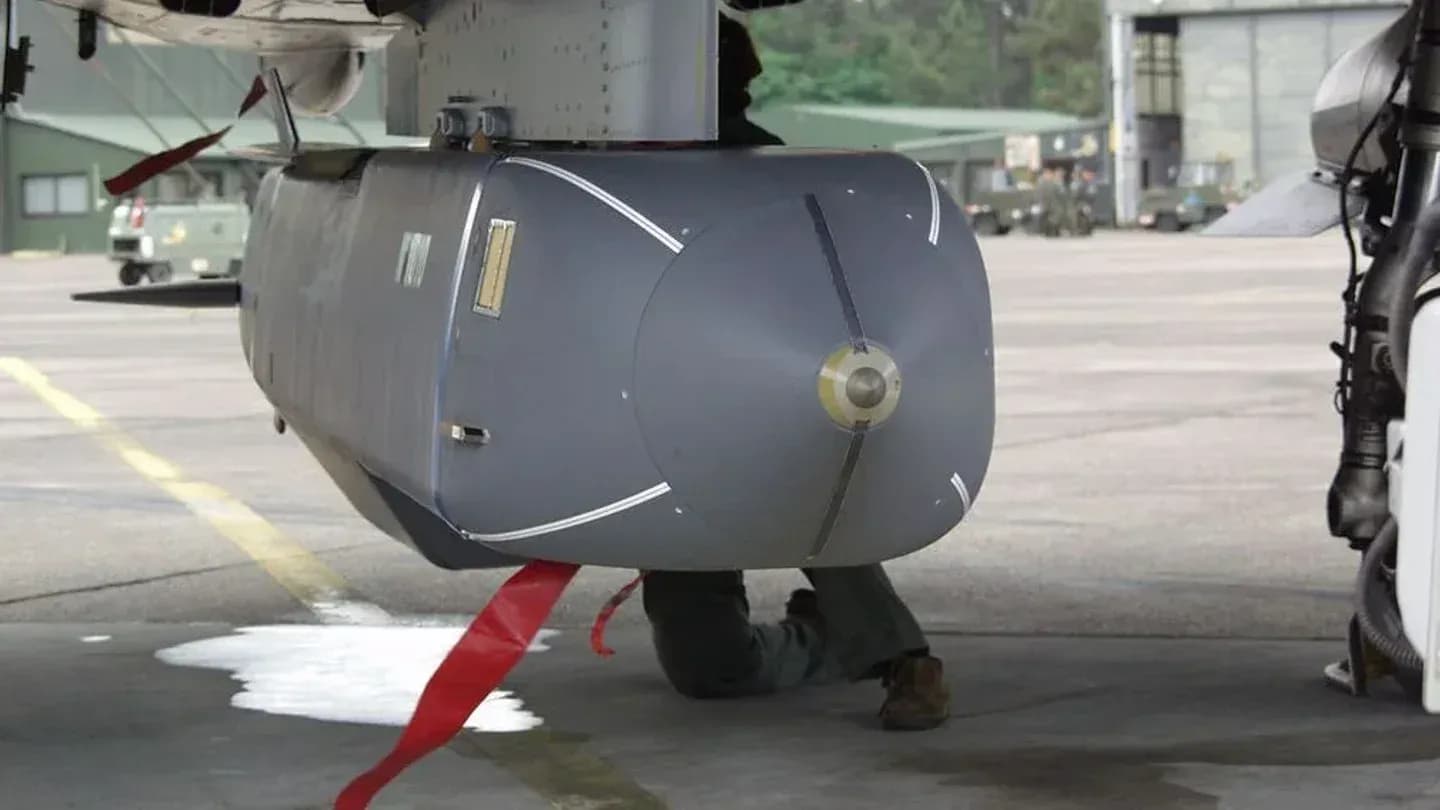
SCALP and Storm Shadow are closely related versions of a jointly developed European deep-strike weapon.
The British government itself describes SCALP as the French-produced version of the UK’s Storm Shadow and says the two rely on shared British and French technology.
That creates a legal and industrial problem for any attempt to manufacture the missile in a third country.
France cannot necessarily transfer technology owned or controlled by Britain without British authorisation.
And that is where the August 24 decision fits into a larger story.
France had already taken its own step.
In a July 2026 joint declaration with Ukraine, Paris authorised licensed production of SCALP missiles in Ukraine before the end of 2026 and said work should begin as soon as possible.
The British decision therefore did not create the Ukrainian production project from scratch.
It removed a major obstacle to implementing it.
France can license the French side of the programme.
Britain is now permitting the release of sensitive information connected to British components.
Only when both technology owners cooperate can a Franco-Ukrainian assembly project realistically move forward.
That is more significant than another shipment of completed missiles.
Missile donations are limited by stockpiles.
Production capacity is different.
If Ukraine can assemble SCALP domestically, even initially from imported subassemblies, it begins to acquire an industrial capability that can survive beyond a single aid package or political cycle.
This is especially relevant because Britain and France are rebuilding their own stocks.
In 2025, the two countries agreed to acquire new Storm Shadow/SCALP missiles and upgrade production lines after the weapon’s successful use in Ukraine.
MBDA described the programme as part of a broader effort to strengthen European defence-industrial resilience.
In other words, Ukraine is not receiving missiles from allies with unlimited inventories.
The same countries supplying Kyiv also need to replenish their own arsenals.
Adding Ukrainian assembly capacity offers one way to increase the total industrial base instead of simply dividing a fixed number of missiles between national stockpiles and Ukraine.
The weapon itself is a sophisticated system.
MBDA describes Storm Shadow/SCALP as an air-launched conventional deep-strike cruise missile designed to attack high-value fixed or stationary targets, including hardened infrastructure.
Its navigation combines inertial navigation, GPS and terrain referencing, while an infrared seeker is used during the terminal phase for precision targeting.
MBDA’s public technical data lists a weight of about 1,300 kilograms, a length of 5.1 metres and a range exceeding 250 kilometres.
Ukraine has already used both British-supplied Storm Shadow and French SCALP missiles operationally.
So this is not about introducing a completely unfamiliar weapon.
The strategic change is industrial.
However, the word assembly needs to be taken seriously.
The UK announcement does not say Ukraine will immediately manufacture every part of the missile domestically.
A local assembly line could initially rely heavily on components or major subassemblies manufactured elsewhere in the MBDA supply chain.
Ukraine could then perform final integration, assembly, testing and other authorised production processes.
How deep localisation will eventually go has not been publicly disclosed.
That is one of the most important unanswered questions.
There is an enormous difference between assembling imported modules in Ukraine and producing guidance hardware, propulsion elements, structures and other major components domestically.
The public documents do not yet allow that distinction to be resolved.
Timing is another constraint.
The Associated Press noted that the initiative is not an immediate answer to Ukraine’s current battlefield shortages.
Building an industrial line takes time, and operational benefits from the project are expected later rather than immediately.
That should be obvious.
Cruise missiles are among the most complex mass-produced weapons in modern arsenals.
A production programme requires secure facilities, specialist machinery, trained engineers, qualified suppliers, quality-control processes and safe handling of propulsion and warhead systems.
In Ukraine, it also requires something European factories normally do not face:
the facility itself becomes a potential Russian target.
Moscow has already reacted accordingly.
The Kremlin accused Britain of “adding fuel to the fire” and deepening its involvement in the conflict.
Russia has also threatened to target Ukrainian facilities involved in missile production.
Those statements are Russia’s position and do not establish that any specific SCALP production site is already operating or has been identified.
From London’s perspective, the argument is the opposite.
The UK says Ukraine has the right to defend itself and that strengthening Ukraine’s own defence-industrial capacity makes that defence more sustainable.
The broader pattern was visible during Prime Minister Andy Burnham’s visit to Kyiv.
SCALP technology was not the only sensitive area in which the two countries deepened cooperation.
Britain and Ukraine also signed a military artificial-intelligence partnership.
The UK will gain access to data and battlefield insights from Ukraine’s Avengers AI Labs, while British and Ukrainian researchers, companies and defence specialists work together on future military systems.
That makes the relationship increasingly reciprocal.
Britain possesses technologies, industrial capacity and intellectual property that Ukraine needs.
Ukraine possesses something Britain cannot reproduce in a laboratory: vast amounts of real-world data and experience from high-intensity modern warfare involving drones, electronic warfare, missiles and air defence.
The exchange is therefore no longer simply donor and recipient.
It is becoming industrial integration.
Storm Shadow/SCALP is a particularly clear illustration of how rapidly that relationship has changed.
In 2023, Britain became the first country to supply Ukraine with Western long-range cruise missiles of this class.
Three years later, it is authorising classified information to be released so Ukraine can participate in assembling the same missile family domestically.
That is a much bigger shift than a new delivery announcement.
A donated missile can be fired once.
Manufacturing knowledge can alter a country’s defence capability for decades.
The next milestone is therefore not how many SCALPs Britain or France sends to Kyiv.
It is when the first missile assembled under the Franco-Ukrainian programme emerges from a Ukrainian production line — and how much of it Ukraine will eventually be able to manufacture itself.
Primary sources
Documents and statements this story is based on.
- UK Government — “Britain is 100% behind you: Prime Minister Andy Burnham visits Kyiv”
- Prime Minister's Office — Meeting with President Zelenskyy
- Joint Declaration by the President of Ukraine and the President of the French Republic
- MBDA — Storm Shadow / SCALP
- MBDA — Storm Shadow / SCALP datasheet
- Associated Press — UK will help Ukraine make long-range missiles
- Reuters — Kremlin says British missile help “adds fuel to the fire”
- UK Government — Lancaster House 2.0
- UK Government — UK-Ukraine AI defence partnership