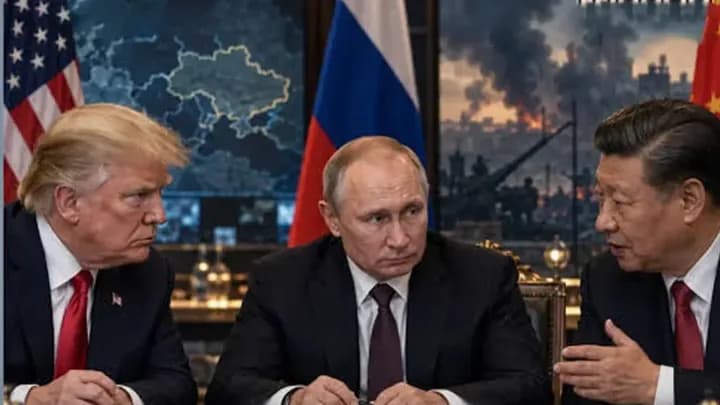
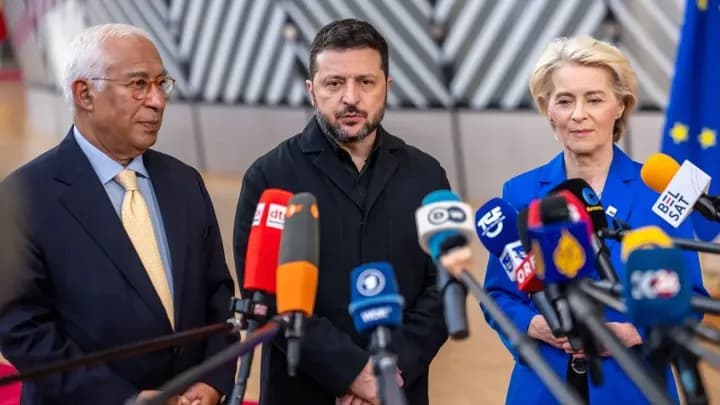
Trump Waives Russia Sanctions, Blames Zelenskyy for War — Then Calls to Smooth Things Over. Kyiv Scrambles to Decipher Washington
Donald Trump has signed an executive order waiving the Graham Act sanctions on Russia — including 500% tariffs — two days before they were due to take effect. He then publicly accused Volodymyr Zelenskyy of prolonging the war, prompting frantic calls from envoys Steve Witkoff and Jared Kushner and a denial from Marco Rubio of any pause in intelligence sharing.
 1 / 4
On 16 October 2026, Donald Trump did what Moscow had long hoped for and Kyiv had feared. He signed an executive order that effectively put on hold the “Lindsey O. Graham Sanctioning Russia and Iran Act of 2026” — a law that included, among other measures, 500% tariffs on Russian goods and tough restrictions on buyers of Russian energy.
Trump defended the move as a matter of “national interest” and a way to “keep Russia at the negotiating table.” The order came just two days before the sanctions were set to take effect. He used a waiver provision he had ensured was in the bill when he signed it into law in September.
In his public remarks, the president pointed to a “diesel deal” — an agreement to purchase Russian diesel fuel that he said his administration had secured. Details of the deal have not been disclosed, but the argument was clear: sanctions get in the way of trade, and trade is the path to peace.
On Sunday Trump escalated. In social media posts and public statements, he directly accused Volodymyr Zelenskyy of prolonging the war. “Zelenskyy doesn’t want peace,” the president of the United States said — the same country that until recently was Ukraine’s biggest arms supplier.
Zelenskyy called the decision “wrong.” He warned of consequences. And on the same day, 18 October, he held a phone call with Trump’s special envoys Steve Witkoff and Jared Kushner.
The Ukrainian president’s office confirmed the call. Zelenskyy said communication between Washington and Kyiv was “virtually nonstop.” But the tone had shifted. Gone was the “we will win together” rhetoric. In its place: “a lot depends on America.”
On Monday, 19 October, Secretary of State Marco Rubio joined the chorus. Speaking from Samarkand, Uzbekistan, he denied that the US had paused intelligence sharing with Ukraine — though Zelenskyy had earlier suggested the exchange was interrupted and then restored. Rubio told Zelenskyy to “focus on ending the war.”
This is not just another diplomatic spat. It signals a structural shift in US policy. Congress passed a law designed to tighten the screws on the Kremlin. Trump bypassed it with an executive order. And instead of pressuring Russia, he is pressuring Ukraine.
The contradiction runs through the administration itself. Senator Darlene Graham (R‑SC), appointed to replace her late brother Lindsey Graham after whom the law is named, “gently disagreed” with Trump’s decision, according to the New York Times. But no open rebellion has emerged.
For Ukraine the stakes are existential. Sanctions were one of the few levers that forced Moscow to factor in Western costs. If the US removes that pressure, Russia gets a green light to act without worrying about Washington. And Kyiv gets a signal that its main ally is willing to sacrifice it for a deal.
Was there really a pause in intelligence sharing? Rubio denies it; Zelenskyy hints at it. No independent verification exists. But the very fact that the question arises tells you how much trust has eroded.
The central question remains unanswered: what comes next? Trump says he wants peace. But a peace achieved through Ukraine’s capitulation is not peace — it is occupation. And the White House appears to be moving in that direction.
For now Kyiv is trying to keep any communication channel open. Zelenskyy talks to Witkoff and Kushner. Rubio gives advice from Uzbekistan. Trump defends his decision and keeps blaming Ukraine.
The absurdity is hard to miss: the US president simultaneously eases pressure on Russia and demands concessions from Ukraine. Sanctions are lifted — yet the blame for the war falls on the one defending itself. A logic that might seem bizarre if it weren’t so clearly at work in real‑world politics.
Primary sources
Documents and statements this story is based on.
- Al Jazeera — Trump defends Russian sanctions relief, lashes out at Zelenskyy
- NBC News — Trump suspends new Russia sanctions, cites diesel deal
- CNBC — Trump waives Russia-related sanctions, tariffs before they take effect
- Reuters — Trump waives many Russia-related sanctions, tariffs before they were to take effect
- Politico — Trump issues order to bypass Russian sanctions in bill named for late Lindsey Graham
- WhiteHouse.gov — Implementing the Lindsey O. Graham Sanctioning Russia and Iran Act of 2026 (presidential actions)
- ABC News — Trump signs order waiving Graham Act sanctions on Russia
- CBS News — Trump waives sanctions, tariffs on Russian oil under Lindsey Graham Act
- The Guardian — Trump puts new Russia sanctions passed by Congress on hold amid deepening row with Ukraine
- DW — Trump defends Russia sanctions waivers, accuses Zelenskyy of prolonging war
- Bloomberg — Trump says diesel deal aimed to keep talks with Russia going
- RFE/RL — Ukraine, Russia, Trump, Putin, Zelenskyy war
- SCMP — Zelensky speaks with US envoys amid Trump spat
- Kyiv Post — article on the sanctions waiver
- Official website of the President of Ukraine — President held a conversation with representatives of the US President
- Ukrainska Pravda — Zelenskyy speaks with Trump envoys
- CSIS — Analysis of the Graham Act
- New York Times — Graham, Trump, Russia sanctions law
- TRT World — Rubio denies US paused Ukraine intel
- Türkiye Today — Rubio denies US paused Ukraine intel as Zelenskyy says it was deblocked
- The Hindu — Rubio says no pause in US intel sharing with Ukraine
- Anadolu Ajansı — Trump waives tariffs, many sanctions under new Russia sanctions law