
Izium's Local Self-Government and the Limits of Liability for Collaboration
Izium's city military administration was created only in autumn 2022, but that is not the strongest argument for the defence: the state must prove the content of each act, the voluntariness of the conduct and every element of the specific offence. An analytical piece on the line between survival under occupation and collaboration.
Civilians' right to survive under occupation and the state's duty to prove individual guilt
Analytical article · 19 November 2026
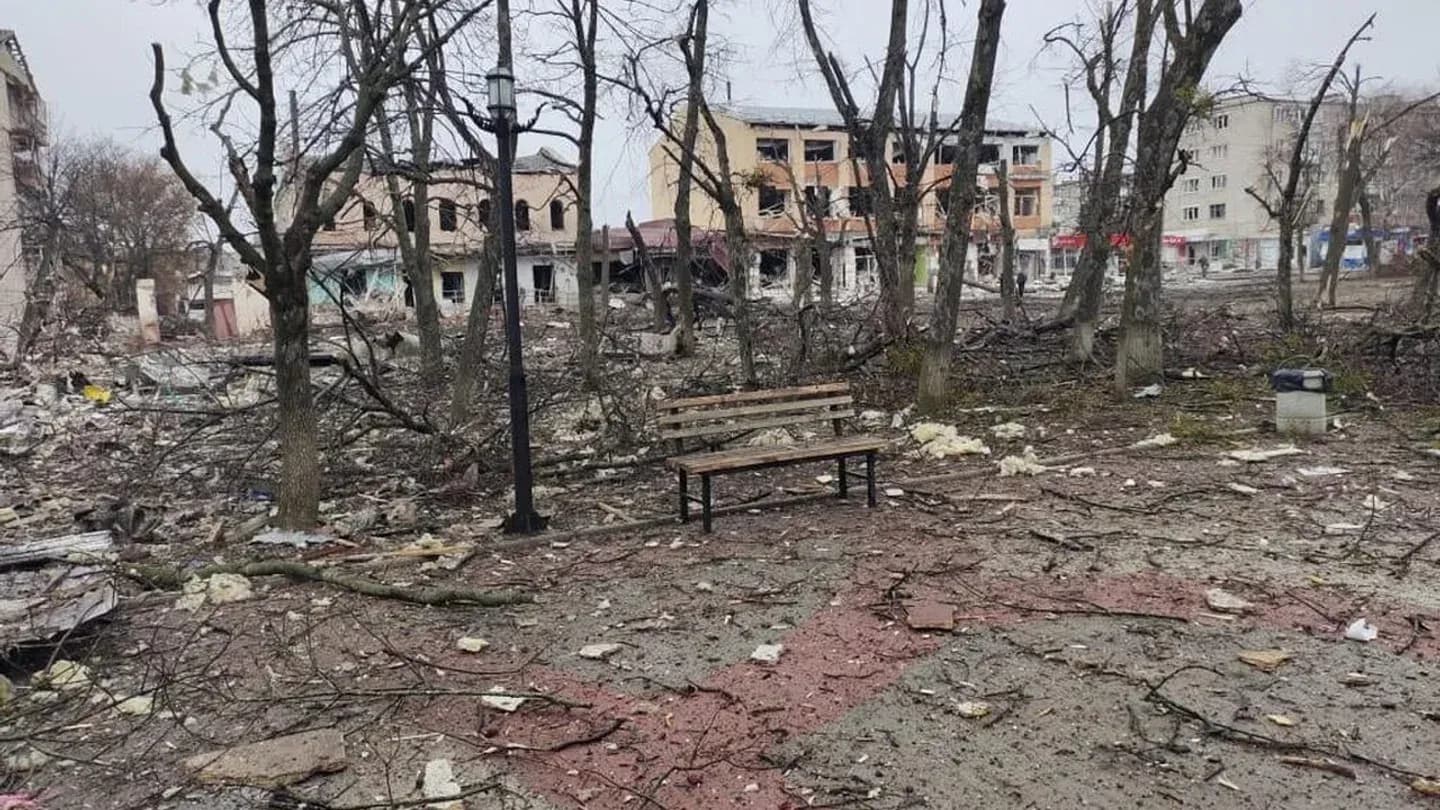
Assistance to residents of an occupied city requires clear legal protection. For Izium, the chronology of local authority's powers matters particularly: the city military administration was created in autumn 2022. Yet the most persuasive argument against unfounded prosecution lies in the requirement to establish the content of each act, the voluntariness of the conduct and all elements of the specific offence. It is precisely this distinction that human rights research and new judicial practice demand. [7, 8, 18, 20, 24, 25]
For a person who ended up under occupation, the work of a water utility, a hospital or a service delivering food has direct life-saving meaning. At the same time, doing one's ordinary job may require contact with those who actually control the city. When, after the territory is liberated, such contact becomes the subject of criminal proceedings, the state must answer a difficult question: what exactly did the person do, and what freedom of choice did they have?
Ukraine has the right to prosecute support for aggression, participation in reprisals or activity of unlawful bodies of power, where specific acts contain the statutory elements of an offence. At the same time, the defence of sovereignty must be exercised with respect for the presumption of innocence and the guarantees of the civilian population. Criminal proceedings must establish personal responsibility; mere presence on occupied territory does not prove it. [3, 11, 19]
How the new criminal prohibitions emerged
Article 111-1 “Collaboration activity” was introduced by Law No. 2108-IX, adopted on 3 March 2022. It entered into force on 15 March. Article 111-2 “Aiding the aggressor state” appeared later: the corresponding Law No. 2198-IX was adopted on 14 April and entered into force on 23 April 2022. Thus the two norms have different dates of appearance and different content. [1, 2]
This difference is fundamental for assessing the events of the first months of the invasion. Liability under a newly established offence cannot be extended to completed acts that preceded its entry into force. If the charge covers continuing conduct, its specific episodes, dates and legal character must be established. Article 58 of the Constitution and the rules on the operation of criminal law in time do not allow this analysis to be substituted by a general reference to martial law. [3, 11]
The problem consistently raised by human rights defenders concerns the breadth of the wording and the manner of its application. The categories of position, economic interaction and work in an institution can cover very different conduct. For criminal law it matters whether the person was meeting civilians' basic needs or exercising authority in the interests of the occupation regime. The need to draw this line existed from the moment the law was adopted. [18, 19]
What the chronology of power in Izium shows
The documents confirm that the Izium city military administration was not created in the summer of 2022. The President issued the decree on its establishment on 1 October, and the official record of the act fixes entry into force on 6 October. The appointment of its head and the exercise by him of local self-government powers were formalised separately. [7–10]
Date — Document and legal significance
24 February 2022 — Decree No. 68/2022 created regional and district military administrations, including in the Kharkiv region. This is a different level of governance than the city administration. [6]
1 October 2022 — Decree No. 680/2022 provided for the establishment of the Izium city military administration. [7]
4 October 2022 — Order No. 231/2022-rp appointed Valerii Marchenko head of the city military administration. [9]
6 October 2022 — According to the Verkhovna Rada's legislative database card, Decree No. 680/2022 entered into force. [8]
16 November 2022 — The Verkhovna Rada adopted Resolution No. 2777-IX on the exercise by heads of the relevant administrations of the Kharkiv region, including Izium, of powers under part two of Article 10 of the Law on the legal regime of martial law. [10]
An important conclusion follows: the autumn acts cannot be used as evidence that the city military administration had already taken over the corresponding functions in the summer. But this chronology does not mean that Ukraine then had no lawful mechanism of military administrations at all, or that no other Ukrainian bodies of power existed in the region. The regional and district administrations operated on a different legal and territorial basis. [4, 6–10]
The procedure for establishing military administrations is defined by Article 4 of Law No. 389-VIII “On the legal regime of martial law”. The decision is taken by the President upon submission by regional state administrations or the military command. Article 15 regulates their powers. The amendments introduced by Law No. 2259-IX, in force from 20 May 2022, also provided a mechanism of a separate parliamentary decision on the exercise by the head of an administration of the powers of the council, the executive committee and the mayor. [4, 5]
For the legal assessment of the summer of 2022, the status of bodies and officials must be reconstructed as of the date of the impugned conduct. This rules out arbitrary retrojection of later decisions into the past. At the same time, the absence of a city military administration did not suspend the operation of the Criminal Code and did not grant a general permission to participate in the structures of the occupation authority. [3–5, 11]
What the preservation of a lawful mandate means
Article 140 of the Constitution guarantees the territorial community the right to independently decide matters of local significance within the Constitution and the laws. The capture of territory by foreign troops does not by itself turn an elected council into an unlawful body, nor does it make all its staff representatives of the occupation administration. However, the status of each official requires separate verification: the law provides grounds for early termination of powers, not merely the general duration of an electoral mandate. [3, 12]
The relevant provisions are contained primarily in Articles 78 and 79 of Law No. 280/97-VR “On local self-government in Ukraine”. They must be read together with the special rules of martial law, including the norms on the consequences of establishing a military administration. Article 19 of the municipal law is devoted to the statute of the territorial community. The general requirement to act on the basis and within the limits of the law is enshrined in Article 19 of the Constitution. [3, 4, 12]
The law vests the executive bodies of local councils with powers in the spheres of housing and communal services, health care and social protection, in particular in Articles 30, 32 and 34. These functions explain why the continuation of civilian work may have an independent lawful basis. However, the competence of a body cannot be automatically attributed to every deputy, and the retention of a post does not legalise any act of its holder. [12]
Therefore the case of a specific official must begin by establishing their pre-war functions, the validity of their powers and their actual work during the occupation. It must be clarified whether the Ukrainian institution continued to operate, whether the person moved to a new unlawful body, what decisions they took and whom those decisions served. Without such analysis, a job title can conceal essential differences between situations. [11, 24, 26]
International law preserves space for civilian life
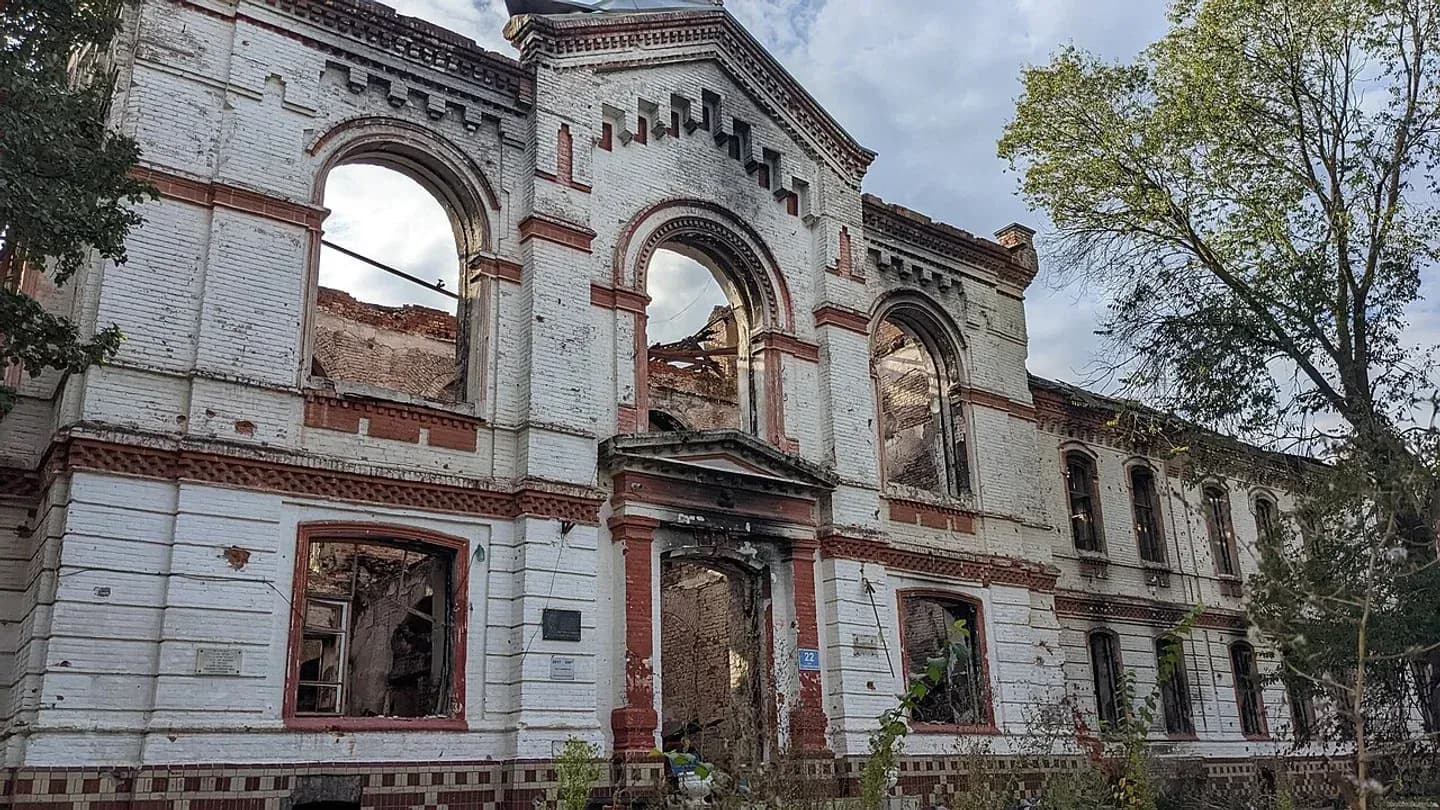
The law of occupation proceeds from the temporariness of a foreign state's factual control and the necessity of protecting the population. Article 43 of the 1907 Hague Regulations imposes on the occupant the duty to restore and ensure public order and safety, while respecting the laws in force, unless absolutely prevented from doing so. This norm limits the arbitrariness of the occupation authority; it does not transfer sovereignty over the territory to it. [13]
The Fourth Geneva Convention details the protection of civilians. Article 47 does not allow protected persons to be deprived of the Convention's guarantees through changes to local institutions, agreements with the occupant or annexation. Article 54 safeguards the status of officials and judges and their right to abstain from performing functions for reasons of conscience, while recognising the possibility of their removal by the occupying power. These provisions do not make newly created occupation bodies lawful bodies of Ukraine. [14, 15]
Articles 50, 55 and 56 also have practical significance: they concern the work of institutions connected with the care and education of children, the supply of food and medical materials, the maintenance of medical establishments, public health and hygiene. Article 59 provides for relief schemes where the population is inadequately supplied. Thus international humanitarian law expects the continuation of basic civilian services during occupation. [14]
At the same time, the occupant's duty to provide for the population is not an unlimited duty of a local worker to serve the occupation administration. Article 51 sets the conditions for permissible requisition of labour and prohibits compelling protected persons to serve in the armed or auxiliary forces of the occupying state. For the assessment of specific work, its character, beneficiaries and conditions of performance matter. [14]
The norms on protected persons primarily regulate their position under the power of another party to the conflict. They do not create a universal immunity from criminal liability before one's own state. At the same time, Ukrainian bodies must take account of the legal regime of occupation when assessing work permitted by international humanitarian law. After de-occupation, the guarantees of legality of the charge and of a fair trial are also ensured by the Constitution and the European Convention on Human Rights. [3, 14, 16, 21]
This provides a substantive basis for defending people who sustained life-support. The court must examine whether limited interaction with the de facto authority was necessary for access to water, medicine or food, and whether the prosecution proves anything more than such contact. The mere fact of receiving a resource from the occupation administration does not yet answer the question about the character of a person's entire activity. [14, 21]
Which elements of the offence the prosecution must establish
Article 111-1 combines several forms of conduct. For local governance, parts two and five are especially important: they provide for voluntary occupation of certain positions in unlawful bodies of power. Part five concerns positions with organisational-managerial or administrative-economic functions. Part seven separately covers, among other things, voluntary occupation of positions in unlawful judicial or law-enforcement bodies. [1, 11]
Part four contains provisions on the transfer of resources to the armed or paramilitary formations specified therein and on economic activity in interaction with the aggressor state or unlawful bodies of power, including the occupation administration. Each of these forms requires its own legal assessment. Assistance to civilians, the operation of an enterprise, the occupation of a position of power and support for combat operations cannot be described by a single undifferentiated word “cooperation”. [1, 11]
The separate special purpose of causing harm to Ukraine is expressly provided by Article 111-2. It cannot be mechanically transferred to all parts of Article 111-1. Equally wrong is to demand proof of already caused specific harm where the relevant offence does not require it. The prosecution must prove precisely those elements established by the applied norm, including intent and voluntariness where the latter is mandatory. [1, 2, 11]
A humanitarian motive is significant for assessing the circumstances, but by itself it does not resolve all questions of classification. At the same time, a job title, payment of remuneration or presence at the workplace also do not replace proof. It is necessary to establish the person's actual powers, the character of the institution, its subordination, the freedom of choice and the content of the acts performed. [11, 24–26]
Duress and necessity have legal significance
Under Article 39 of the Criminal Code, the infliction of harm on legally protected interests in a state of extreme necessity, under the conditions established by that norm, is not a criminal offence. It concerns the averting of an immediate danger to a person, other persons, public or state interests, where it cannot be averted by other means and the permissible limits are not exceeded. Such an assessment requires weighing the danger, the available alternatives and the harm caused. It is here that the argument about preventing a humanitarian catastrophe acquires concrete legal meaning. [11]
Article 40 excludes the criminal wrongfulness of an act or omission under direct physical duress through which the person could not control their actions. Where such capacity remained, and also in cases of psychological duress, the question is resolved under the rules of extreme necessity. A general reference to occupation does not substitute for individual verification, but a formal consent to work does not remove the need to examine threats or other circumstances of duress. [11, 24]
The absence of a created city military administration may be one element of context: who could realistically organise assistance, which lawful channels remained available, whether the threat could have been averted otherwise. But it is equally important to establish the possibility of evacuation, the state of communications, the dependence of unable-to-work residents on a particular service and the limits of contact with the occupier. These are questions of evidence, not a predetermined answer about guilt or innocence. [11, 24]
Such verification cannot be reduced to a requirement that a person under occupation must necessarily file a written complaint against armed representatives of the de facto authority. The reality and safety of an appeal also require assessment. In a case connected with Izium, the Supreme Court in 2026 directly pointed to this flaw in the examination of the arguments on duress. [25]
What human rights research shows
The 2024 ZMINA report “Survival or Crime” cites 9,179 criminal proceedings under Article 111-1 as of 15 June 2024 — according to SBU data obtained by the organisation. The researchers analysed 1,442 verdicts under Article 111-1 and 12 under Article 111-2. They identified two acquittals under Article 111-1, one of which was later overturned on appeal. [18]
The study also recorded 11 cases concerning representatives of the State Emergency Service and 18 cases concerning representatives of communal institutions. This is the number of cases in the examined material, not a confirmed nationwide count of all workers in the respective professions. The figures demonstrate the coverage of civilian spheres, but the content and justification of each charge require independent assessment. [18]
Human Rights Watch, in its report of 5 December 2024, also drew attention to the near hundred-per-cent share of guilty verdicts among the examined decisions, plea agreements, difficulties of access to effective defence and in-absentia proceedings. These are conclusions about a certain body of practice at the time of the research. They cannot be turned into a claim that every charge is unfounded or that the outcomes of all future cases are already predetermined. [19]
The problem remained a subject of research later as well. In the ZMINA report published on 28 April 2026, 1,143 verdicts from 2025 were analysed in detail. In the overall body of 3,103 available verdicts under Article 111-1 as of the end of 2025, the organisation counted 11 acquittals, seven of them handed down during 2025. Not all of these decisions were final. [20]
For public discussion it is important to distinguish registered proceedings, notifications of suspicion, the number of accused, verdicts and final decisions. One indicator cannot be substituted for another. The small number of acquittals prompts scrutiny of the quality of defence and judicial control, but the statistics themselves do not establish the causes of that ratio. That requires an analysis of the evidence and procedural conditions in specific cases.
International monitors point to a concrete conflict of norms
On 29 June 2023, Matilda Bogner, head of the UN Human Rights Monitoring Mission in Ukraine, presenting a thematic report on the detention of civilians, stated that the law on collaboration activity criminalises, among other things, conduct permitted or required by international humanitarian law and had led to cases of arbitrary detention. This was a human rights assessment by the UN, not a judicial decision striking down the Ukrainian law. [17]
More recent materials contain concrete observations. In its report covering 1 June – 30 November 2025, OHCHR reported an analysis of verdicts concerning 326 individuals. At least 21 of them, in the Office's assessment, were convicted for work which the occupying state could lawfully compel for the purpose of meeting the needs of the population under international humanitarian law. This figure relates precisely to the stated sample and reporting period. [21]
Such a conflict creates unacceptable uncertainty for a civilian: performing work that the law of occupation permits may later become grounds for prosecution by one's own state. The demand to remove this contradiction is aimed at protecting people and the predictability of the law. It does not alter Russia's responsibility for aggression and for violations of the rights of the population under its control, which the UN also documents. [17, 21]
Lyman shows the difficulty of assessing assistance to the population
The discussion was sharpened by the cases of women from Lyman connected with the coordination of street committees during the occupation. According to a Graty piece of 21 February 2025, on 29 January the Supreme Court upheld a five-year prison sentence for Tetiana Potapenko. The defence insisted on assistance to residents; the majority of judges found proven the voluntary occupation of a leadership position in an unlawful body. Judge Yuriy Luhanskyi delivered a separate opinion. [22]
A separate opinion evidences the existence of a legal debate but does not overturn the majority's decision. Reporting on such trials must distinguish the defence's version, the court's conclusion and the position of human rights defenders. To reduce the entire content of a case to the formula “convicted merely for handing out food” is to skip precisely the dispute about facts and powers that requires verification.
The outcomes of other proceedings also differed. In the case of Valentyna Tkach, covered by Graty, on 29 November 2024 the court approved a plea agreement and imposed five years of imprisonment with release from serving the sentence on one year of probation. Hence an identical mention of a five-year penalty does not mean an identical actual deprivation of liberty. A Radio Svoboda publication of 13 December 2025 returned these cases to the wider discussion about collaborationism and survival. [23, 27]
The Supreme Court clarifies the limits of liability
As of 2026 it would be inaccurate to describe judicial practice as entirely unchanged. On 7 April, in case No. 635/2049/22, which concerned the occupation of the post of starosta in Borysivka of the Kharkiv district, the Supreme Court stressed the necessity to prove voluntariness beyond reasonable doubt. The court pointed to the significance of Articles 39 and 40 of the Criminal Code and to flaws in the examination of the defence's arguments. The appeal decision was quashed with the assignment of a new appellate review; this ruling contained no final acquittal. [24]
Another ruling of the same day, in case No. 642/1023/23, is directly connected with Izium. It concerned a person accused of treason and of working as an investigator in an unlawful law-enforcement body, not of communal service. According to the Supreme Court's official review, the appeal decision was quashed because of an improper examination of the arguments on duress, and a new appellate review was assigned. This example matters for the standard of proof, but it cannot be presented as an acquittal of representatives of local self-government. [25]
Particularly telling is the ruling of 13 October 2026 in case No. 642/2062/22. In an official communication of 6 November the Supreme Court explained: the established actions of the person in fact amounted to works on the improvement of a settlement, which witnesses confirmed, and such activity could not entail criminal liability. The court examined these questions with the application of the Geneva Convention. [26]
These decisions support the requirement to assess actual conduct and the conditions of its commission. They do not automatically release all workers of a given sector and do not replace legislative clarification. But they show that the humanitarian content of work, the failure to prove authority functions and duress can be decisive for the outcome of proceedings. [24–26]
Legal certainty and effective defence in every case
Article 7 of the European Convention requires that a criminal prohibition be accessible and sufficiently foreseeable. It protects against retroactive establishment of liability and unpredictable extension of an offence to the detriment of the accused. Derogation from this guarantee under Article 15 is not permitted even in wartime. At the same time, gradual judicial clarification of the law is possible if it is consistent with the essence of the offence and was reasonably foreseeable. [16, 28]
For disputes about work under occupation, concrete questions must be posed: which text was in force at the time of the conduct; which exact prohibition was applied; could the person foresee criminal liability; did the court equate technical work with the exercise of authority without proper grounds. The later creation of a military administration does not by itself prove a violation of Article 7. The legal argument must concern the content and application of the criminal norm. [3, 11, 28]
The fairness of proceedings also depends on the possibility to meet with counsel, challenge evidence, examine witnesses and receive reasoned answers to material arguments. A plea agreement requires verification of its voluntariness and awareness. The choice of detention in custody has its own grounds; it is not proof of guilt and must not turn into anticipatory punishment. [16, 19, 29]
Trial in absentia is also not automatically incompatible with international standards. What matters is proper notification, effective legal assistance, the circumstances of the person's absence and, under appropriate conditions, the possibility of a fresh examination of the charge in their presence. The concrete guarantees must be assessed. A general assertion that no rights exist at all in all in-absentia cases does not convey the content of the legal problem. [16, 30]
For Izium these standards mean the necessity to examine documents on powers, actual duties, testimony of residents and staff, and materials that confirm or refute duress. The burden of proving guilt remains on the prosecution. A person must not have to prove their innocence merely because they stayed in the city. [3, 25, 29]
What changes are needed to protect civilians and public trust
The first necessary change is a clear legislative distinction between activity directed at civilians' basic needs and punishable participation in occupation governance. Such an approach must take account of the content of functions and of specific acts. A formal exemption from liability by profession name would leave outside attention both real abuses and people whose assistance does not fit a narrow professional list. [19, 20]
The second change concerns the proof of voluntariness. Courts must assess not only the appointment document or the statement of consent but also the circumstances of their appearance. Threats, detention, dependence on access to food or medicine and the impossibility of safe departure require substantive verification. Where voluntariness is an element of the offence, doubts about it cannot be shifted onto the accused. [3, 24, 25]
The third change is accessible rules for communities and workers of civilian services. People must understand the limits of permitted work before an emergency arises. Such guidance must be consistent with the law and international obligations and explain the difference between meeting civilian needs, assuming authority powers and assisting military operations. A general requirement not to contact the occupier is insufficient to describe the everyday reality of an occupied city.
The fourth change is strengthening effective defence and the review of erroneous decisions. What is needed is access to lawyers, proper examination of exculpatory evidence, control over the lawfulness of detention and the proportionality of punishment. If criminal law later mitigates or abolishes liability, the established rules on its retroactive effect must apply. In every case the review must rest on a proper procedural mechanism. [3, 11, 16, 29]
Finally, state communication must distinguish the experience of life under occupation from proven guilt. Unfounded stigmatisation deepens the gap between people and the institutions in which they must have trust after liberation. The policy of returning territories needs a comprehensible answer for their residents: properly proven crimes entail liability, while necessary civilian work receives a predictable legal assessment.
What Izium's chronology means for the wider discussion
The Izium chronology shows why criminal prosecution cannot rely on a simplified notion of an instantaneous replacement of the entire local self-government by a military administration. Lawful status, actual functions and the timing of authoritative decisions matter. But the defence of a person will be persuasive only when these circumstances are combined with an analysis of the specific charge, the evidence of voluntariness and the conditions of occupation. [4–12, 24, 25]
Human rights research and Supreme Court decisions give grounds to demand a more precise law and more attentive justice. The provision of water, medical assistance, food and other necessary services must be assessed with regard to the rights of the civilian population. The state strengthens its legitimacy when it is able to establish guilt on sound grounds and, with equal consistency, to protect a person from unfounded punishment. [14, 18–21, 24–26]
Sources and references
Numbering corresponds to the in-text references. Sources verified on 19 November 2026.
Verkhovna Rada of Ukraine. Law No. 2108-IX of 3 March 2022 on establishing liability for collaboration activity. Entry into force 15 March 2022. zakon.rada.gov.ua
Verkhovna Rada of Ukraine. Law No. 2198-IX of 14 April 2022 on improving liability for collaboration activity. Introduction of Article 111-2; entry into force 23 April 2022. zakon.rada.gov.ua
Constitution of Ukraine. Articles 8, 19, 58, 62, 64, 140 and 141. zakon.rada.gov.ua
Law of Ukraine No. 389-VIII of 12 May 2015 “On the legal regime of martial law”. Articles 4, 10 and 15; for the events of 2022 — taking into account the history of amendments and Law No. 2259-IX. zakon.rada.gov.ua
Verkhovna Rada of Ukraine. Law No. 2259-IX of 12 May 2022 on the functioning of the civil service and local self-government during martial law. Entry into force 20 May 2022. zakon.rada.gov.ua
President of Ukraine. Decree No. 68/2022 of 24 February 2022 on the creation of military administrations. Regional and district levels. president.gov.ua
President of Ukraine. Decree No. 680/2022 of 1 October 2022 on the creation of military administrations of settlements in Kharkiv region, in particular the Izium city military administration. president.gov.ua
Verkhovna Rada of Ukraine. Card of Decree No. 680/2022. The document history records entry into force on 6 October 2022. zakon.rada.gov.ua
President of Ukraine. Order No. 231/2022-rp of 4 October 2022 on the appointment of Valerii Marchenko as head of the Izium city military administration. president.gov.ua
Verkhovna Rada of Ukraine. Resolution No. 2777-IX of 16 November 2022 on the powers of heads of military administrations of the Kharkiv region. Official parliamentary announcement of 16 November 2022. rada.gov.ua · Text of the resolution
Criminal Code of Ukraine No. 2341-III. Articles 4–5, 39–40, 111-1 and 111-2. The original versions of the new articles are also set out in the laws under references 1 and 2. zakon.rada.gov.ua
Law of Ukraine No. 280/97-VR of 21 May 1997 “On local self-government in Ukraine”. Articles 19, 30, 32, 34, 78 and 79; for the assessment of events the version in force on the relevant date is required. zakon.rada.gov.ua
ICRC. 1907 Hague Regulations on the laws and customs of land warfare. Article 43. ihl-databases.icrc.org
ICRC. Geneva Conventions of 12 August 1949. Fourth Convention, in particular Articles 4, 47, 50, 51, 54–56 and 59. icrc.org
ICRC. Fourth Geneva Convention. Article 54 on judges and officials. ihl-databases.icrc.org
Council of Europe. Convention for the Protection of Human Rights and Fundamental Freedoms. Articles 5, 6, 7 and 15. echr.coe.int
UN in Ukraine. Statement by Matilda Bogner on the detention of civilians in the context of the armed attack by the Russian Federation against Ukraine, 29 June 2023. ukraine.un.org
ZMINA Human Rights Centre. “Survival or Crime: how Ukraine punishes collaborationism”, 2024. Data as of 15 June 2024; methodology and analysis of judicial practice. zmina.ua
Human Rights Watch. “All She Did Was Help People”, 5 December 2024. Study of the legislation and practice of liability for collaboration activity. hrw.org
ZMINA Human Rights Centre. “Four years of ‘prevention’”, 28 April 2026. Analysis of practice for 2025; in particular the methodology and the section on acquittals. zmina.ua · Publication page
UN OHCHR. Report on the human rights situation in Ukraine for 1 June – 30 November 2025, published 9 December 2025. Paragraph 107. ukraine.ohchr.org
Graty. Oleksii Arunian. Report on the cassation review of the case of Tetiana Potapenko from Lyman, 21 February 2025. graty.me
Graty. Oleksii Arunian. Report on the sentence of Valentyna Tkach and the plea agreement, 12 December 2024. graty.me
Supreme Court. Ruling of 7 April 2026 in case No. 635/2049/22. Full text on the official website of the Khmelnytskyi Court of Appeal. kma.court.gov.ua
Supreme Court. Review of the practice of the Criminal Court of Cassation for April 2026, section 6.3.3, pp. 23–24. Ruling of 7 April 2026 in case No. 642/1023/23, connected with Izium. strapi.supreme.court.gov.ua
Supreme Court. Official communication on judicial practice regarding collaboration activity, 6 November 2026. Contains the summary of the position in case No. 642/2062/22 of 13 October 2026 on improvement works. supreme.court.gov.ua
Radio Svoboda. Olha Katsan. “Collaborationism or survival”, 13 December 2025. Piece on the cases of Lyman residents and the human rights discussion. radiosvoboda.org
European Court of Human Rights. Guide on Article 7 of the Convention, update of 28 February 2026. Foreseeability of the law and the limits of judicial interpretation. ks.echr.coe.int
Criminal Procedure Code of Ukraine No. 4651-VI. Articles 17, 91–94, 177, 183 and 474 on the presumption of innocence, proof, preventive measures and the review of agreements. zakon.rada.gov.ua
ECtHR, Grand Chamber. Sejdovic v. Italy, application No. 56581/00, judgment of 1 March 2006.
Primary sources
Documents and statements this story is based on.