Government shifts 81.4 bn UAH from debt-service spending to military pay and fuel
For the third time since September, the Cabinet is finding money for military pay inside the already adopted 2026 budget: 81.4 bn UAH moved from underused state debt-service spending. The pay rise promised from 1 January still has no amount and no mechanism.
On 19 November the Cabinet of Ministers adopted an order drafted by the Finance Ministry, directing 81.4 bn UAH to the urgent needs of the Defence Ministry under martial law. Of that sum, 74 bn UAH is monetary allowance for service members: 72.6 bn goes to the Defence Ministry for the Armed Forces, and another 1.4 bn to the State Special Transport Service. A further 7.4 bn UAH will buy fuel for the Armed Forces.
The decision brings no new revenue into the budget. The money was freed because appropriations under the budget programme "State debt servicing" were used in amounts smaller than the 2026 budget law provided. They were first transferred to the reserve fund for the security and defence sector, and from there to the Defence Ministry. In effect, the pay of people in uniform is this time being covered from a line planned for settling accounts with the state's creditors.
The third reallocation since September
For the government this is not a one-off move but a mode of operation. In September the Cabinet reallocated 33.6 bn UAH to monetary allowance: 25.9 bn for monthly payments and 7.7 bn for one-off assistance in case of a service member's death, disability or partial loss of working capacity. In early October more than 50 bn UAH was taken from the security and defence reserve so that, in Prime Minister Serhiy Koretskyi's words, October payments could be made "on time and in full". Now it is 81.4 bn. The pay needs of the fourth year of full-scale war were again not calculated at the start of the budget year, and the government offers no answer as to why.
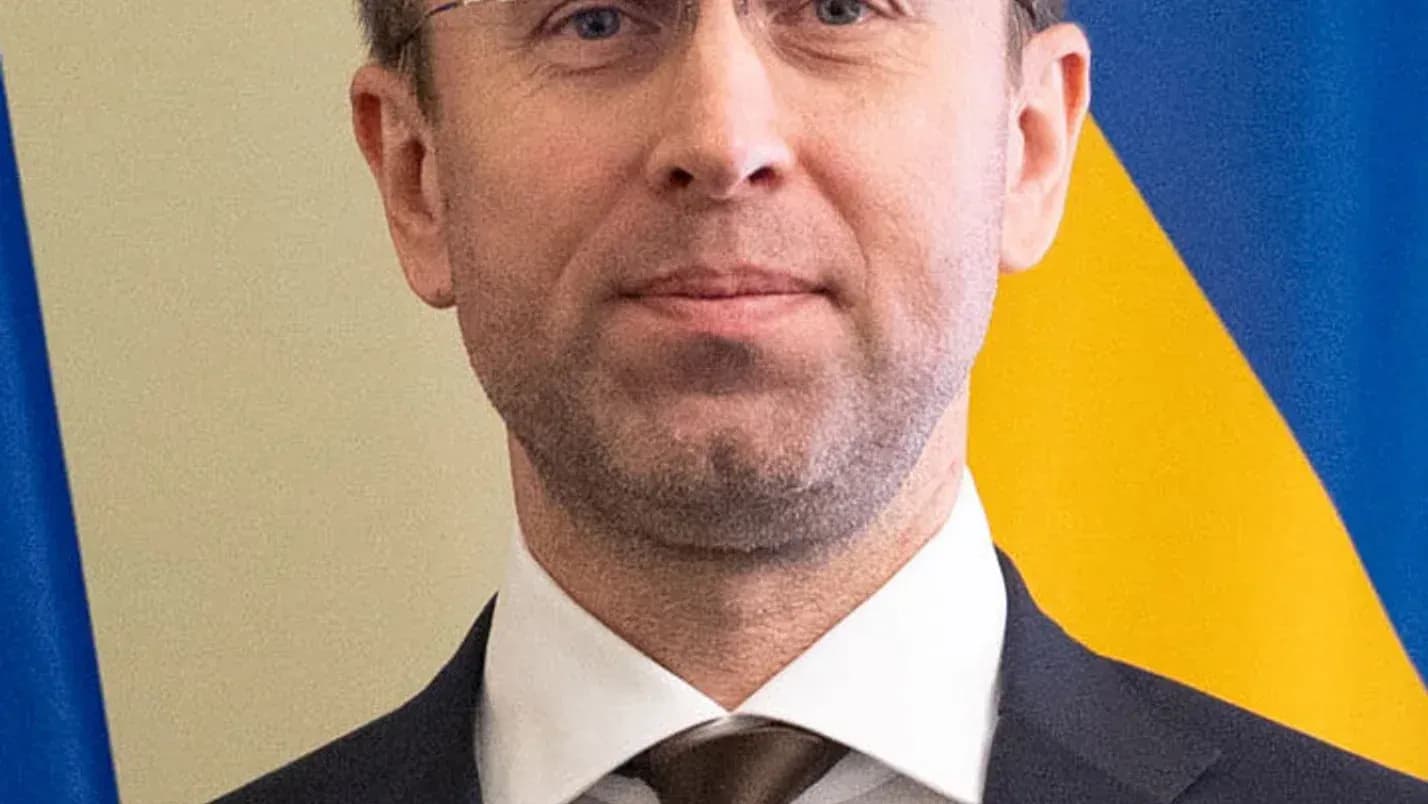
The authorities present the decision as routine work.
"We are ensuring timely financing and stable payments to service members who carry out combat tasks," Prime Minister Serhiy Koretskyi commented on the decision.
More than 90% of the sum, according to the government's breakdown, goes precisely to payments. But the order contains neither a date by which the money must reach service members' accounts nor any mention of raising monetary allowance. It is about closing what has already been accrued, not about paying more.
A deficit acknowledged out loud
The backdrop is the publicly acknowledged 27 bn US dollar deficit of the defence budget. The reasons Koretskyi has named are the rising cost of a technological war, the fact that in the first half of 2026 the Defence Ministry financed spending out of the second half's funds, and the failure to meet all commitments to partners. Finance Minister Serhii Marchenko warned back in September that, because of a liquidity shortfall, some non-military payments could be delayed and that the situation is "too close to the same scenario we had in 2022". President Volodymyr Zelensky said that if drone orders for January and February are not paid for in autumn, the troops face "serious challenges" in winter.
In parallel, on 28 October the Verkhovna Rada passed the draft 2027 budget in the first reading together with an amendment raising military monetary allowance from 1 January. Initially the proposal was to increase minimum payments by at least 20%, but after disagreements with the Finance Ministry it was agreed that the government would define the mechanism and the size, and that the increase would not necessarily be the same for everyone: those currently paid less should gain more first. MP Yaroslav Zhelezniak, the amendment's author, estimated the 2026 shortfall in payments at 100–190 bn UAH and warned that the growth of Armed Forces spending in the 2027 budget merely covers that hole, while the government may either ignore parliament's instruction or cite a lack of funds.
For service members and their families this means one simple thing: November payments were closed by an internal manoeuvre rather than by state revenue, and the next such operation will be needed again after December's results. On 20 November Ukraine received almost 8 bn euro in a single tranche under the Ukraine Facility — the largest one-off tranche in the programme's history — which, according to Koretskyi, will go to financial stability and the state's priority needs. But the question of how much a service member will receive from 1 January 2027 still has no answer: the government has named neither the amount, nor the mechanism, nor the date of a decision. Until they exist, monetary allowance depends not on a plan but on which budget line turns out to be underused next month.
Primary sources
Documents and statements this story is based on.