
Hoax bomb threats disrupt dozens of flights across Europe
Aircraft were diverted and searched after bomb threats on 5 November. No explosives were found; links between the incidents remain under investigation.
Hoax bomb threats disrupted at least 25 flights across Europe on 5 November 2026, according to The Guardian’s evening tally. Some aircraft were diverted, while others were searched after landing or delayed before departure. Airline and official accounts reported by The Guardian and the BBC said searches had found no explosives.
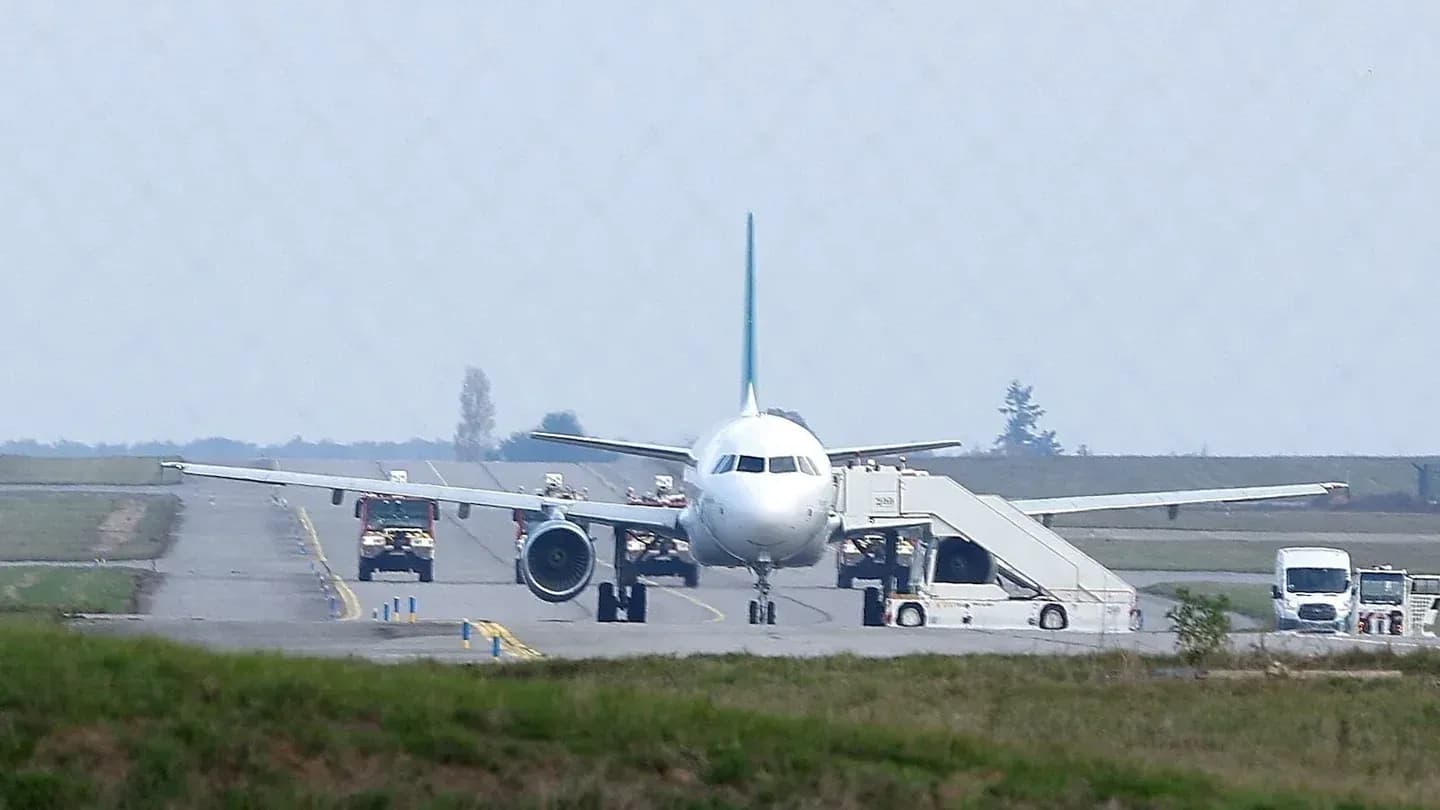
Aer Lingus flight EI402 from Dublin to Rome landed at Évreux-Fauville military air base in Normandy. The French prime minister’s office said a bomb threat prompted the diversion, ABC News reported. The airline confirmed a safe landing, described the diversion as a security precaution and said it was working to get passengers to their final destination.
Wizz Air confirmed to The Guardian that its Milan Malpensa–Warsaw flight was diverted to Vienna after a threat received during the flight. Another of the airline’s flights from Milan landed safely in Bucharest, where the aircraft was inspected. The BBC reported both cases, citing the carrier.
Two Finnair aircraft flying from Helsinki to Rome and Vienna reached their scheduled airports, and passengers disembarked. In a statement to The Guardian, the airline described the threats as unfounded or hoaxes. Italian air force fighter jets escorted the Rome-bound flight, airport operator Aeroporti di Roma told the BBC. Receiving a threat therefore did not always mean an aircraft had to land at a different airport.
In Prague, searches were completed on four arriving aircraft from Athens, Dublin, Glasgow and Newcastle. An airport spokesperson told The Guardian that the planes landed safely, were directed to remote stands and were searched for explosives with negative results. Passengers received their luggage after security measures were completed, with no significant impact on other airport operations. The Czech police’s National Center Against Terrorism, Extremism, and Cybercrime took over the investigation into the threats.
In Bulgaria, three Ryanair flights affected by threats landed safely: two in Sofia and one in Plovdiv. Searches of three aircraft in Madrid also ruled out threats. London Heathrow and Birmingham airports received messages assessed as not credible, the BBC reported. The incidents involved different kinds of disruption, from extra checks to diversions, rather than a series of confirmed attempts to detonate explosives.
A common source for the threats has not been established. The EU transport commissioner said it was too early to say whether the incidents were linked, The Guardian reported. The BBC said emails sent to Rome’s airports were signed on behalf of the “Fighters of the Male State”; Aeroporti di Roma confirmed the messages’ contents to the broadcaster. Such a signature, however, does not itself identify the senders or prove involvement by a particular organisation or state.
This was not the first wave of alerts that week: according to the BBC, seven European flights were searched following threats on 3 November, with no explosives found. The International Air Transport Association, IATA, condemned attempts to disrupt air transport and urged authorities to establish the origins of the hoax threats. The disruption should not be confused with a shutdown of European aviation: Eurocontrol figures cited by The Guardian showed about 27,400 flights scheduled across Europe on 5 November.
Primary sources
Documents and statements this story is based on.