Mobilisation as a Cover for Abduction and Torture: Six Ukrainian Servicemen to Face Trial in Kharkiv
Ukraine's State Bureau of Investigation has sent a Kharkiv case to court: six servicemen are accused of abduction, torture, a shooting and forcing a civilian to sign deferment-cancellation documents. The defendants remain innocent until proven guilty.
 1 / 4
1 / 4The distinction matters because the case is far more serious than a dispute over aggressive military recruitment.
Ukraine's Territorial Recruitment and Social Support Centers, commonly known by the Ukrainian abbreviation TCC, administer military registration, mobilisation and related procedures.
According to the State Bureau of Investigation, or DBR, servicemen from one Kharkiv district recruitment centre and other military units allegedly used those mobilisation activities as a pretext to enter a private residence.
Investigators say the men then identified themselves as officers of the Security Service of Ukraine, or SBU, and demanded that two civilians confess to alleged involvement in drug trafficking.
When one of the civilians resisted, investigators say, he was shot with a combat pistol and suffered a gunshot wound. The weapon was later identified by investigators as a captured or trophy firearm.
Both men were then allegedly forced into a vehicle and taken to the premises of the recruitment centre.
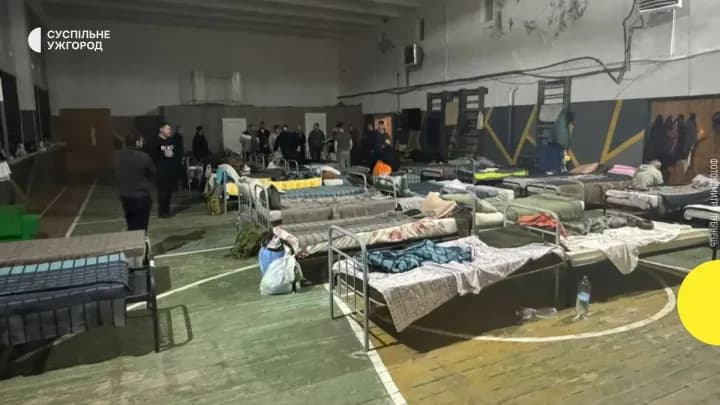
There, according to the DBR, they were held unlawfully for an extended period, beaten, threatened with weapons and pressured to provide information. One man was also allegedly forced to sign documents concerning the cancellation of his mobilisation deferment.
One victim was eventually released. The other escaped.
Whether either man was liable for military service does not legalise such treatment.
Publicly available information does not establish the complete military-registration status of both victims. The investigation does, however, refer to documents concerning one victim's mobilisation deferment.
Ukraine's Constitution protects personal liberty, human dignity and the inviolability of the home. The current rules governing recruitment centres authorise activities such as checking military-registration documents; they do not turn recruitment personnel into criminal investigators with unrestricted search or detention powers.
Ukraine's Ombudsman went further in February 2026, stating explicitly that TCC personnel do not have authority to detain or forcibly hold people.
Internationally, the distinction is equally important. Article 3 of the European Convention on Human Rights prohibits torture and inhuman or degrading treatment in all circumstances, while Article 5 protects the right to liberty and security.
Investigators say six servicemen were involved.
Among them is a major who held a managerial position at a district recruitment centre. The DBR alleges that he organised the activity and involved members of the centre's security unit as well as servicemen from other military units whose normal responsibilities included recruitment.
That does not establish responsibility of the entire TCC leadership structure.
No publicly available evidence reviewed for this article shows that higher-level commanders ordered, authorised or knew about the alleged conduct.
But it does create an institutional question that the trial may help answer: if prosecutors' version is correct, how could several servicemen allegedly use mobilisation procedures and the premises of a state recruitment centre as part of such conduct?
The charges listed by the DBR include unlawful possession of firearms and ammunition, armed hooliganism, violent unlawful entry into a home, kidnapping, completed attempted intentional murder and torture.
The DBR says the defendants face up to 15 years in prison.
That figure should not be read as a predetermined sentence for every defendant. A court would have to establish individual guilt, determine each defendant's role and then apply Ukraine's sentencing rules to the offences proven at trial.
Two defendants, including the main suspect, remain in custody. Two are under nighttime house arrest and two have been granted bail. The case is being supervised by the Kharkiv Specialised Defence Prosecutor's Office for Ukraine's Eastern Region.
The public evidence has limits.
The DBR has released photographs and video connected to the investigation and has publicly described the alleged sequence of events. But the complete indictment, expert reports, witness testimony and full evidentiary record are not publicly available in the sources reviewed for this article.
Nor did the reviewed public sources contain a substantive defence account on behalf of all six servicemen.
They therefore remain defendants, not convicted offenders.
Can this case be described as proof of a nationwide system of torture inside Ukrainian recruitment centres? No. One prosecution cannot establish that.
But there is documented evidence of a much wider human-rights problem surrounding some mobilisation practices.
Ukraine's Ombudsman reported receiving 18 complaints about individual TCC representatives in 2022 and 6,127 in 2025. Monitoring visits also recorded cases of unlawful restrictions on liberty, physical violence and other forms of coercion. A complaint is not proof of a crime, so those figures must not be presented as thousands of proven criminal offences.
The state's response in the Kharkiv case has now moved beyond an internal inquiry.
The DBR announced suspicions on April 22. On September 9 it announced the completion of the pre-trial investigation and the transfer of the indictment to court.
The real accountability test begins there.
If the prosecution proves that state authority and mobilisation procedures were deliberately used as cover for armed violence, unlawful detention and torture, punishing individual offenders will be only one part of the answer.
The other will be demonstrating that a uniform, an office and the powers of mobilisation do not place anyone above the law.
Primary sources
Documents and statements this story is based on.
- State Bureau of Investigation — completion of the investigation
- State Bureau of Investigation — initial suspicion announcement
- Suspilne Kharkiv
- Constitution of Ukraine
- Regulation on Territorial Recruitment and Social Support Centers, Cabinet of Ministers Resolution No. 154
- Criminal Code of Ukraine
- Office of the Ukrainian Parliament Commissioner for Human Rights
- Ombudsman Office — abuse of authority by police officers and TCC servicemen
- European Convention on Human Rights — Council of Europe