
“Freak in a Hat”: How the Mayor of Dnipro Showed That Ukraine’s Anti-Corruption Bureau Is Not to Be Feared
The mayor of Dnipro publicly called a NABU detective a “freak in a hat” — and the only consequence is a complaint to NAZK. A column on how impunity destroys Ukraine’s anti-corruption vertical.
 1 / 4
When a mayor of a million-plus city can call a NABU detective a “freak in a hat” without any real repercussions, you have to ask: what exactly is he risking?
The short answer — nothing substantial. NABU filed a complaint with NAZK. Not with a court, not with the police, not even a formal investigation into possible obstruction of justice. A complaint. To an agency that handles ethics violations. If you think this sounds like a schoolyard tattletale to the principal, you’re not far off.
NAZK might rule that the mayor violated ethics rules. It might even issue an administrative fine. But let’s be honest: will that stop anyone who is already accustomed to impunity? Will it change the dynamic when an official feels he can get away with anything, including publicly humiliating the very person tasked with holding him accountable?
“Freak in a hat” is not just a random insult. It’s a new standard of communication with anti-corruption bodies. Before, officials ignored them, sabotaged their work, dragged out investigations. Now there’s a new tool: public degradation. And the scariest part isn’t that the mayor said it — it’s that he’s absolutely certain nothing will happen to him.
Think about how many times NABU has opened cases against high-ranking officials who kept working, giving interviews, running for office. How many times NABU detectives have faced pressure — through phone calls, media attacks, “friendly” courts. Now add public insults to the list.
Here’s the core question: can an anti-corruption agency function effectively when its investigators can be openly called “freaks” with impunity? When the only protection mechanism is an ethics complaint? This isn’t about Mayor Filatov personally. It’s about a system that allows this treatment.
The mayor of Dnipro is neither the first nor the last to show contempt for anti-corruption bodies. But he is a perfect marker of how low NABU’s authority has sunk. Once feared, now despised. And contempt is worse than fear — it kills any reform.
Try a simple test. Imagine the mayor called a Supreme Court judge a “freak.” Or the head of the Security Service. Or the defense minister. What would happen? An immediate reaction, investigations, apologies, possibly criminal charges. But a NABU detective? Apparently that’s allowed.
Why? Because a detective has no political muscle behind them. Because over the years NABU has never become an institution that commands respect — it is tolerated as long as it’s convenient, and despised when it becomes inconvenient.
The scandal has been widely discussed over the past week — by Ukrainska Pravda, Zaxid.net, political Telegram channels. But the discussion will fade. The mayor will keep working. The detective will keep showing up to work, knowing he can be publicly humiliated and no one will be held accountable.
This is not about the insult. It’s about the signal. A signal to every other official: you can publicly abuse anti-corruption agencies and get away with it. The worst that can happen is a complaint to NAZK. And a complaint to NAZK is not a punishment — it’s a piece of paper.
As long as this continues, no anti-corruption reform has a chance. Because reform means the rule-breaker is afraid. Not that the enforcer becomes a target of mockery.
“Freak in a hat” — that is now the unofficial status of NABU in the eyes of Ukraine’s ruling class. And perhaps that is the most accurate diagnosis one can give.
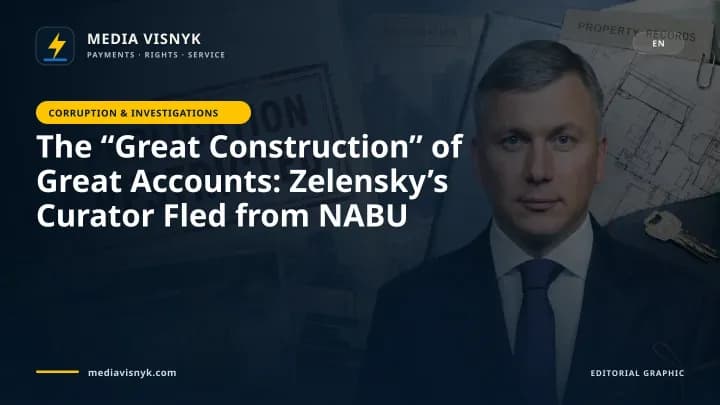
The “Great Construction” of Great Accounts: Zelensky’s Curator Fled from NABU
The Firing of Papusha: How Kravchenko’s Team Burns Bridges, Not Corruption
A Judge With a Russian Passport and 26 Million Hryvnias: Ukraine's Former Top Commercial Court Head Faces Second Suspicion — This Time for Money Laundering
Corruption Overtakes Missiles: 72% of Ukrainians Hold Zelensky Responsible for Corruption in His Circle